
Two firms vying to lead Drexel's revitalization effort

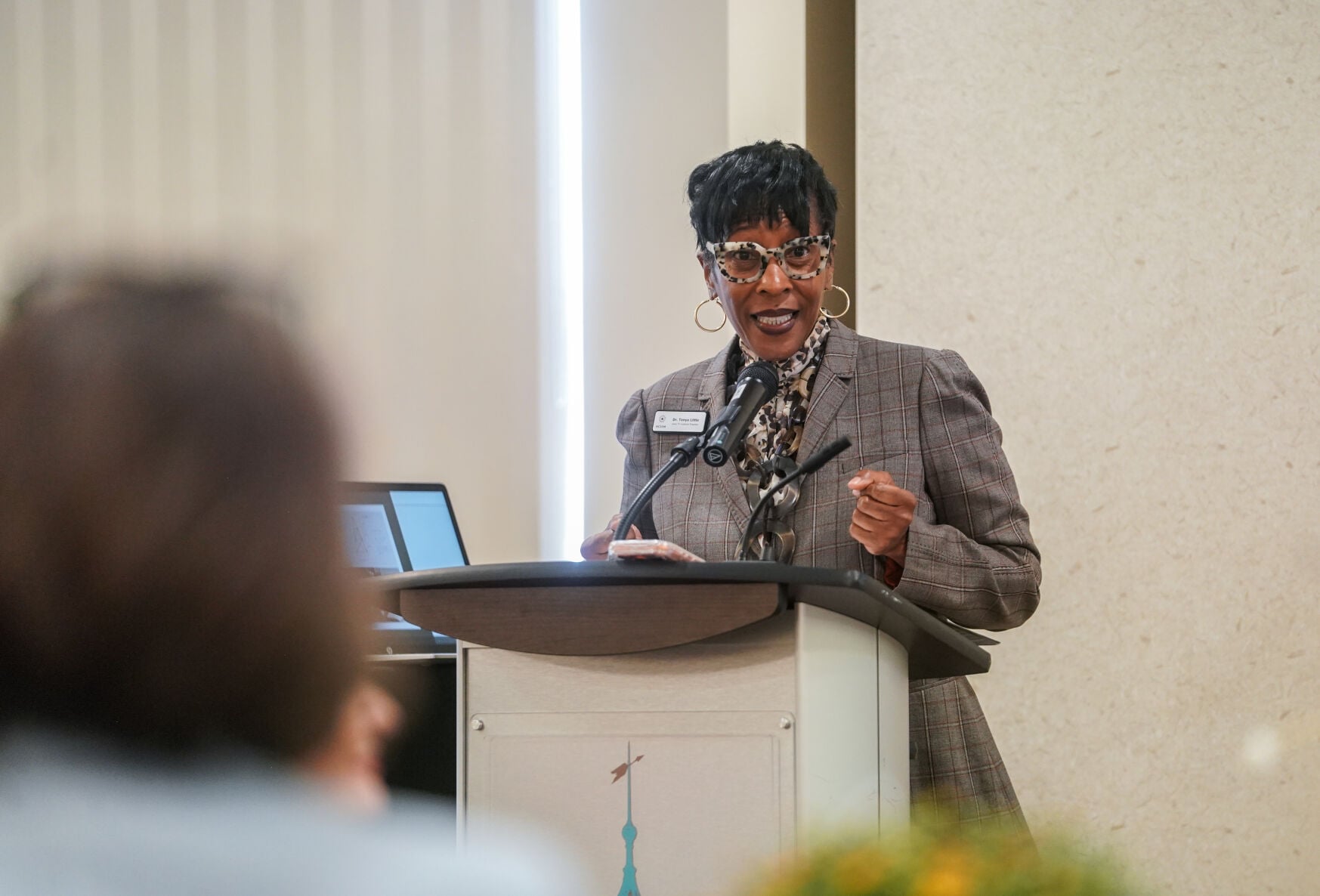
Eric Woolridge, director of planning and business development at Destination By Design, presents his firm’s qualifications to the Drexel aldermen Monday, Sept. 28.
Town aldermen agree that the future of Drexel is found in a balance between honoring the past and building for the future — a future two downtown redevelopment firms are now jockeying to bring to fruition.
In response to a request for qualifications (RFQ) the town issued in August, Destination By Design and WithersRavenel pitched their services to the aldermen at a Sept. 28 special meeting, saying it is possible for Drexel to get on the map again, but it will take a lot of time, money, and collaboration.
Both firms agreed that any revitalization effort begins with “low-hanging fruit” projects like ambient lighting or paver pathways but must ramp up over time to large economic development initiatives — in this case, enticing a large business to occupy Drexel’s 100-acre industrial site that was once home to Drexel Furniture.
Eric Woolridge, director of planning and business development at Destination By Design, highlighted his organization’s “storytelling,” including attractive graphics and vivid project renderings, as a way to win grants and get townsfolk excited about efforts to revitalize downtown.
Woolridge also said his firm is familiar with Burke County and the surrounding area. DBD has led beautification and revitalization efforts on the Fonta Flora State Trail, Foothills Conservancy’s new Oak Hill Community Park and Forest, the City of Lenoir, Old Fort, downtown Boone, and Chimney Rock, he said.
WithersRavenel’s Mike Legg, Charlotte regional market executive, said downtown revitalization is “a long haul,” and “not just pretty pictures,” citing his firm’s substantial engineering and economic development experience, which includes winning $1.1 billion in public funding for government clients.
WithersRavenel is considerably larger than DBD, with more than 470 employees across nine offices in North Carolina, while DBD has about 30 employees at its headquarters in Boone, according to the firms’ websites.
WithersRavenel presenters hedged when aldermen asked if the firm had worked with towns as small as Drexel, instead highlighting smaller projects in larger towns.
Meanwhile, DBD’s Woolridge said his firm has worked with even smaller communities than Drexel, mostly in West Virginia, and successfully connected them to larger recreation attractions for more traffic.
Property ownership was of particular interest to Alderman David Harmon, who asked both firms how small towns like Drexel should approach downtown property owners who may be hesitant to get on board with a revitalization plan.
Both firms said understanding building owners’ priorities and bringing them into the planning process is key, and both agreed developing collaborative relationships is one of the hardest parts of the process.
Harmon asked Legg, who formerly served as Kannapolis city manager, if Drexel buying property would be a good idea. Legg said towns owning property is “way more good than bad,” and allows more control over the revitalization process, adding it’s important to have “willing partners” in getting the property back into the private sector quickly.
Aldermen and Mayor Dennis Anthony agreed that it would benefit Drexel to expand its downtown area to north of the railroad tracks, allowing for new development in addition to revitalization of the existing downtown block.
After the presenters left, the aldermen agreed to table a vote until the next meeting. According to Drexel’s Request for Qualifications, the town will negotiate fees after selecting the most qualified firm.
Alderman Victoria Taylor said she instinctively preferred DBD.
Harmon said both firms are “very qualified,” but he preferred WithersRavenel.
Mayor Pro Tempore Scott Coe said, “I don’t think you could go wrong with either one.”
Town Manager Bill Carroll said he had worked with WithersRavenel staff previously and was impressed with their responsiveness.
“They were always really easy to work with,” he said.
The next meeting will be held at 6 p.m. on Tuesday, Oct. 6, at the Drexel Town Hall, 202 Church St., Drexel.