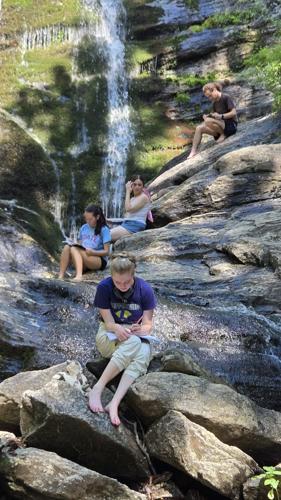
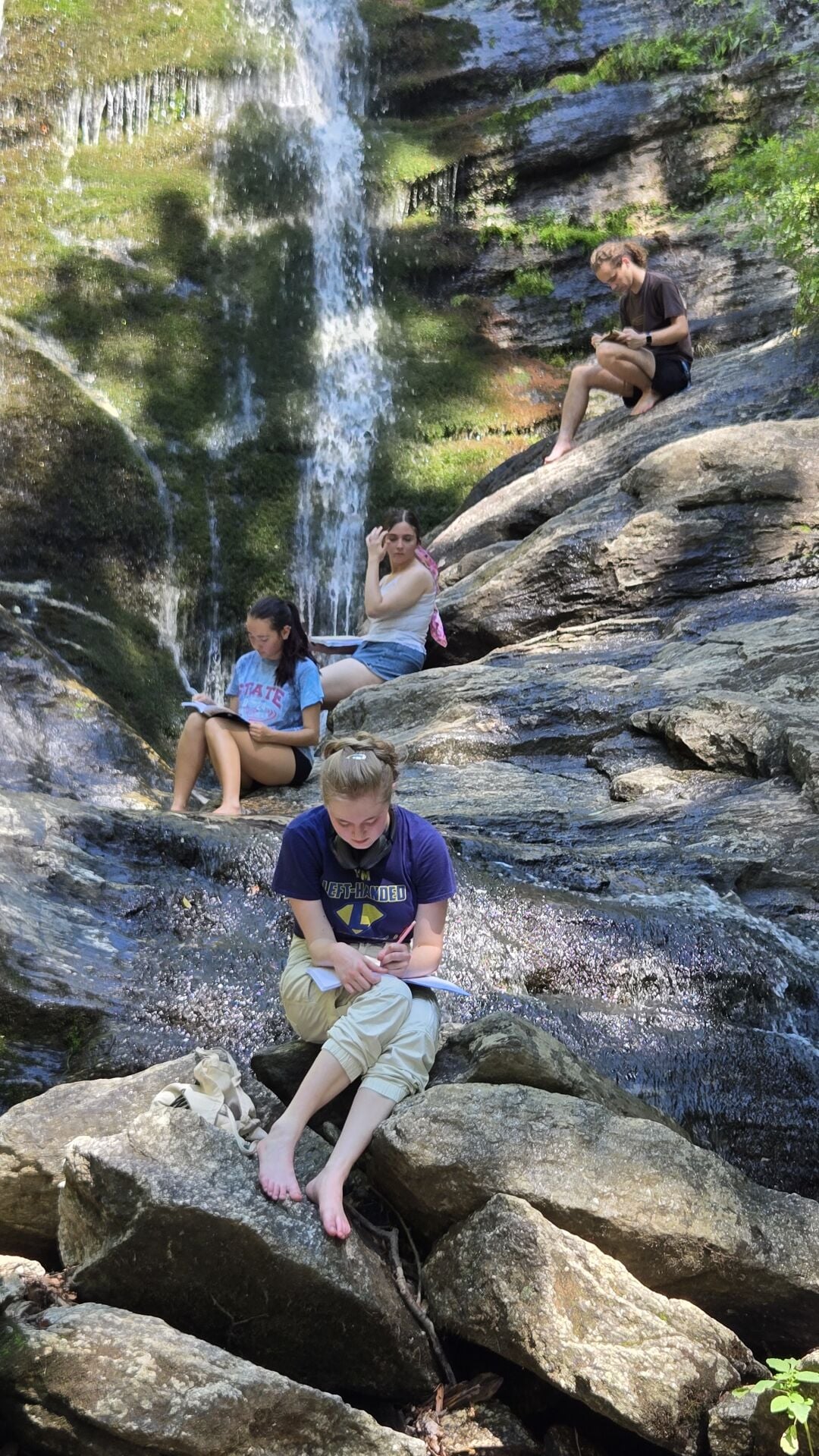
On the first friday of the Summer Research & Innovation Program, students in the Mapping Folklore Across Western North Carolina course take a pencil and notebook to Tom’s Creek for a writing retreat. From bottom: Lydia Dean, Julie Hayes, Gabby Hardee, and Taki Cook.
Burke County has no shortage of folklore, stories passed down through generations, promising revelations on the Brown Mountain Lights and what really happened the night Frankie Silver allegedly murdered her husband with an ax.
On the first friday of the Summer Research & Innovation Program, students in the Mapping Folklore Across Western North Carolina course take a pencil and notebook to Tom’s Creek for a writing retreat. From bottom: Lydia Dean, Julie Hayes, Gabby Hardee, and Taki Cook.
Photos FOR THE PAPER
To kick the summer off, a group of rising seniors at the North Carolina School of Science and Mathematics Morganton dug into the oral traditions of Burke County as part of their residential Summer Research & Innovation Program, Mapping Folklore Across Western North Carolina.
The program consists of two weeks where six students — one from the Morganton campus and five from the Durham campus — spend the first week researching the region and identifying sources.
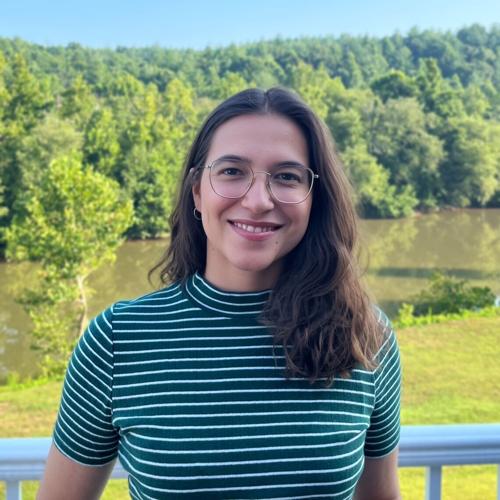
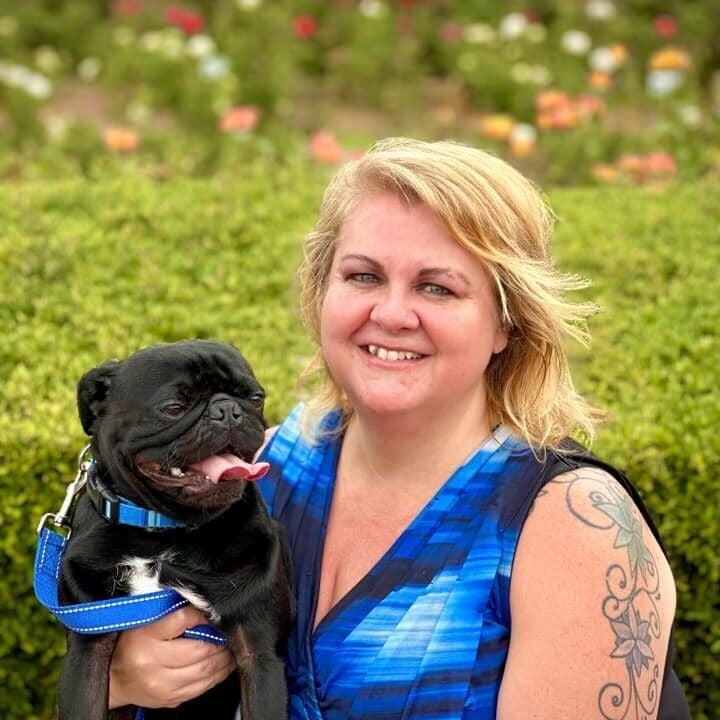
Christy Davenport
FOR THE PAPER
“Folklore typically was a way in which, for a lack of a better term at the time, peasants shared stories and explained things,” NCSSM Humanities Instructor and historian Christy Davenport said. “You would see this in rural environments … where there may not be as much reach, back in the day, with technology and stuff like that, (when) these stories were developed.”
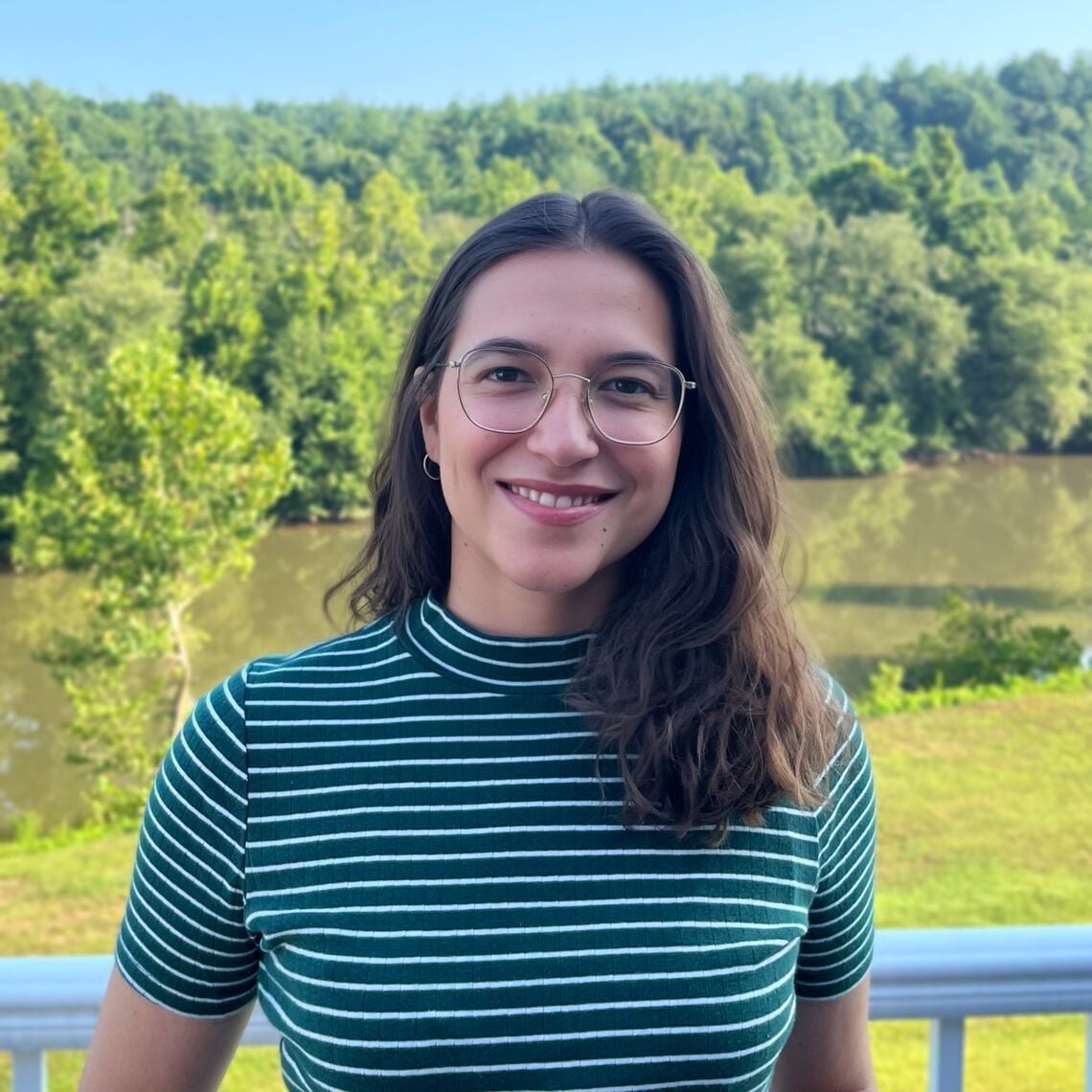
“Also, they get an understanding of the genre itself, because folklore always comes with a moral message,” added Meltem Şafak, instructor of humanities and literary studies at NCSSM. “Sometimes, maybe, there is not a tangible event, but there is an ongoing story.”
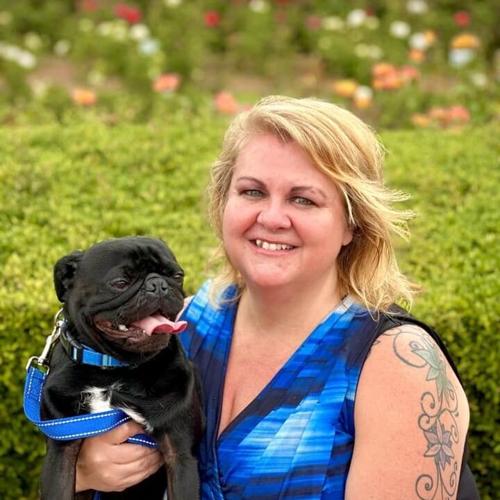
Meltem Şafak
FOR THE PAPER
“We allow them to think (about) why these stories are still alive, what kind of message is intended by them, and what needs society had, maybe, so they continued spreading these stories,” Şafak continued.
Following research and multiple field trips in the first week, students collected their findings in a research paper or a creative writing project, which they presented at a panel on the second Friday.
“Several (from previous years) have been published in different little pieces, which is always nice to see them keep editing at that and turn it into something that can be shared with a wider audience,” Davenport said.
THE STORY BEHIND THE PROGRAM
Folklore studies require a mix of history and literature, Davenport explained, which she and Şafak each teach respectively.
The program is in its third year, taught each summer by the duo, who came to Western North Carolina for their roles at NCSSM and had no prior knowledge of the stories in the area.
Davenport said she is originally from the coast of North Carolina, while Şafak hails from Turkey. Both came with an extensive knowledge of the folklore from their hometowns.
“We realized there are so many overlaps when it comes to superstitions and folklore in general,” Şafak said, explaining that she and Davenport bonded over their mutual interest in the area’s mountain stories and supernatural events after discovering they both had the same books covering the topics.
While the students are allowed to focus on folklore outside of Western North Carolina, the pair of teachers wanted Burke to be the main focus, with one of the field trips including a visit to the Burke County Public Library in Morganton to review primary sources.
“So many things are digitized, our students get access to everything through certain databases,” Şafak said. “This is really a great opportunity for them to really go and touch those archival materials. They don’t really know what ‘archive’ means until they really see that (North Carolina) room in the library and how well documented those resources are.”
Since the program launched, students have turned in papers, stories, retellings, children’s songs, and, this year, a dual narrative about Silver, the only woman ever hanged in Burke County after murdering her husband with an ax.
“It is not really set in stone, what really transpired,” Şafak said. “One of our students is actually playing with that and creating a dual narrative of a schizophrenic narrator telling Frankie Silver’s story. She actually had no idea about this historical phenomenon and pulled all her primary sources from the Burke County Public Library and turned it into her final project for this program.”
As the students brought their projects to present on Friday, they found their own ways to contribute to Burke’s story, equipped with references, research, and just a little superstition.
Keep it Clean. Please avoid obscene, vulgar, lewd,
racist or sexually-oriented language. PLEASE TURN OFF YOUR CAPS LOCK. Don't Threaten. Threats of harming another
person will not be tolerated. Be Truthful. Don't knowingly lie about anyone
or anything. Be Nice. No racism, sexism or any sort of -ism
that is degrading to another person. Be Proactive. Use the 'Report' link on
each comment to let us know of abusive posts. Share with Us. We'd love to hear eyewitness
accounts, the history behind an article.



















(0) comments
Welcome to the discussion.
Log In
Keep it Clean. Please avoid obscene, vulgar, lewd, racist or sexually-oriented language.
PLEASE TURN OFF YOUR CAPS LOCK.
Don't Threaten. Threats of harming another person will not be tolerated.
Be Truthful. Don't knowingly lie about anyone or anything.
Be Nice. No racism, sexism or any sort of -ism that is degrading to another person.
Be Proactive. Use the 'Report' link on each comment to let us know of abusive posts.
Share with Us. We'd love to hear eyewitness accounts, the history behind an article.