



Editor’s note: This is the last in a two-part series about the recent Burke County Trails Summit from Burke River Trail Executive Director Beth Heile.
The Burke County Trail Partners recently met in the Burke County Commissioner Room. I organized the meeting and Burke County was kind enough to host in their space.
The following is the conclusion of the summary of the meeting:
NEW STATE SUPPORT & LOCAL PARTNERSHIPS
North Carolina has recognized that trails are more than a recreational amenity — they are critical infrastructure for tourism, health, transportation, and economic development.
That’s why recent legislation and state programs have prioritized funding for trails, especially those that connect communities.
Through the advocacy work of the Great Trails State Coalition, North Carolina has made historic investments in trails in recent years: $29.15 million for the Complete the Trails Fund in 2021, $2 million for DOT feasibility studies in 2022, $25 million for the new Great Trails State Program in 2023, plus an additional $5 million for completing state trails. In 2024, the state further cemented its commitment by officially designating the third Saturday in October as Great Trails State Day, an annual celebration recognizing the value of trails statewide.
What makes these investments even more effective is the role of local nonprofits. Organizations like the Burke River Trail Association and Foothills Conservancy are not only writing grants and coordinating volunteers but also providing matching funds and project management — allowing public dollars to go further.
With these new funding opportunities and strong legislative momentum, Burke County and its municipalities are well-positioned to build on this support and bring meaningful, community-driven trail projects to life.
A perfect example was shared by Sarah Chabaane, Burke County trails coordinator: the partnership between Burke County, Friends of Fonta Flora State Trail, and OVNCST-Friends (Overmountain Victory National Historic Trail NC Friends), to split the cost of the Canal Bridge sidewalk project.
IMPROVING SAFETY WITH NEW TRAIL MARKERS
After years of recognizing the need for a faster, more accurate way to locate people in distress on trails and waterways, Burke County Emergency Services turned that vision into reality with a $50,000 grant from Duke Energy.
Last year, the waterway marker system was deployed; this year, hiking trail markers are being rolled out.
At the summit, John Hood, deputy director of Burke County Emergency Services, shared the blue diamond trail markers that will be installed on trails and asked land managers to provide a two-letter code for their area (for example, “VL” for Valdese Lakeside Park), along with the number of markers needed.
BCES will handle installation and use GPS to record each marker’s exact location for rescue purposes. Each marker will include a unique identifier — much like a highway mile marker — and locations will be mapped and distributed to regional 911 centers.
This initiative is a powerful example of how public safety and outdoor recreation can work together to improve both visitor experience and emergency response.
Attendees also discussed the responsibility of the land managers to promote trail safety and possibly a trail difficulty rating system.
NEW POLICY OPPORTUNITY: TRAILS IN NCDOT RIGHT OF WAY
One of the most exciting developments in statewide trail policy is a long-awaited shift in how trails can be built within NCDOT right of way.
Until now, trail construction in these corridors has been limited to costly, engineered sidewalks and side paths — often delaying projects or putting them out of reach for local communities.
Three summit attendees, Shane Prisby, Smith Raynor, and Palmer McIntyre, were part of the policy working group and shared the details.
Thanks to consistent advocacy from the Great Trails State Coalition and local trail partners across North Carolina, NCDOT has released a first draft of new guidelines that would allow natural surface trails within state highway ROW.
This change represents a major step forward — enabling faster, more affordable trail connections while still meeting safety and access standards. The draft policy is the result of close collaboration among NCDOT, NC State Parks, FHWA, and trail advocates, and reflects a growing recognition that trails are essential transportation infrastructure.
HONORING HISTORY THROUGH TRAILS
At the Summit, representatives from the Overmountain Victory Trail — Brian Oliver, Bryant Lindsey and Linda Lindsey — provided an update on their work to prepare for the upcoming America 250 commemoration.
As a National Historic Trail, the Overmountain Victory Trail traces the route of patriot militia forces during the Revolutionary War and plays a powerful role in connecting our landscapes to our shared history.
In anticipation of the 250th anniversary in 2026, the trail partners are working closely with local, state, and federal agencies to highlight these historic connections, engage communities, and encourage more people to explore the stories hidden along North Carolina’s trails.
Led by Ed Phillips, Burke County has an America 250 NC Committee to help prepare for the United States’ 250th anniversary in 2026. The committee is responsible for the blue America 250 banners placed in downtowns and at public schools.
MOVING FORWARD IN OUTDOOR RECREATION
At the end of the meeting, attendees left with new strategies and to-do lists that will continue to move Burke County forward in outdoor recreation.
“I used to get stressed when planning this event — especially the first one — thinking we needed a jam-packed, highly structured agenda,” I told the group. “But after that initial gathering, we all realized that simply getting together was reason enough. The connections and momentum built here are exactly what move trails forward.”
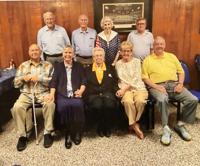
Those attending the summit included Linda Lindsey (OVNCST-Friends), Bryant Lindsey (OVNCST-Friends), Brian Oliver (OVNCST-Friends), Jeffrey Allison (National Park Service), Smith Raynor (N.C. State Trails), Lance Huss (South Mountains State Park), Nora Coffey (Lake James State Park), Shane Prisby (Foothills Conservancy of N.C.), Bryan Fish (City of Morganton), Stephen Fox (City of Morganton), David Andersen (Town of Valdese), Sarah Chabaane (Burke County), Bradley Kirkley (Burke County), Alan Glines (Burke County), Bradley Kirkley (Burke County), Beth Heile (Burke River Trail Association), Brett Hartis (Duke Energy), Ed Phillips (Discover Burke County), Melissa Patton (Carolina Land and Lakes), Palmer McIntyre (Great Trails State Coalition), Grant Buckner (Catawba Riverkeeper), Ellie Riggs (Catawba Riverkeeper), Tyler Hickman (N.C. DEQ), John Hood (Burke County Emergency Services), James Robinson (Burke County Emergency Services), and Dominic Minor (Burke County Emergency Services).















(0) comments
Welcome to the discussion.
Log In
Keep it Clean. Please avoid obscene, vulgar, lewd, racist or sexually-oriented language.
PLEASE TURN OFF YOUR CAPS LOCK.
Don't Threaten. Threats of harming another person will not be tolerated.
Be Truthful. Don't knowingly lie about anyone or anything.
Be Nice. No racism, sexism or any sort of -ism that is degrading to another person.
Be Proactive. Use the 'Report' link on each comment to let us know of abusive posts.
Share with Us. We'd love to hear eyewitness accounts, the history behind an article.