



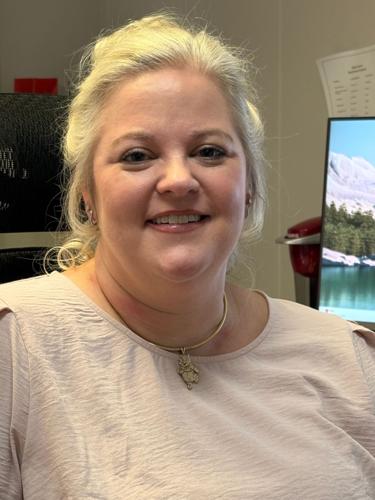



The atmosphere at the Burke County Department of Social Services right now is understandably somewhat tense.
Like other such offices across the country, Burke is sitting on pins and needles while the federal government decides how drastically it will slash funding to social programs like Medicaid and SNAP (Supplemental Nutrition Assistance Program).
A sweeping, GOP-backed bill — part of the Trump Administration’s spending and tax reform plan — could jeopardize the health care of 28,870 Burke County residents — 35% of the county’s population, according to Burke County officials.
Another 11,396 county residents — 12% of the populace — could lose their nutrition benefits.
The bill would also essentially undo the state’s bipartisan Affordable Care Act Medicaid expansion approved last year, through which an additional 6,724 Burke residents were approved for benefits.
Nine states, including North Carolina, have trigger laws in place that would eliminate expansion programs if federal funding were lost.
Burke DSS Director Korey Fisher-Wellman said those losses would lead to a laundry list of societal and economic ills and expose vulnerable populations to even more risk than they already face.
“If you take politics out of it, what is lost in all this is you’re going to pay the money one way or another, whether that’s in increased child welfare costs or unpaid health claims at the emergency department,” Fisher-Wellman said. “You’re going to create a strain on society that’s going to have to be paid, whether we do it through these programs that are in place or not.”
The bill includes $900 billion in spending cuts over the next decade, with many of them directly affecting Medicaid.
Nationwide, 8.6 million Americans could lose their health insurance, including 650,000 in North Carolina. The SNAP program could be trimmed by as much as $230 billion over 10 years, affecting 1.4 million North Carolinians.
The House passed the legislation by a narrow 217-215 margin in February. The Senate approved an amended version last month.
The two versions would have to be reconciled in committee before the bill can pass. Republican leaders have said they hope to push it through by July 4.
The outcome nationally and locally is uncertain, but some deep cuts seem inevitable.
“I don’t think anyone knows for sure because it all depends on what happens with the federal budget,” Fisher-Wellman said. “I do think there is hope that as these things are talked about, there is enough pressure that some of these things will be avoided, and they don’t cut everything.”
Fisher-Wellman and DSS Finance Director Amanda Grady listed an exhaustive roster of systemic problems that could result from funding cuts. The effects roll downhill “like a snowball,” Grady said.
If people lose preventative health care, costs increase down the line as illnesses grow more serious.
“If you have Medicaid you can go to a preventative doctor appointment and stay on top of things,” Fisher-Wellman said. “That’s a lot cheaper on society than if you don’t have health insurance and you wait until you have stage-4 renal cancer and show up at the ED, and the cost is astronomical.
“Prevention is a lot cheaper than costs down the road.”
Families who lose benefits would face higher economic stress, leading to increased rates of neglect and abuse, which in turn would put more pressure on an already taxed-to-the-limit foster care program, Fisher-Wellman said.
Those who require mental-health and substance-use services could lose them, leading to higher rates of homelessness and criminal activity, making things tougher for law enforcement.
Stricter work requirements on recipients — the bill would likely impose biannual recertification, doubling the current workload for DSS workers — would strain offices like Burke County’s.
Health care providers would lose revenue, which might necessitate staff cuts. Statewide, Medicaid pays out $30 billion annually in health care costs.
In addition to decreasing access to food, reductions to nutrition assistance programs would also have a negative economic effect, Grady added.
“It hurts more than just the person who is on the program, because it stimulates the economy,” she said. “Last month, I think we did about $1.8 million in SNAP benefits. That pays the grocery stores and their employees, that pays the bills. It’s going to affect more than just the participant.”
The trickle-down effects of cuts at the national level would cause states to bear more of the load, and they, in turn, would pass the expense down to the local level.
“DSS is like a quasi-state department in that we’re performing a state function at a county level,” Fisher-Wellman said. “Most of our money is federal and state money, with about a third of our budget coming from the county. But there’s only so much money to go around. You’ve still got to provide EMS and public health and other services.
“It will be a challenge for sure at the local level.”
For now, DSS personnel can only wait to find out just how much of a challenge they will face.
























(0) comments
Welcome to the discussion.
Log In
Keep it Clean. Please avoid obscene, vulgar, lewd, racist or sexually-oriented language.
PLEASE TURN OFF YOUR CAPS LOCK.
Don't Threaten. Threats of harming another person will not be tolerated.
Be Truthful. Don't knowingly lie about anyone or anything.
Be Nice. No racism, sexism or any sort of -ism that is degrading to another person.
Be Proactive. Use the 'Report' link on each comment to let us know of abusive posts.
Share with Us. We'd love to hear eyewitness accounts, the history behind an article.