

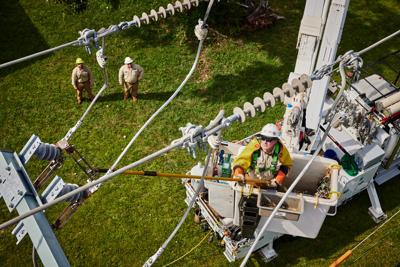

DUKE ENERGY PUBLIC HEARING
Duke Energy customers in Burke County will have a chance to speak regarding the company’s proposed 16% rate increase.
DATE: Tuesday, April 28
TIME: 7 p.m.
WHERE: Burke County Courthouse, 201 S. Green St.
A proposed Duke Energy rate increase could raise electric bills for thousands of Burke County residents, but not everyone would be affected the same way.
The difference depends on who supplies your power. While some customers in the county receive service from Duke Energy and could be affected by the pending case, others are served by municipal systems in Morganton and Drexel or by Rutherford Electric Membership Corporation, which are not directly tied to Duke’s current retail rate request.
Duke Energy Carolinas serves Valdese, Rutherford College, Connelly Springs, and Hildebran.
The company is seeking approval from the North Carolina Utilities Commission to raise rates by 16% over a two-year period beginning Jan. 1, 2027. Next Tuesday, Western North Carolina residents, including about 17,500 Burke County customers, will have an opportunity to comment on the proposal at a public hearing at the Burke County Courthouse, one of the four locations across the state hosting hearings on the request.
If approved, a typical Duke Energy Carolinas residential customer would see their monthly bill increase next year from $144.98 to $162.20, followed on Jan. 1, 2028, by an increase, which would bring the monthly rate from $162.20 to $168.54, according to Bill Norton, principal communications manager for Duke.
“We’re investing in critical upgrades to improve reliability, harden the grid against storms, and support North Carolina’s growth even while we do everything we can to keep rates as low as possible for our customers,” Norton stated.
Duke Carolinas last requested a base rate increase in January 2023, which resulted in a 14.7% increase over three years. Since, Duke has expanded self-healing technology that automatically detects outages and reroutes power in seconds to restore power faster. In 2025, the technology helped avoid nearly 1.3 million customer outages in North Carolina and saved nearly 3 million hours of total outage time, according to Norton.
“We are sensitive to the financial pressures our customers face and know there is never a good time to request a rate review — we do not ask for this increase lightly,” Norton stated. “Any request must strike the right balance between investing in the future and keeping costs low for our customers. We are committed to helping customers who struggle to pay for basic needs with a variety of programs and tools to reduce their energy costs and keep their power on.”
MORGANTON AND DREXEL SERVED BY PUBLIC POWER
Morganton and Drexel are among more than 70 North Carolina communities served through public power networks managed by ElectriCities of North Carolina, which helps municipal systems manage power supply, legislative issues, and business services.
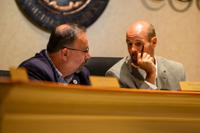
During a recent Morganton City Council meeting, elected officials approved two sales agreements with ElectriCities of North Carolina. Jay Morrison, the organization’s chief legal officer, said their public power members serve about 1.6 million people statewide.
“Public power in the state is less expensive, fortunately, than Duke and the co-ops overall,” Morrison said. “In Agency 1, all 19 of our members are the lowest-cost providers in their areas.”
Morrison credited long-term accessibility and ownership of nuclear resources, including a 37% share of the Catawba Nuclear Station, for helping keep costs stable. The agency’s current power portfolio is approximately 94% nuclear, 5% natural gas, and 1% hydro and other renewables, according to Morrison.
Though costs for public power are lower than Duke Energy and other co-ops such as Rutherford Electric, future increases are still possible because of inflation and changing market conditions.
“We expect, with inflation, prices will start going up,” Morrison said. “But we’ve had a very good history to date.”
In Drexel, a 6% electric increase is proposed for customers, bringing the average monthly bill from $135 to $143. An analysis from ElectriCities recommended a 4% increase, but ultimately municipalities have the authority to set their own rates.
Morganton City Manager Sally Sandy said she hasn’t had her first meeting with the electric department yet for this year’s budget, so she doesn’t yet know whether the rate will increase.
“One of the things that we strive to do is to set our rates, which we control, in a way that is as low as possible, but still allows us to invest in our system,” Sandy said. “Duke, they’re looking at a much larger system.”
RUTHERFORD ELECTRIC NOT CONSIDERING INCREASE
Rutherford Electric Membership Corporation, which serves about 14,000 consumers in Burke County, is not currently considering a rate increase, according to General Manager Jeffrey Brittain.
Though Duke Energy is a part of the corporation’s power supply mix, Rutherford Electric’s costs are not tied to Duke’s retail rate case currently being considered by the North Carolina Utility Commission, Brittain said.
The same can be applied to the other 10 counties Rutherford Electric serves, totaling more than 67,000 consumers throughout the western piedmont and mountains.

















(0) comments
Welcome to the discussion.
Log In
Keep it Clean. Please avoid obscene, vulgar, lewd, racist or sexually-oriented language.
PLEASE TURN OFF YOUR CAPS LOCK.
Don't Threaten. Threats of harming another person will not be tolerated.
Be Truthful. Don't knowingly lie about anyone or anything.
Be Nice. No racism, sexism or any sort of -ism that is degrading to another person.
Be Proactive. Use the 'Report' link on each comment to let us know of abusive posts.
Share with Us. We'd love to hear eyewitness accounts, the history behind an article.