

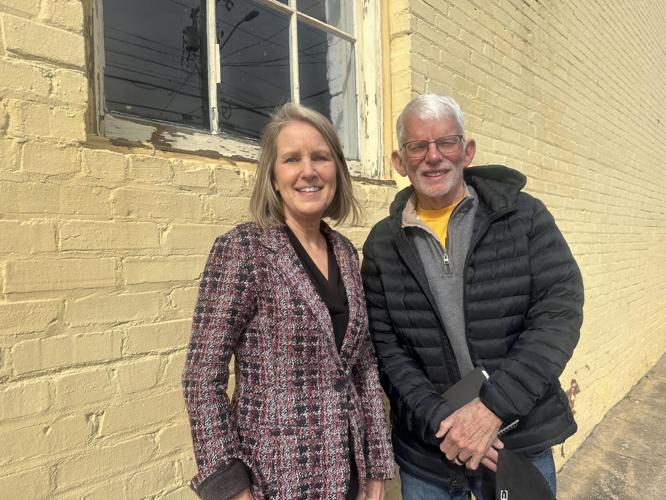

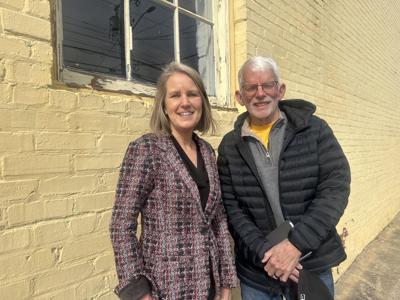
A 40-mile trail designed to connect all nine Burke County towns is beginning to take shape, with 8 miles completed and another 4 expected by the end of the year.
When Beth Heile started working on the idea of the Burke River Trail in 2018, she knew it would take years to move from vision to reality. About eight years later, that effort is showing progress.
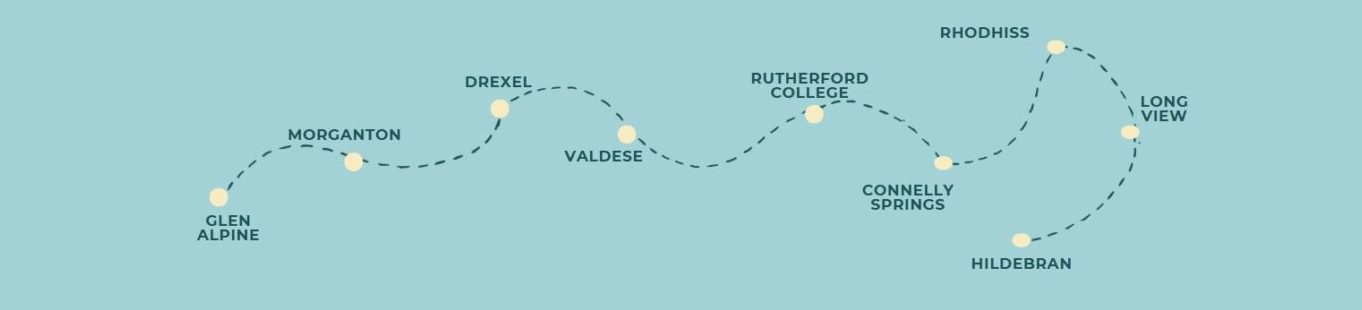
The 40-mile trail was first proposed by Rep. Hugh Blackwell as a way to improve both economic development and quality of life. So far, the trail exists in disconnected segments, with long-term plans to link them into one continuous corridor. The trail will follow alongside the Catawba River, connecting downtowns, parks, and schools.
The completed sections include natural surface portions such as the 2-mile Valdese Greenway, 4-mile Catawba River Greenway, half-mile section near Draughn High School, and sidewalk connections through several downtowns and developments, according to Heile.
The next 4 miles expected to be completed by year’s end include an extension of the Catawba River Greenway in Morganton and an expansion of the Valdese Greenway that will stretch across Wildcat Way and continue east toward the Valdese Bluffs neighborhood.
Building a trail is a multi-year process that involves working with landowners, hearing concerns, and completing legal and survey work.
“Even with willing landowners, the legal and survey work alone can take a year,” Heile said. “This is not something that happens overnight.”
After the vision was born in 2018, the Western Piedmont Council of Governments began a feasibility study in 2020 to assess how a trail could connect all nine towns. Heile began volunteering to get towns and landowners engaged and officially formed the Burke River Trail Association as a nonprofit organization in 2021.
TRAILS AS AN ECONOMIC DRIVER
Heile said the trail has piqued the interest of developers who want to incorporate it into future projects.
An 11-acre owner on Malcolm Boulevard in Rutherford College told Heile that the trail made them consider housing and storefronts along the corridor. The developer of the Valdese Bluffs housing development also advocated for the trail to come through the property as an amenity.
“When people see the trail as an amenity, it changes how they think about development,” Heile said. “It helps protect space before it’s gone.”

Drexel Town Manager Bill Carroll said walkability and connectivity to downtown areas have become more popular, especially for younger generations.
“I’ve always liked the idea of connecting towns together through walkable networks,” Carroll said. “It’s hard to do. It takes a lot of effort and a lot of cooperation.”
On Burns Street, 12 condos are planned in Drexel, and Carroll said residents will benefit from proximity to the trail corridor.
QUESTIONS AND concerns
The Burke River Trail Association has also faced questioning from some community members, including questions about projects the nonprofit has helped manage.
Former Glen Alpine Alderman Jim Frady raised concerns about the development of the Glen Alpine Downtown Park, particularly regarding construction decisions and fundraising after a playground was removed from the plans.
“The board was sold the idea that the grants, plus town matching, was ample money to complete the initial plan,” Frady said. “Many of us are now questioning where the money went.”
Heile explained that the BRTA did not receive the $180,000 North Carolina Parks and Recreation Trust Fund Grant that was needed to complete the park. Even without the playground, Heile said fundraising was vital to complete the amenities that the park does have.
The contractor for the park project was chosen without a bid process, something else that didn’t sit well with the former alderman. A contractor completed the preliminary grading for free and took the dirt for his own use as part of the deal.
Frady said he and others in the community were also critical of funds being used to create a new park instead of improving the existing Simpson Field.
When asked about his concerns, Heile said the state grant designated for the project could only be used for a downtown park site, and the town chose to move forward without the playground due to safety concerns near railroad tracks.
As a nonprofit, BRTA is not required to follow the same procurement process as local governments. Hiring decisions are made by the BRTA board, she said.
Heile emphasized that the organization does not profit from grant writing.
“We have not made any money off this project,” Heile said. “We’re putting more into it.”
The Burke River Trail Association contributed $49,500 toward completing the $255,670 park, which opened in November 2025 with a picnic shelter, restrooms, a walking loop, and paved parking.
Others have wondered why the Burke River Trail is being marketed as a reality before its completion. Heile countered that branding is an important aspect of creating a trail, pointing to the Mountains-to-Sea State Trail. After over 40 years of work, the statewide trail has not been fully completed yet.
“It’s to get the brand out there, to get the people, the grassroots interested, telling their elected officials that they want a trail,” Heile said.
SUPPORTING SMALL TOWN VISIONS
Heile said the organization has become about more than putting miles down. It’s helping towns with project management, fundraising, and connections to state agencies.
“It’s always been for economic development and quality of life,” Heile said.
In Drexel, Heile has supported a stained-glass public art project led by community member Dan Hoyle. The project, called “A Community of Hands,” will place seven stained glass panels throughout the downtown park.
“I knew how to create the art, but I didn’t know how to navigate the logistics of a public art project,” Hoyle said. “Burke River Trail helped with the permissions, signage design, and coordination with the town.”
Heile is also assisting with a redevelopment project in Rhodhiss that aims to transform an old mill into apartments and new businesses.
Each town has a different vision, Heile said, and her role is to help connect small towns with agencies such as NCDOT, the Wildlife Resources Commission, and statewide trail and commerce partners.
“Sitting and wanting doesn’t make it happen,” Heile said. “You have to go out and make the contacts and talk to people.”
Hoyle said the long-term perspective is what matters most.
“This is about looking 15 or 25 years down the road,” Hoyle said. “It’s not just what we see today, but what this community can become.”
While some residents remain hesitant, Heile said the goal is still the same.
“We just want to help Burke County be better.”
















(0) comments
Welcome to the discussion.
Log In
Keep it Clean. Please avoid obscene, vulgar, lewd, racist or sexually-oriented language.
PLEASE TURN OFF YOUR CAPS LOCK.
Don't Threaten. Threats of harming another person will not be tolerated.
Be Truthful. Don't knowingly lie about anyone or anything.
Be Nice. No racism, sexism or any sort of -ism that is degrading to another person.
Be Proactive. Use the 'Report' link on each comment to let us know of abusive posts.
Share with Us. We'd love to hear eyewitness accounts, the history behind an article.