

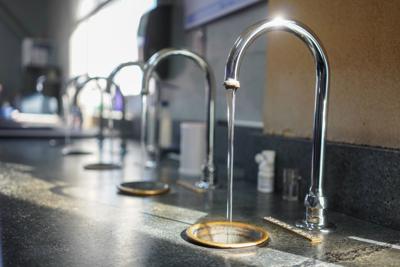

Gov. Josh Stein recently announced $215 million for drinking water and wastewater resiliency projects throughout the state. Of the recipients, Morganton, Drexel, and Valdese received nearly $18 million combined to strengthen infrastructure post Hurricane Helene.
About $196 million of the funds were awarded to communities that experienced significant infrastructure damage from Hurricane Helene. The funding spreads across 66 projects in 26 counties.
“People need to have access to clean, reliable water,” Stein said in the announcement. “These investments will help rebuild infrastructure more resilient so families can count on safe water, especially when disaster strikes.”
In Morganton, the $8 million awarded replaces an earlier allotment of $10 million, which was allotted for the interconnection project with Valdese and Drexel. Because Valdese did not receive funding for the project, the municipalities agreed to instead focus on their individual infrastructure projects.
Morganton City Manager Sally Sandy said projects will include upgrades to the city’s chemical feed system, which injects liquid or dry chemicals into water to treat issues such as pH imbalance, bacteria, iron, and corrosion. The system is essential for disinfection and purification.
More upgrades are also planned for the city’s Supervisory Control and Data Acquisition water system, which allows the water plant to communicate with stations and tanks within the city’s distribution system, Sandy said.
“These are the projects that, based on Helene and what we experienced, help us add more resiliency to our water system,” Sandy said.
Drexel has received nearly $6 million for improvements to the town’s drinking water pump station, according to Town Manager Bill Carroll. The funding replaced two previous loans, totaling about $10 million, that the town returned after the water interconnection project was abandoned.
The town’s $5 million for sewer pump station and line rehabilitation, which was awarded back in the fall, is still active, Carroll said.
The town has preliminary design and cost estimates for the projects, and selected McGill Associates to assist with all of its Helene disaster-related funding, Carroll said. If construction hasn’t begun within the next year, he said he hopes to at least have a better idea of when work will begin. Carroll added that he’s still working on a formal contract with McGill, with permission to execute from the board of aldermen.
Carroll added that the funding is specifically for the projects outlined in the awards and can’t be used to replace other water lines and sewer lines throughout the town.
In Valdese, $4 million will be used to renovate the town’s existing raw water pump station at the town’s water treatment plant along Lake Rhodhiss, according to Town Manager Todd Herms. Planning and engineering for the project are expected to begin this summer.
“The availability of Helene funding for Valdese’s utility infrastructure is very helpful,” Herms said. “It allows us to strengthen the resiliency of our systems while also helping keep operating costs, and ultimately rates, at a more affordable level.”
The process is complex and requires multiple rounds of regulatory approvals, Herms added, saying it would be reasonable to anticipate construction beginning in late 2027 or early 2028.
“We appreciate the Governor and NCDEQ working with us and being able to allocate this additional funding to much-needed projects for a small utility in Western North Carolina,” Carroll said. “They have been very, very willing to work with us and help us accomplish our goals, while also meeting the goals of the state in investing in utilities.”
The State Water Infrastructure Authority approved the awards during its April 15-16 meeting, according to Stein’s office. The projects address some of the state’s most pressing needs: repairing vital water systems that were damaged by Helene to make them less vulnerable to future storms; conducting studies of dangerous forever chemicals such as PFAS; and replacing lead pipes that can cause numerous health issues, said Reid Wilson, secretary of the North Carolina Department of Environmental Quality.
“Every dollar will support the health and economic vitality of our communities,” Wilson said.























(0) comments
Welcome to the discussion.
Log In
Keep it Clean. Please avoid obscene, vulgar, lewd, racist or sexually-oriented language.
PLEASE TURN OFF YOUR CAPS LOCK.
Don't Threaten. Threats of harming another person will not be tolerated.
Be Truthful. Don't knowingly lie about anyone or anything.
Be Nice. No racism, sexism or any sort of -ism that is degrading to another person.
Be Proactive. Use the 'Report' link on each comment to let us know of abusive posts.
Share with Us. We'd love to hear eyewitness accounts, the history behind an article.