








Editor’s Note: This is the first in a two-part series on changes to the local health care landscape. This article focuses on Medicare and Medicaid.
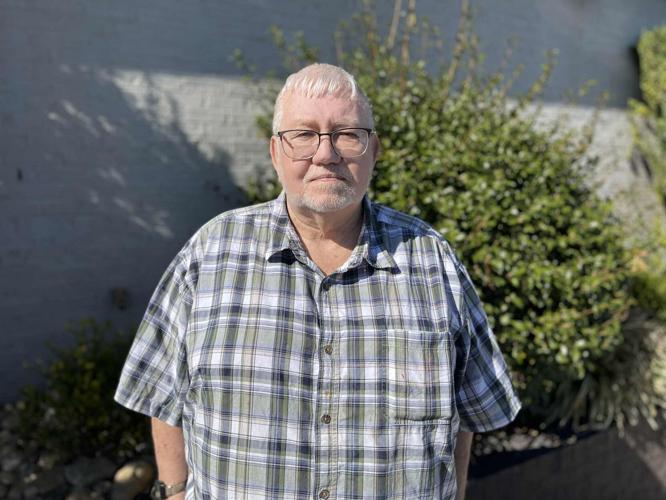
The next time Tom Andrews visits his doctor, he’ll ask whether cheaper alternatives for life-critical medications are available. If not, the 69-year-old will simply have to live without them — however long that is.
He takes 11 different medications, ranging from insulin, used to regulate his blood sugar levels, to Repatha, which lowers fat in his blood due to a high risk of heart attack, stroke, and other heart problems. His wife, whom he married in 1974 and now uses a wheelchair, has 18 prescriptions.
Both rely on Medicare to cover their health insurance, with UnitedHealthcare as their provider. And while a one-month supply for his Tier 1 medications is fully covered, Tier 2 drugs require a $10 copay, and the deductible for other tiered medications will increase from $340 today to $520 in 2026. Repatha, for instance, is classified Tier 3, which means its cost will increase significantly.
“We’ve got about maybe $6,000 or $8,000 in savings,” the Avery County native said. “I tell you what. It’s rough.”
Health care costs are spiking this upcoming year because of three compounding issues, health care experts said. Those include: Congress failing to extend Affordable Care Act tax credits amid the longest federal government shutdown in American history; the North Carolina General Assembly remaining gridlocked over Medicaid funding more than 150 days past its budget deadline; and the slashing of Medicaid and Medicare.
If Burke County residents like Andrews can’t access affordable health coverage, they may have to completely forgo what is considered life-saving care.
Andrews and his wife spent roughly three decades working for Henredon Furniture in Morganton. Henredon is one of many furniture companies that have closed or left the foothills region since the 1990s and was affected in the early 2000s when local furniture production was replaced by imports that take advantage of cheaper labor and fewer regulations.
The local economy has struggled to rebound ever since, further set back by the recent devastation from Hurricane Helene in 2024.
Around the time employment in the furniture industry was being hollowed out, both Andrews and his wife went on disability: he in 2006, after two major back surgeries, and she following a heart attack. Difficult decisions lie ahead.
‘The biggest cut to our safety net in history’
According to Liz Fowler and Gerard Anderson, health policy scholars at Johns Hopkins University, these dramatic cost increases are largely due to a combination of cuts to Medicare and Medicaid as part of the GOP-led “One Big Beautiful Bill,” signed into law by President Donald Trump earlier this year, and the sunsetting of Affordable Care Act (ACA) tax credits.
Fowler has called it “the biggest cut to our social safety net in history.”
North Carolina residents buying insurance on the ACA marketplace can expect an average rate increase of nearly 28.6% in 2026, according to an Oct. 29 news release from the state’s Department of Insurance. Many healthy individuals who have enrolled in the past are expected to opt out of health insurance altogether if they can’t afford it.
“If hospitals start to see an increase in the number of uninsured people who aren’t able to pay their bills, they’re going to increase rates for other payers,” Fowler explained in a July interview for the Bloomberg School of Public Health. “The U.S. health system is like a balloon: When you squeeze one part of the balloon, the rest of the balloon stretches out.”
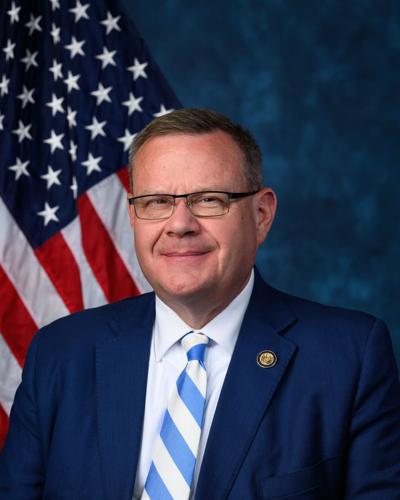
U.S. Rep. Tim Moore, a Republican whose constituents in Burke County include Andrews, voted for the One Big Beautiful Bill. However, he believes critics are misattributing skyrocketing health care costs to the federal piece of legislation, conflating it with the ACA tax credits expiring. Extension of these enhanced premium tax credits took center stage during the federal government shutdown and remains a priority for Democrats before the subsidies sunset at the end of the year.
“Americans are being reminded that the Affordable Care Act was never truly affordable as the COVID-era tax credits expire,” the former North Carolina Speaker of the House told The Paper during the 43-day shutdown. “Senate Democrats are holding hardworking Americans hostage for a short-term fix that fails to solve the long-term cost crisis created by Obamacare.”
According to an analysis from nonprofits Peterson Center on Healthcare and KFF, post-pandemic inflation, increased labor costs, hospital consolidations, increased prescription drug spending, and tariffs are also contributing to overall health care cost increases in 2026.
FAILURES AT THE STATE LEVEL
It doesn’t help that the North Carolina General Assembly has also failed to pass the 2025-27 state budget, participating in its own government standoff. The legislative body has blown past its July 1 deadline.
Republican legislators are in a stalemate with North Carolina Governor Josh Stein, a Democrat, over several key points. This includes competing proposals regarding the state’s Medicaid rebase — the cost to cover changes to the number of people enrolled in the program and provide care — and funding for a children’s hospital in Apex.
Burke’s population hovers around 88,000, with 28,762 of its residents enrolled in Medicaid; this means roughly a third of the county’s population is directly impacted by this governmental impasse.
In the meantime, the state’s Department of Health and Human Services (DHHS) is relying on a “mini budget” signed into law by Stein on August 6. The $600 million included to address Medicaid costs falls $319 million short of what DHHS officials claim is needed to fully fund Medicaid.
To adjust for this shortfall, health care providers are now being reimbursed by up to 10% less than they have been, DHHS officials said, effective Oct. 1.
These rate cuts may force providers — particularly those in rural areas like Burke County — to either turn away Medicaid patients or stop offering a medical service entirely. In turn, more families will go without health care coverage, which means when they do receive essential medical care and can’t pay, costs will inevitably be passed along to the rest of the payers within the broader health care ecosystem.
‘THOSE ARE LIFE-SAVING MEDICINES THEY NEED.’
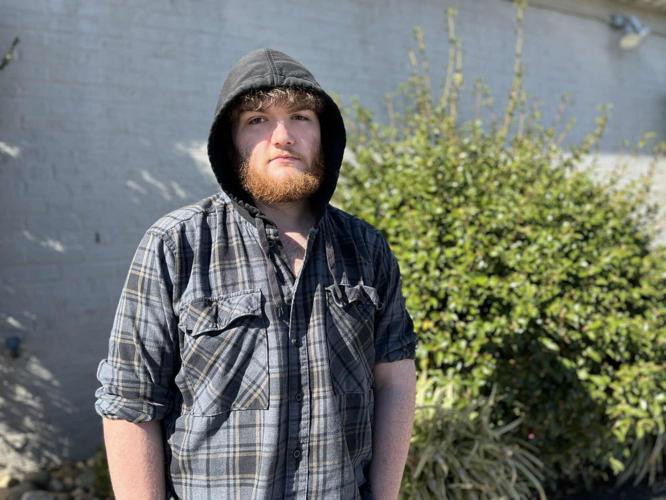
Calling it a “big money racket,” Andrews laments what the dysfunctional nature of the U.S. health care system foretells for his nephew, Chase Carswell. Like the younger members in many rural families in Southern Appalachia, Carswell assists his aunt and uncle with daily tasks and travel, helping where he can — likely, in part, out of economic necessity.
Similar dynamics are playing out all over the Burke, where U.S. Census data show 14.1% live below the poverty line.
Carswell sits firmly next to his uncle inside a booth at the Green Street Bojangles in Morganton. “Those are life-saving medicines they need,” he said from beneath a hood pulled tightly over wavy brown hair shielding his forehead.
The 20-year-old said he currently earns $13 an hour as a cashier at Murphy’s, a position Andrews noted his nephew secured after participating in four phone interviews and submitting between 75 and 100 applications for various jobs.
“Even if you made $20 an hour, you still couldn’t afford health insurance,” his concerned uncle said. “I got him some help with Medicaid, but that’s fixing to sink. I don’t know what we’re gonna do now.”





















(0) comments
Welcome to the discussion.
Log In
Keep it Clean. Please avoid obscene, vulgar, lewd, racist or sexually-oriented language.
PLEASE TURN OFF YOUR CAPS LOCK.
Don't Threaten. Threats of harming another person will not be tolerated.
Be Truthful. Don't knowingly lie about anyone or anything.
Be Nice. No racism, sexism or any sort of -ism that is degrading to another person.
Be Proactive. Use the 'Report' link on each comment to let us know of abusive posts.
Share with Us. We'd love to hear eyewitness accounts, the history behind an article.