

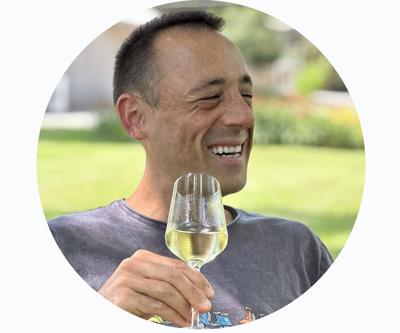
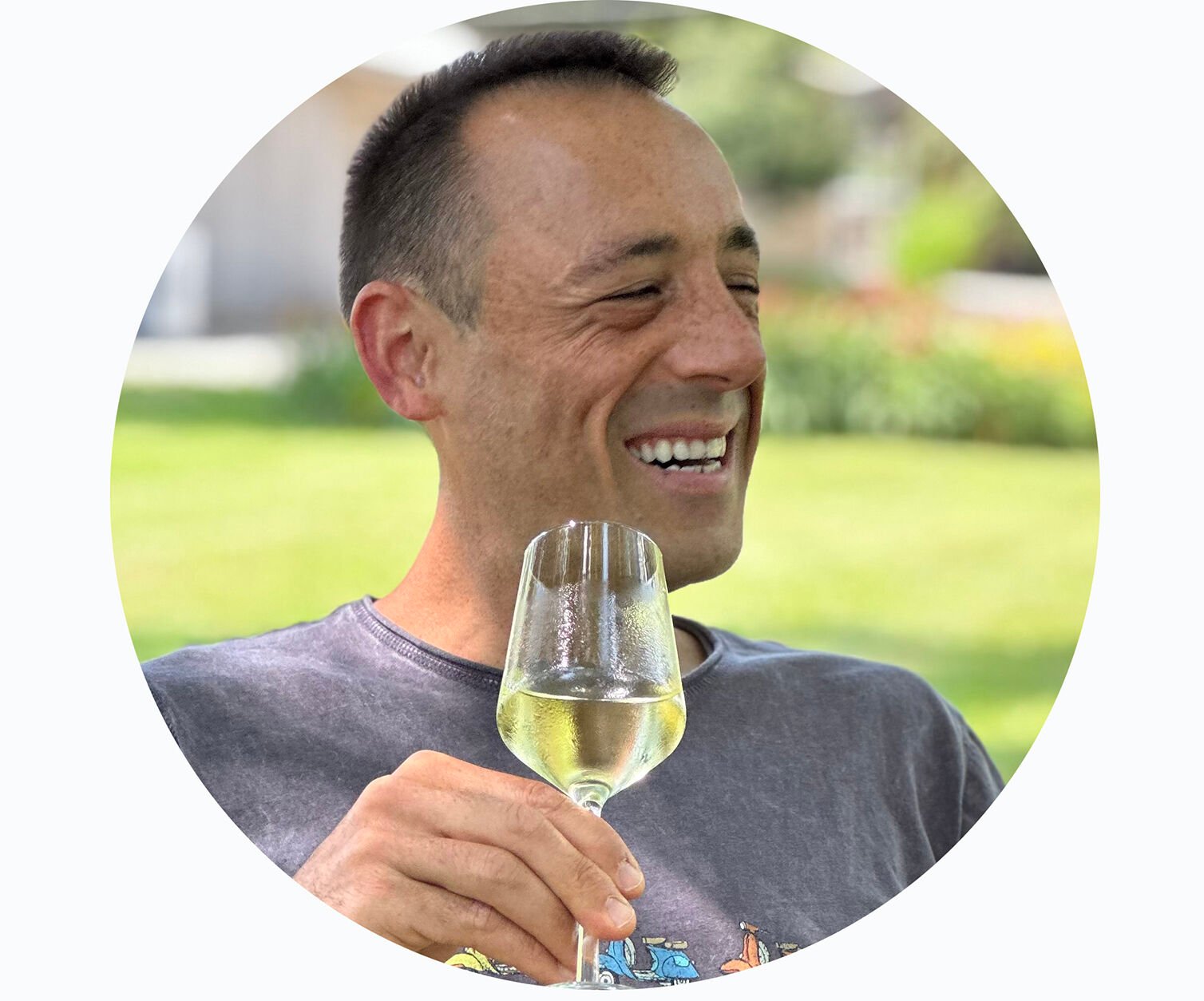
Welcome to 2025, y’all! I hope you closed out the old year and welcomed the new one with some really great bubbles in your glass. With a new year comes so many opportunities to start new journeys, set new goals, and take on new hobbies.
The next few months’ columns invite you to do just that with wine. It’s your short primer to starting a new hobby on the vine. As you’re reading the next couple of months, I’ll take you through my process of tasting a wine and leave you with some examples to seek out and try on your own
A caveat: tasting wine and drinking wine are entirely different activities with quite different aims.
As in nearly all human activities, wine has ritual. You’ve probably experienced parts of it when you’ve eaten out at a nice restaurant and the waiter pours a small sample in the glass of the person who ordered the wine. There are many versions of this ritual, but they all involve the “5 Ss.” So, let’s pretend I was just poured that sample of wine and dive in.
The first S is “SEE.” I take a moment and look at the wine. I mean really look at it. I first look for problems — is the wine bubbling when it’s not supposed to be? Probably don’t drink that. Is there debris floating in it? Is it cloudy? Is it an odd color? All of these things could be as the winemaker intended, but these wines are actually quite rare in the big world of wine.
After I’m satisfied that I’m not going to be drinking grape stems or little bits of cork, I look at the color of the wine. Is it intensely pigmented (I can’t see through it) or is it transparent? Wines (red and white and rose) pick up brown hues as they age, as do wines that are aged in oak barrels. Red wines lighter in color often (but not always: hello Nebbiolo) signal lighter body and lower tannins. Deeply colored wines are often the opposite (or they’ve had gross food coloring added to them!). They’re often higher in tannin, higher in alcohol, and fuller in body. Always? Of course not.
At this point in the ritual, I’m simply feeding my brain data points so that it can make predictions, which is really the brain’s favorite activity! As we move into swirling and smelling, we’re going to give our brains yet more data points, by which you will confirm or refute your mind’s initial assumptions based on sight alone. Oh, you’d never see me hold the glass up to a light source. I don’t like being “blinded by the light.” Just hold it over a white napkin laid flat on your table.
The second S is “SWIRL.” This one is quick and easy but of vital importance to tasting wine. There are dozens of aromas (what we smell) and flavors (what we taste) in wine that are stable when the wine is still. No matter how hard or for how long you keep your nose in the glass, you will never access them without swirling the glass and the wine in it. And I mean aggressively. When I swirl the wine after visually studying it, I am volatilizing those stable aromas and flavors. And I can now smell and taste them.
You probably do not believe me. But I want you to try this the next time you have a glass of wine in front of you. Pour the wine. Walk away for five minutes. And then smell it without moving the glass or liquid. Take note. Then really swirl the wine and stick your nose in again. You will be amazed at how many new things you smell that you simply could never have accessed without agitating the liquid. It’s chemistry: you can’t hack it.
Between now and next month, you have new hobby homework. I want you to get a feel for the seeing and the swirling before we start sniffing and sipping. As you’re out and about buying wine, buy a bottle of Pinot Noir (get the Au Bon Climat from Craft’d!), a bottle of Nebbiolo (a Barbaresco, Barolo, or Vieti Langhe), and a bottle of either Syrah (Lindquist at Craft’d) or Cabernet Sauvignon (the world’s your oyster). Pour them and see the big range of color hues and intensity of colors.
In the white wine camp, grab a bottle of Pinot Grigio (Santa Margherita for example) and an oak-aged Chardonnay (Au Bon Climat!). You’ll see a vastly different color in the two glasses. With each wine, smell them when the liquid is totally still. And then give them, one by one, a new smell. You can thank me next month for how much difference this will make in your wine enjoyment.
Next month? We smell and taste!













(0) comments
Welcome to the discussion.
Log In
Keep it Clean. Please avoid obscene, vulgar, lewd, racist or sexually-oriented language.
PLEASE TURN OFF YOUR CAPS LOCK.
Don't Threaten. Threats of harming another person will not be tolerated.
Be Truthful. Don't knowingly lie about anyone or anything.
Be Nice. No racism, sexism or any sort of -ism that is degrading to another person.
Be Proactive. Use the 'Report' link on each comment to let us know of abusive posts.
Share with Us. We'd love to hear eyewitness accounts, the history behind an article.