

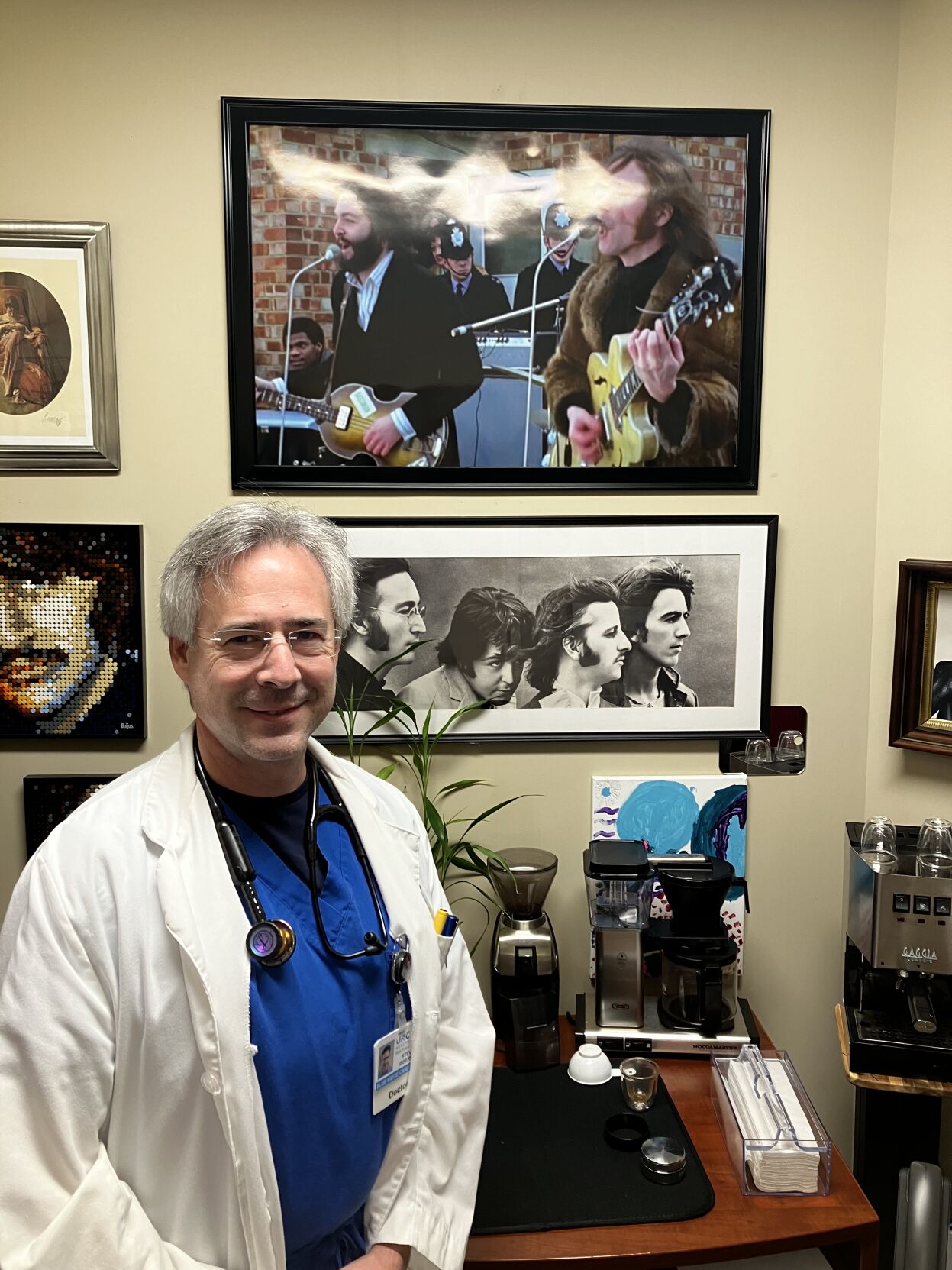

The first thing Dr. Steven Isserman does when he welcomes a visitor into the offices of Blue Ridge Cardiology is to offer him a cup of coffee.
Not just any cup of coffee, mind you. A cup of coffee made with beans roasted in Isserman’s garage and then freshly ground and brewed in his office.
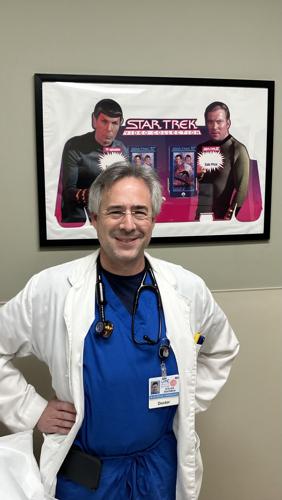
Isserman, a slight fellow with an unruly shock of graying hair, takes pleasure in this simple act of hospitality and kindness, but then the highly trained doctor who is a Fellow of the American College of Cardiology, takes pleasure in the myriad aspects of what he says is a happy and balanced life.
So, grab that cup of rich, dark coffee, settle into a comfortable chair in the practice’s break room, and take in the perspective of a heart doctor who truly does speak from the heart.
Let’s get the credentials out of the way first, for they are impressive. Isserman earned his medical degree from the University of Miami.
His residency came at Mount Auburn Hospital, the primary teaching hospital of Harvard University Medical School and one of the most highly rated teaching hospitals in the nation.
His time at Mount Auburn was followed by a fellowship at Tufts Medical Center in Boston, the principal teaching hospital for Tufts University School of Medicine.
We’ll get back to the question of why such a splendidly credentialed specialist chooses to practice in Morganton shortly, but first a look at Isserman’s background.
THE MAKING OF A PHYSICIAN
Isserman, 54, grew up in a suburb of Philadelphia. His mother was a travel agent, his dad a pharmacist. Early on, he became a fan of the Philadelphia Eagles, watching their home games in “the concrete icebox” that was Veterans Stadium.
In addition to developing a passion for Eagles football at an early age, Isserman also discovered, before he was 6 years old, a burgeoning interest in medicine and just how the human body works.
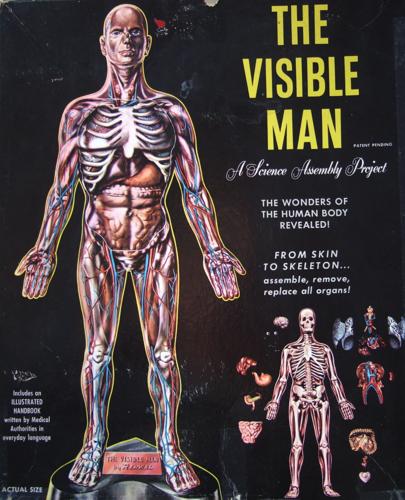
“Around the time I was 5 years old, my parents got me a model called, ‘The Visible Man,’” Isserman recalled. That gift turned out to have a powerful impact on his life.
The box which contained the model proclaimed, “The wonders of the human body revealed. From skin to skeleton… Assemble, remove, replace all organs.”
The model also included, “an illustrated handbook written by medical authorities in everyday language.”
Soon, the young boy knew the names of a host of body parts and organs, both in English and in Latin. “My parents would pull me out like a parlor trick,” he said, laughing, “to impress their friends at parties.”
By the time he was in high school, Isserman knew he wanted to pursue a career in medicine, and he began his undergraduate career at the University of Miami in south Florida.
So, what takes a Philly boy south to the sunny skies of Miami?
“Scholarship” is Isserman’s simple reply.
Asked how the experience went, Isserman replied, “Very different from what I was used to. I had been away from home, so at first it was very liberating. And then I got homesick.”
The homesickness was short-lived, however, and he threw himself into his studies, majoring in biology and chemistry with the idea of getting into medical school. His hard work paid off. He was offered a spot in the University of Miami Leonard M. Miller School of Medicine.
“Getting into medical school is the key,” Isserman explained. “For what seems like your whole life, you’ve been working toward that goal. High school. Undergrad. It’s all pointed toward admission to medical school.”
And how does a prospective doctor decide what his specialty will be?
“Well, you really don’t know until you get there,” he replied. “I had always been interested in how the body works. The science of the body. And the heart is so representative of that. The pressure in the chambers. The blood flow. The electricity. The mechanics.”
BUILDING A CAREER
When med school, residency, and fellowship were completed, Isserman returned to Florida for his first job, joining a large cardiological practice in Fort Myers. The experience was not a pleasant one.
“My wife hated Florida,” Isserman recalled. “And the practice was falling apart. We took out a map, knowing we could go anywhere we wanted. The West Coast was too far and too weird. The upper half of the country was too cold. We certainly didn’t want the Deep South. So that basically left us with Virginia, North Carolina, and the Upstate of South Carolina.”
More importantly, however, Isserman was looking for a practice that “valued the lives of their physicians, that was dedicated to maintaining that life-work balance. I had absolutely no desire to work myself to death.”
Isserman found what he was looking for with Hickory Cardiology — “a good group that I enjoyed working with.”
Conditions changed, however, when the group was purchased by Frye Regional Medical Center and even more so when Frye became a “for profit” facility.
“I knew I wanted a change,” Isserman remembered, “so seven years ago I got in my car, drove to Morganton, walked into Kathy Bailey’s office (the recently retired CEO of Blue Ridge Health) and said, ‘Let’s start a cardiology program.’”
Bailey was intrigued and amenable and Blue Ridge Cardiology was born. Today the practice includes Isserman as well as Dr. Harpeet S. Bhalla, Dr. Fernando A. de la Serna, Dr. Ryan Miller, Physician Assistant Certified Erin C. Breiner, Nurse Practitioner Certified Philip M. Dineen, and Nurse Practitioner Justin Jonas.
A CULTURE OF COOPERATION
Isserman especially appreciates a couple of things about working as part of UNC Health Blue Ridge.
One is “the culture of this hospital. There is such a positive and healthy relationship between the doctors and the administration here. The doctors here feel appreciated and supported. That is so important.”
Secondly, Isserman said, Burke County patients “are wonderful to work with. They trust their physician. They are very appreciative that we are serving them. They appreciate what we do.”
Heart issues are common in Burke County, Isserman continued, “because a lot of people eat a lot of unhealthy food and have lived challenging lives. But they are a joy to work with.”
Isserman, who consistently draws rave reviews for his ability to connect with patients, said he always attempts to emphasize the positive when talking with a person about their diagnosis and treatment.
“I do my best to communicate optimism,” he said. “I emphasize that there are always methods of treatment and that we will work together to find a solution.”
As a man who enjoys his work and appreciates the people he works with, Isserman says retirement is not yet on his horizon.
“I want to work as long as I’m able,” he said. “Blue Ridge is a teaching facility, and I really enjoy working with younger people. For the foreseeable future, I have no reason to stop.”

















(0) comments
Welcome to the discussion.
Log In
Keep it Clean. Please avoid obscene, vulgar, lewd, racist or sexually-oriented language.
PLEASE TURN OFF YOUR CAPS LOCK.
Don't Threaten. Threats of harming another person will not be tolerated.
Be Truthful. Don't knowingly lie about anyone or anything.
Be Nice. No racism, sexism or any sort of -ism that is degrading to another person.
Be Proactive. Use the 'Report' link on each comment to let us know of abusive posts.
Share with Us. We'd love to hear eyewitness accounts, the history behind an article.