




Linville Gorge scares me.
More specifically, the Linville Gorge Wilderness Area and the hiking trails contained therein.
Unlike my older brothers, who started frequenting the Gorge in their teens, I didn’t start hiking regularly in “The Grand Canyon of the East” until I was in my mid-30s.
(I’m excluding visits to Table Rock, Hawksbill, and Shortoff mountains. Although technically part of the Wilderness Area, I don’t consider the treks to their summits to be true “Gorge hikes.”)
My first venture into the Gorge was on an early autumn day in 1996. A friend and I descended the Babel Tower Trail to the Linville River at the bottom of the Gorge and followed the Linville Gorge Trail downstream.
At the intersection with the Conley Cove Tail, we climbed out of the Gorge up to Old Hwy. 105 and walked back up that road to the parking area at the Babel Tower Trailhead.
Learning Lessons
On that initial foray into the Gorge, I learned some very quick lessons:
Trails aren’t marked in the Gorge. No blazes on the trees. No signs at intersections. No mileage markers. You’re on your own. Those who designated the area as “wilderness” were pretty darned serious about it.
Distance on Gorge trails is a whole different animal than distance in South Mountains State Park or on the trails of the Pisgah National Forest.
Gorge trails are often incredibly steep. Going up is tough. Going down can be even tougher.
Gorge trails are almost always rocky.
Combine steep with rocks and Gorge trails are bad falls, twisted ankles, and broken legs just waiting to happen. You either go slowly and carefully or you don’t go very far.
Yes, on that very first visit to the Gorge, I learned to have a healthy fear of the place — a fear that could only be mitigated through care, through caution, and through careful planning of where you’re going and the trails to be used.
But I also fell in love with the Gorge on that first hike as well. The scenery is beyond spectacular.
The Gorge is the total package — rushing water, towering rock formations, the mountains climbing to the sky above the trails, the sound of the wind rushing up the channel from Lake James.
To sit on a streamside rock on a crisp autumn day and take in the entire landscape is truly a spiritual experience.
Exploring The Gorge
And so I have returned often to the Gorge over the next 30-plus years.
I have taken in the beauty of Celestial Point, descended to the Devil’s Hole, and sat atop Sitting Bear with my brother Johnny.
Brother Robert has guided me along the Rock Jock Trail, which meanders precariously above the Gorge’s western rim.
I have soaked my weary and aching feet in the icy waters of the Linville River on summer afternoons, and I wondered just how much the heart and lungs can be strained in climbing out from that great natural chasm.
On Veteran’s Day weekend in 2008, I convinced Johnny and our friends Ginny and Kevin Rector that we could descend into the Gorge on the Conley Cove Trail, go upstream on the Gorge Trail, cross the river on a bridge now long washed away, head up the eastern rim on the Spence Ridge Trail, and from that point on the ridge, climb to the summit of Table Rock Mountain, have lunch, and then head back the way we came.
See above the paragraph about Gorge distances. And consider that the attempt was made in mid-November when darkness falls soon after 5 p.m. Didn’t happen. We only made it to the Spence Ridge Trailhead before my faithful crew of hikers mutinied and threatened to hang the man who came up with such a scheme.
Even though we truncated our journey, we were lucky to make it back to our vehicle before dark.
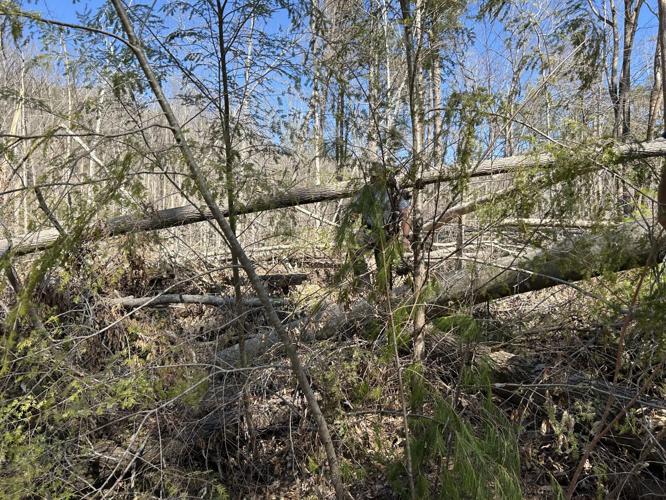
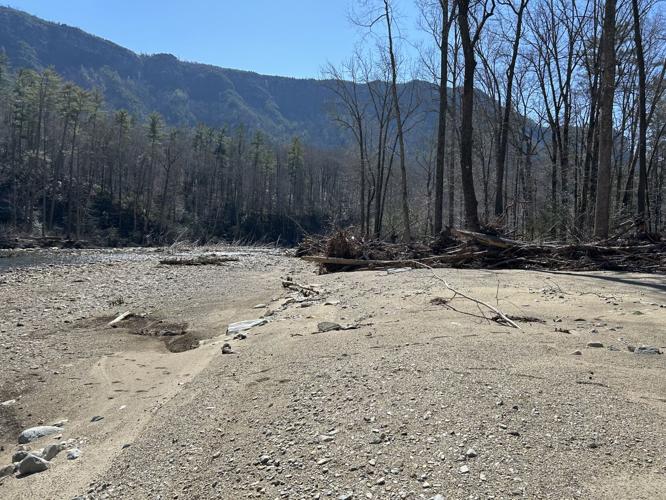
All this is prelude to saying the Gorge was a wild and dangerous place before Hurricane Helene ravaged the region on Friday, Sept. 27, 2024. Now, it is even more so.
Helene Increases Dangers
As Burke County’s Public Information Officer Chris White pointed out in a press release earlier this week:
“Trail conditions have drastically changed, with substantial downed timber, washed-out paths, landslides, and altered river routes. These conditions significantly complicate navigation and make traveling through the Gorge more challenging and hazardous than previously experienced.”
White continued with a warning:
“Those planning visits should take extra precautions, including carrying additional water and food supplies. In the event of an injury or becoming lost, hikers must be aware that response and rescue times have increased considerably.”
White urged, and I would second his recommendations, that hikers going into the Gorge plan their routes carefully, inform someone about their plans and expected return time, and carry navigation tools, first aid kits, and clothing suitable for changing weather conditions.
And finally, he gave a solemn reminder:
“Searches that previously took rescue teams approximately one hour can now take around three hours. In extreme situations, rescue personnel may take up to 24 hours or longer to reach hikers in distress due to the extensive damage and challenging conditions.”
I would urge anyone who’s considering venturing into the Gorge to take White’s warnings seriously. Gorge rescues, although they take place regularly, are scary and they’re expensive.
I love the Gorge. But it’s a place whose wildness I respect and of whose dangers I have a healthy fear.
Linville Gorge scares me.





















(0) comments
Welcome to the discussion.
Log In
Keep it Clean. Please avoid obscene, vulgar, lewd, racist or sexually-oriented language.
PLEASE TURN OFF YOUR CAPS LOCK.
Don't Threaten. Threats of harming another person will not be tolerated.
Be Truthful. Don't knowingly lie about anyone or anything.
Be Nice. No racism, sexism or any sort of -ism that is degrading to another person.
Be Proactive. Use the 'Report' link on each comment to let us know of abusive posts.
Share with Us. We'd love to hear eyewitness accounts, the history behind an article.