

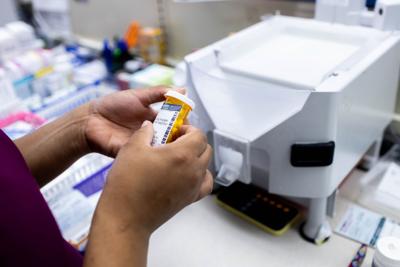


After years of stalled efforts and industry pushback, Gov. Josh Stein signed Senate Bill 479, the SCRIPT Act, into law last month. The bill directly targets the practices of Pharmacy Benefit Managers (PBMs) by imposing new transparency rules, audit protections, and patient safeguards.
For Jessi Stout, who operates Table Rock Pharmacy and compounding with her husband and who has been involved in PBM reform efforts for years, the bill marks a turning point in a fight that has brick-and-mortar pharmacies struggling to survive.
One of the most immediate and meaningful impacts of SB 479 for patients to choose their pharmacy without penalty, Stout said.
The new law prohibits PBMs from inflating copays or restricting access based on where a patient fills their prescriptions, a practice known as “patient steering.”
“Until now, many PBMs have steered patients toward their affiliated pharmacies,” she said. “This kind of manipulation has been far too common, and SB 479 takes an important step in putting a stop to it.”
The SCRIPT Act also requires PBMs to pass along a majority of the rebates they receive from drug manufacturers directly to patients at the point of sale, offering potential savings at the pharmacy counter.
For independent pharmacists, the bill offers long-sought protections against financial losses and unfair business practices. Stout said one of the most important provisions is a new right to decline prescriptions that would result in a loss.
“Pharmacists can now openly explain to a patient when a prescription is being filled at a financial loss, something no other business would be expected to tolerate,” Stout said.
PBMs, which serve as middlemen between insurers and pharmacies, have long been accused of reimbursing their own affiliated pharmacies at higher rates while underpaying independents.
A July 9 Federal Trade Commission (FTC) report revealed that the nation’s three largest PBMs — CVS Caremark, Express Scripts, and OptumRx — reimbursed their own pharmacies at rates up to 200 times higher than what they paid unaffiliated pharmacies for the same cancer drugs.
The FTC found that between 2017 and 2022, these three companies collectively generated more than $7.6 billion in excess revenue from just 30 specialty generic drugs by charging employers, insurers, and patients far more than what the drugs actually cost.
Among other provisions, SB 479 prohibits PBMs from reimbursing their affiliated pharmacies at higher rates than competitors for the same medications, a move designed to prevent self-dealing and help level the playing field for independent pharmacies.
The law also introduces new audit protections for pharmacies, requiring PBMs to limit audit scope and prevent recoupment for technical errors unrelated to fraud.
One important limitation of the SCRIPT Act is that it only applies to commercial insurance plans. It does not cover federal programs like Medicare or the State Health Plan, two areas where PBMs have been some of the worst offenders in terms of anti-competitive behavior and harmful reimbursement tactics.
“Expanding regulatory oversight to include these programs is critical to truly protecting pharmacy access and sustainability,” Stout said.
Stout also advocates for requiring PBMs to reimburse pharmacies at rates that at least cover their actual acquisition costs plus a fair dispensing fee. That fee supports everything behind the counter, pharmacist expertise, staff wages, rent, insurance, software, bottles and labels, and vital patient services like delivery and medication synchronization.
Some states are already setting stronger precedents. Arkansas, for example, has not only cracked down on unfair reimbursement but also passed legislation banning PBMs from owning pharmacies altogether. In response, CVS Caremark announced it would close all of its pharmacies in the state.
Still, Stout sees The SCRIPT Act as a meaningful win.
Although the final bill isn’t as far reaching as PBM legislation in other states, it marks real progress, she said.
“The new reporting requirements, in particular, have the potential to expose some of the most deceptive practices and lay the groundwork for future reform.”
With bipartisan support and co-sponsorship from Senate President Pro Tem Phil Berger, she believes momentum is finally on the side of pharmacy reform.
“I’m incredibly proud of the work we’ve done to get this far,” Stout said. “And I’m hopeful our legislators will continue pushing for stronger protections.”












(0) comments
Welcome to the discussion.
Log In
Keep it Clean. Please avoid obscene, vulgar, lewd, racist or sexually-oriented language.
PLEASE TURN OFF YOUR CAPS LOCK.
Don't Threaten. Threats of harming another person will not be tolerated.
Be Truthful. Don't knowingly lie about anyone or anything.
Be Nice. No racism, sexism or any sort of -ism that is degrading to another person.
Be Proactive. Use the 'Report' link on each comment to let us know of abusive posts.
Share with Us. We'd love to hear eyewitness accounts, the history behind an article.