



The City of Morganton is actively seeking a planning consultant to overhaul and consolidate its development regulations into a single Unified Development Ordinance (UDO), a sweeping effort that officials say will modernize zoning and subdivision rules, strengthen enforcement, and improve how residents and developers navigate the city’s permitting process.
The project, outlined in a Request for Proposal (RFP) issued Nov. 19 and closed on Dec. 23, called for the creation of a new UDO and associated zoning map that would combine and update multiple ordinances currently scattered across different chapters and eras of city code.
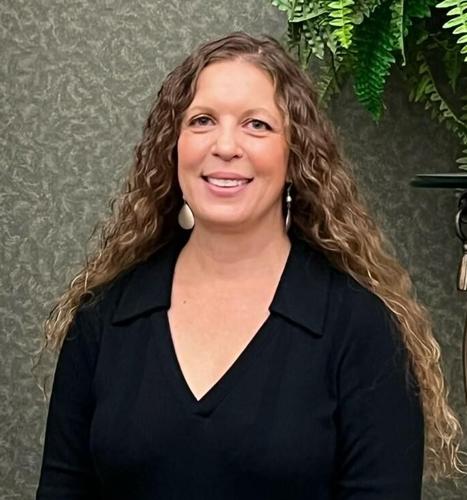
Wendy Smith, Morganton’s director of development and design, would not say how many proposals were received but that she planned a presentation to the city council during its March regular meeting.
City officials described the effort as an update to regulations governing how Morganton grows, including housing, lot creation, landscaping, parking, building design standards and infrastructure requirements.
“The successful firm will provide evidence that it has the ability to produce a UDO that represents the best of Morganton’s past and present and creates an inspiring approach to the future,” the RFP reads.
The city’s current development rules include separate documents for zoning (2015), vested rights (1993), subdivisions (1991), flood damage prevention (2007), watershed protection (1994) and stormwater regulations (2007). The proposed UDO would fold these into one ordinance, combining and revising them to align with modern state law and the city’s newly adopted Imagine Morganton 2040 Comprehensive Plan.
The UDO is intended to preserve “strong elements” from existing ordinances while revising provisions that no longer meet local needs, the RFP reads. Officials said the process must be heavily grounded in public input, especially around zoning and subdivision standards, and must be written in a way that is easier for residents, business owners and developers to understand.
The consultant will first conduct a detailed evaluation of existing ordinances and work with city staff, City Council and the Planning and Zoning Commission to identify areas requiring revision, According to the RFP. From there, the project will shift into a structured community engagement program designed to build consensus and ensure the new ordinance reflects both the city’s long-range vision and on-the-ground realities.
The city wants the final product to be visually accessible, incorporating “graphic images, diagrams and charts” alongside code language, with clear procedures, definitions, intent statements and timelines for permitting processes.
PUBLIC INVOLVEMENT CENTRAL TO THE PROJECTMorganton’s RFP requires the consultant to propose and carry out a public engagement strategy that includes at least three community-wide meetings, three advisory committee meetings, and three focus group meetings early in the process, in addition to joint working sessions involving City Council and the Planning and Zoning Commission.
The selected consultant will also help city staff identify members for an advisory committee made up of local residents, and will be expected to prepare materials, record meeting input and process feedback throughout the project.
In addition, the consultant must host a project website to provide updates, promote involvement and serve as an information hub for the community.
Beyond public engagement, the consultant will be expected to conduct a broad analysis of city data and development conditions, including demographic, economic, infrastructure, transportation and environmental factors. This analysis will guide recommended density standards and dimensional requirements for development, including performance standards.
The consultant will also review zoning districts and overlays and recommend modifications, aiming to reduce redundancies, clarify terminology, and create a legally enforceable ordinance that complies with state enabling legislation. The RFP specifically references Chapter 160D of the North Carolina General Statutes, which governs local planning and development regulations.
City officials stressed that the code should be enforceable and valid under state law, a key requirement because North Carolina has undergone major planning law reforms in recent years, including consolidation of planning statutes into Chapter 160D.
MAPS, DOCUMENTS & PROMOTIONAL MATERIALS
The consultant must provide the city with draft and final versions of the ordinance in Word and PDF format, along with ArcGIS maps, meeting minutes, reference data and promotional materials such as a summary brochure and a PowerPoint presentation. The city is also requiring 10 printed copies of the final plan.
The RFP requested a lump-sum total price, including travel, printing and other expenses, while also asking for itemized pricing for additional meetings, flood and watershed ordinance updates, stormwater ordinance updates, and GIS mapping.
Morganton’s project timetable shows proposals were scheduled to be reviewed from Dec. 29 through Jan. 16, with consultant interviews planned from Jan. 20-27. The city expected to announce a successful respondent on Feb. 6, followed by a project commencement meeting with staff between Feb. 9 and 20.
The consultant would then present the methodology and public engagement plan at a City Council workshop on Feb. 27, with the formal contract award scheduled for March 2.









(0) comments
Welcome to the discussion.
Log In
Keep it Clean. Please avoid obscene, vulgar, lewd, racist or sexually-oriented language.
PLEASE TURN OFF YOUR CAPS LOCK.
Don't Threaten. Threats of harming another person will not be tolerated.
Be Truthful. Don't knowingly lie about anyone or anything.
Be Nice. No racism, sexism or any sort of -ism that is degrading to another person.
Be Proactive. Use the 'Report' link on each comment to let us know of abusive posts.
Share with Us. We'd love to hear eyewitness accounts, the history behind an article.