

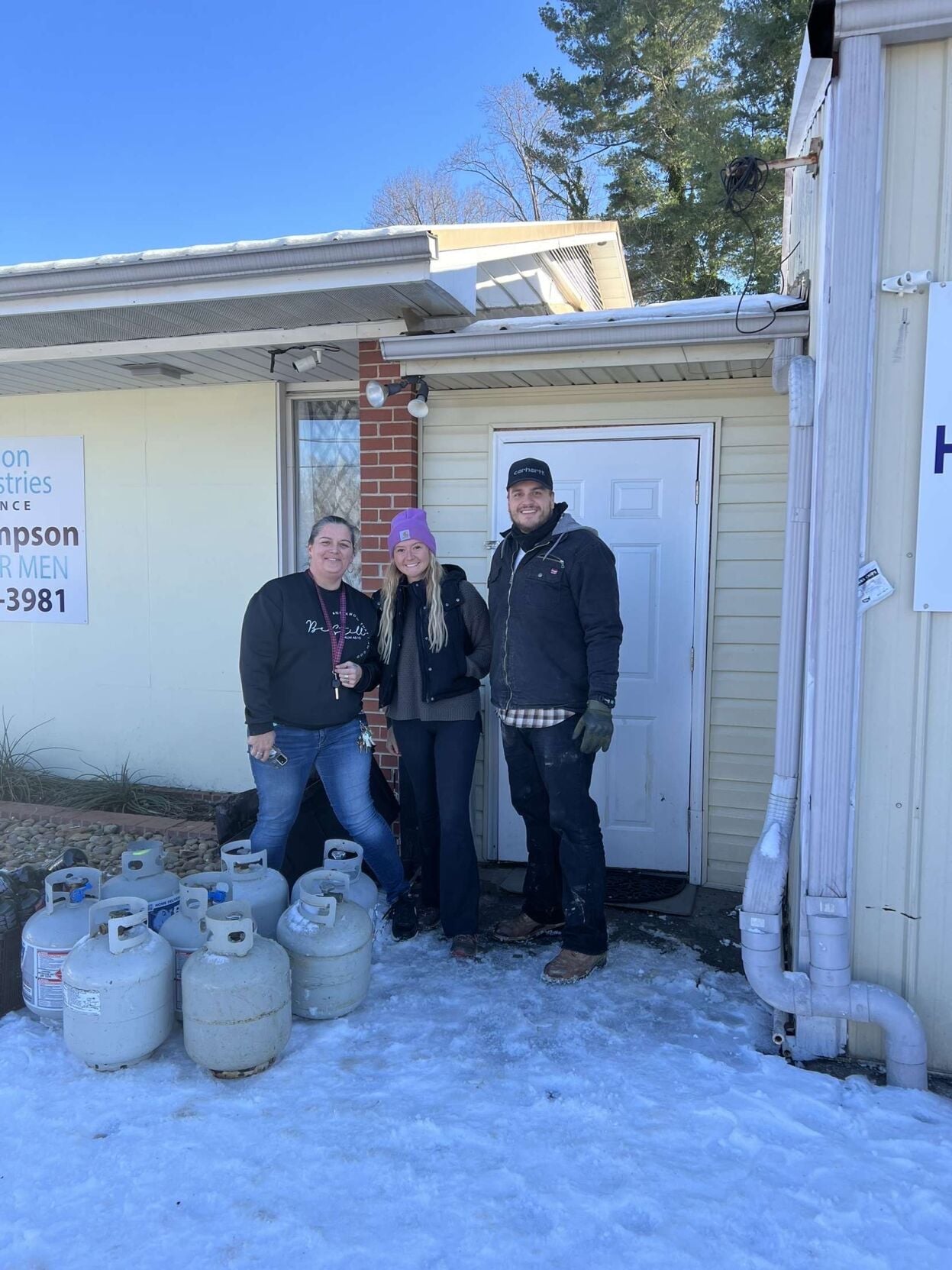

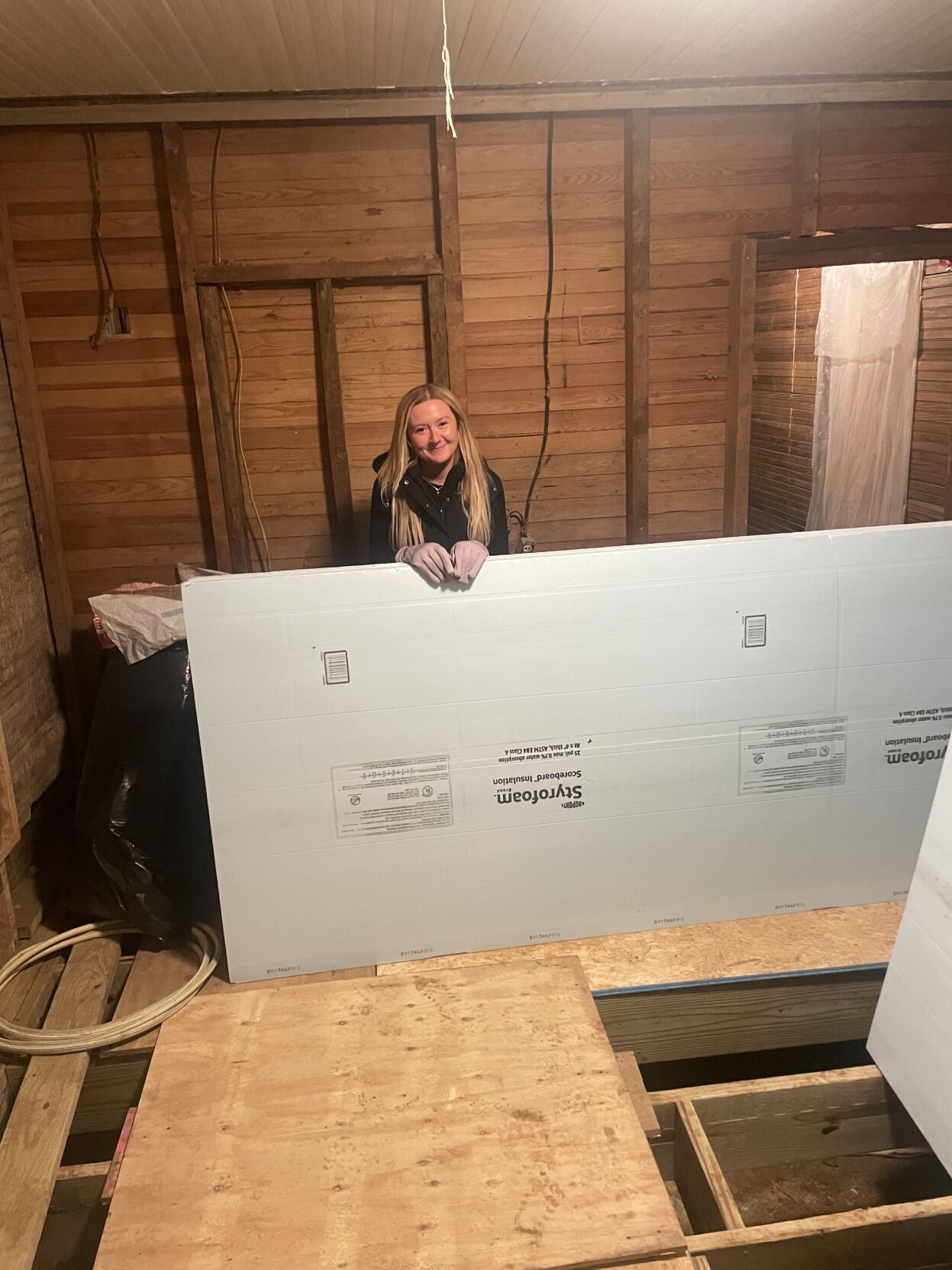
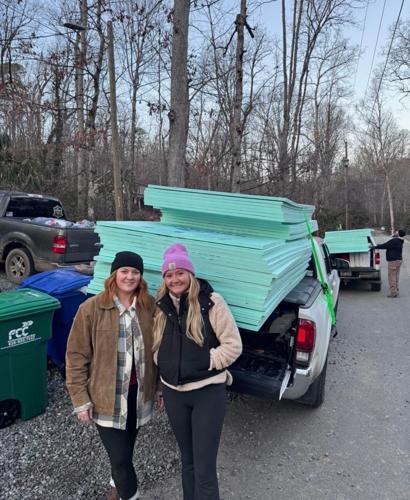
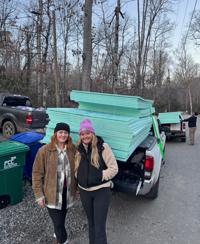

Reporter’s Note: It wasn’t a typical interview — When I met with Madison Holland, she was in the middle of a parking lot delivering mattresses to residents in Black Mountain, having driven from Boone earlier that day. This is just one scene that epitomizes her life since Hurricane Helene devastated western North Carolina on Sept. 27.
Holland, a Morganton native and recreation management student at Appalachian State University, felt compelled to act in the wake of the disaster. What began as trips delivering small carloads of supplies from Morganton up Interstate 40 soon turned into a life-altering passion.
“I felt compelled to get involved,” Holland stated. “This didn’t happen in some far-off place — it happened where we’re from, to our home.”
In high school, she was deeply involved in band and various service organizations, and in college would continue her volunteer work as President of the National Association for Music Educators, which often collaborated with schools to provide instruments and sheet music to children in underprivileged communities. However, hurricane relief work was unlike anything Holland had ever undertaken before.
She began rallying support through social media, collecting clothes, food, and water, and receiving monetary donations. Holland meticulously documented how funds were used, sharing receipts and posting updates on her social media to praise donors for their efforts. Over time, she raised more than $1,300.
Her first attempt to enter devastated areas was met with roadblocks — literally. But a convoy of National Guard trucks spotted her and waved her into their group, allowing her to bypass restrictions. That marked the start of regular trips during the storm’s first month. Often accompanied by friends from Appalachian State and Morganton, she traveled to some of the hardest-hit areas, including Avery, Mitchell, Yancey, and Buncombe counties.
Holland’s dedication caught the attention of the United Cajun Navy, a disaster relief organization. She began working from their camp in Black Mountain, moving her from just delivering supplies to clearing debris, setting up tents, and checking on temporary bridges in areas prone to landslides.
“The work is humbling,” Holland said. “For so many people, the new normal is living in a yurt with maybe one stove and whatever pieces of their lives they could salvage.”
North Carolina alone suffered billions in damages, and the challenges persist as winter weather conditions threaten recovery efforts. After every rainfall or snowfall, Holland’s team inspects temporary bridges to ensure they are stable and that no new landslides have caused further damage.
Amid the heartbreak, Holland finds moments of joy. Delivering Christmas presents to children in devastated areas brought smiles and a semblance of normalcy to their lives. In another episode, Holland noticed a young girl running a pop-up nail salon on the side of the road while clearing debris. Holland decided to give the shop a try and paid for the girl to paint her nails and had a lot of fun while doing so.
“We see such personal parts of people’s lives — sometimes even their grief — but being able to bring a little happiness is everything,” she said.
One of her most difficult experiences was clearing debris from the Black Mountain Orphanage, which was destroyed by the storm.
“It really hit when we found the kids’ journals. You could see the shift in their writing — the joy just disappeared and was replaced with fear,” she lamented.
To cope with the intensity of disaster relief work, Holland has learned to compartmentalize: “We build such close relationships with the families we serve. You want to do more for them, but you can’t do everything.”
The camaraderie of her team has been vital. She described the United Cajun Navy as a “giant family” of people from diverse backgrounds united by a shared goal.
“It’s a weird thing to say, but you can have a good time while doing disaster relief,” she said. “It’s OK to smile, even in the face of tragedy, because there’s so much good to be done.”
Appalachian State University has supported her efforts, offering resources like case managers to help with classes and counseling services for students volunteering in relief efforts.
For Holland, the experience has been transformative.
“I’ve learned how to listen to people, how to be vulnerable, and how to care,” she said. “It’s also taught me how to work with people at all levels, from community members to those in positions of power.” The impact of Holland and her fellow volunteers did not go unnoticed. On the morning of Friday, Jan. 24, she met President Donald Trump in Swannanoa for a photo opportunity and was recognized for her efforts in aiding the Helene recovery.
Though she still dreams of becoming a music teacher, Holland is dedicating this chapter of her life to disaster relief. She is pursuing certification in wilderness rescue as an EMT with Watauga County Rescue Squad and plans to continue working with the United Cajun Navy.
“The thing that drives me forward is that these mountains are me,” Holland said. “I’ll always be affected by the tragedies in these communities and inspired by the work we’ve done.”












(0) comments
Welcome to the discussion.
Log In
Keep it Clean. Please avoid obscene, vulgar, lewd, racist or sexually-oriented language.
PLEASE TURN OFF YOUR CAPS LOCK.
Don't Threaten. Threats of harming another person will not be tolerated.
Be Truthful. Don't knowingly lie about anyone or anything.
Be Nice. No racism, sexism or any sort of -ism that is degrading to another person.
Be Proactive. Use the 'Report' link on each comment to let us know of abusive posts.
Share with Us. We'd love to hear eyewitness accounts, the history behind an article.