

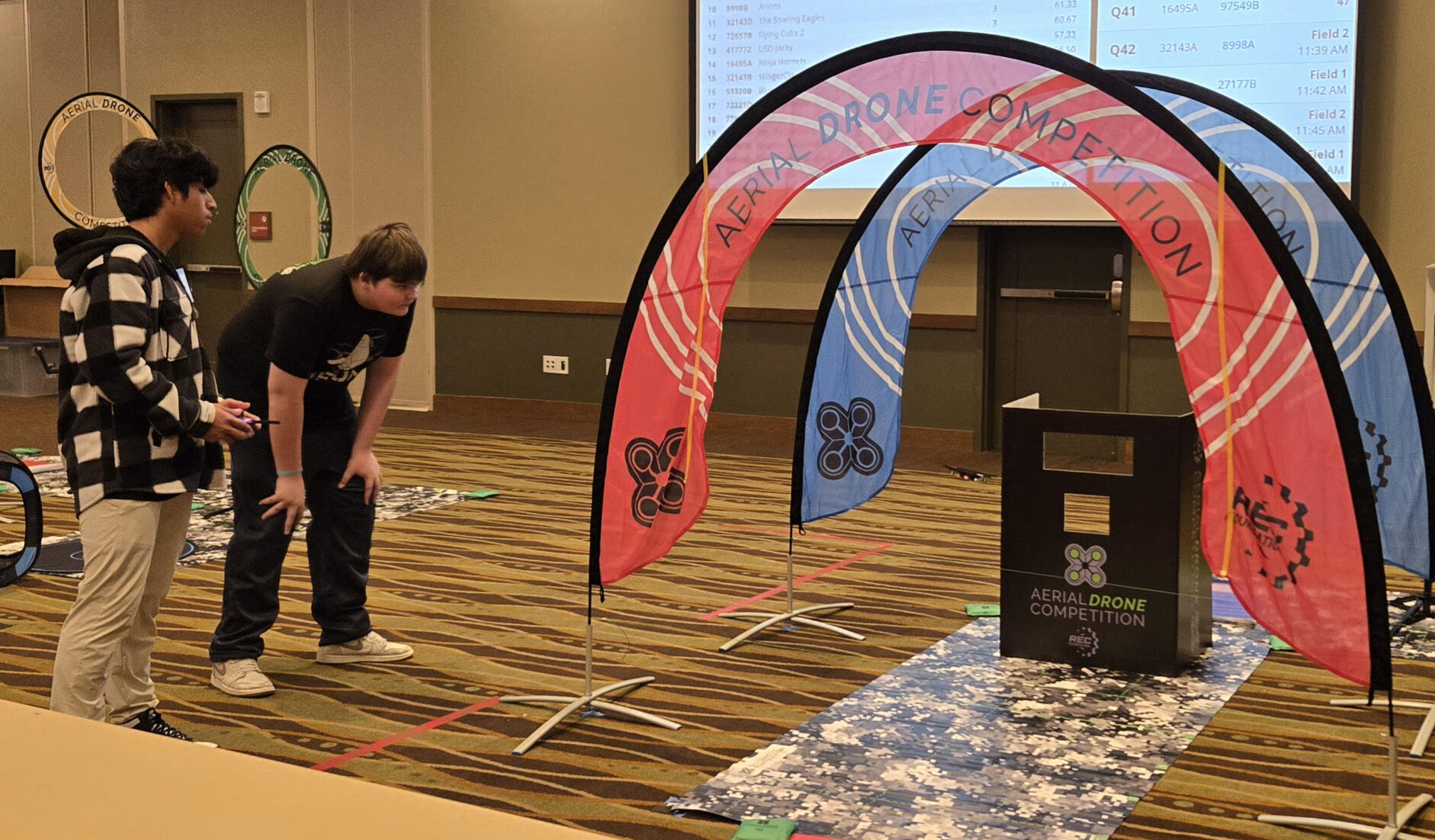
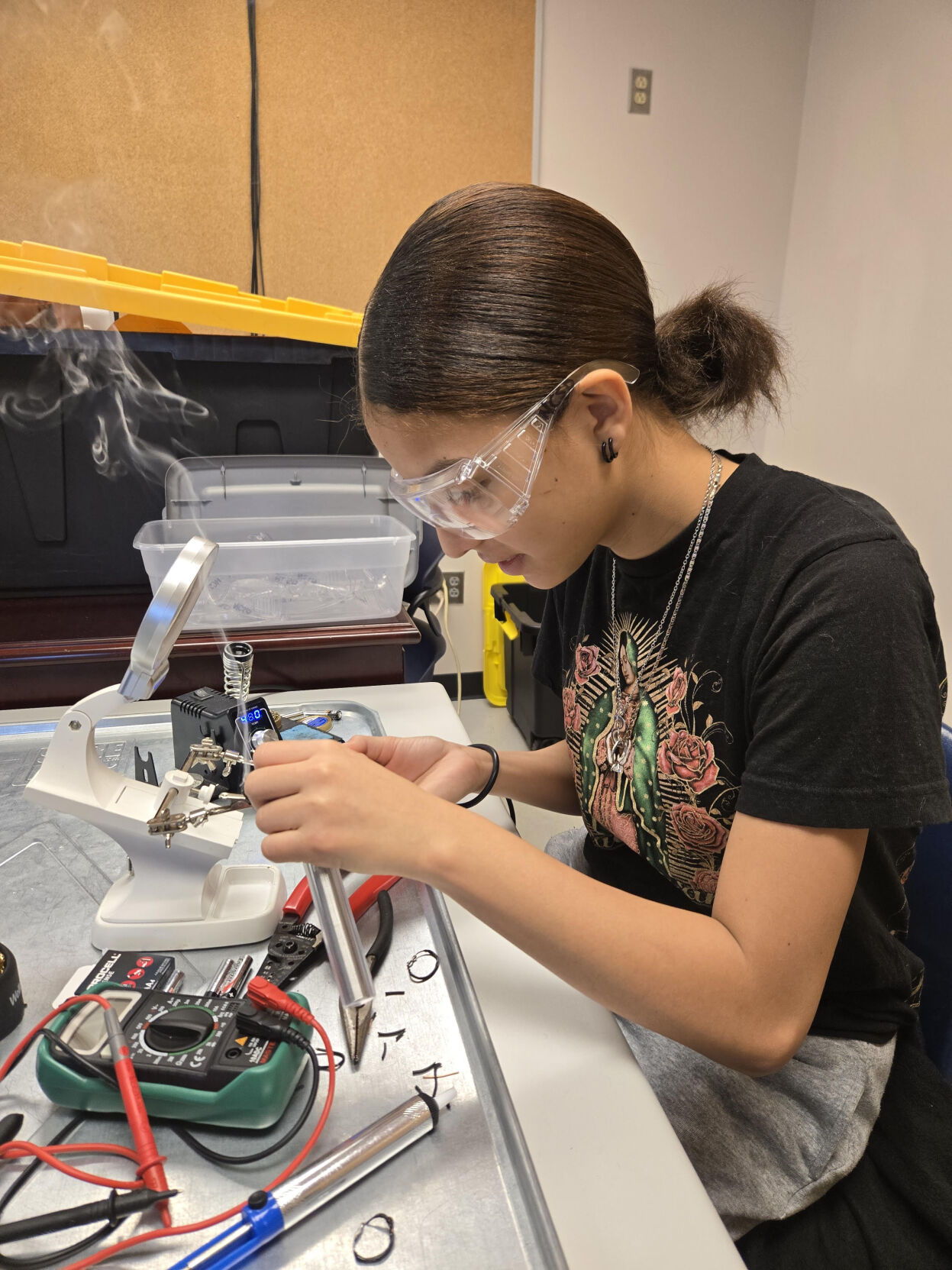
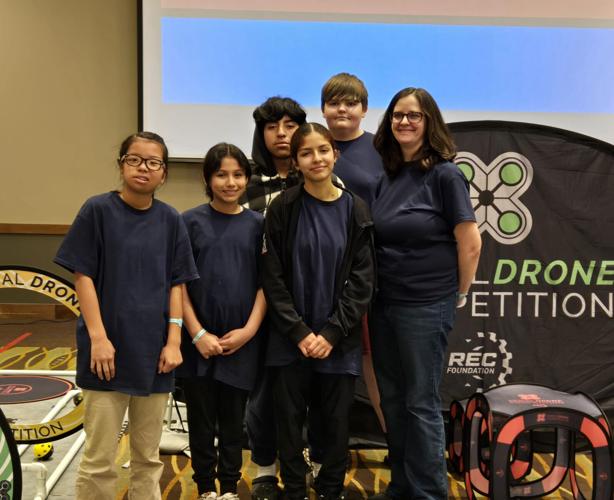
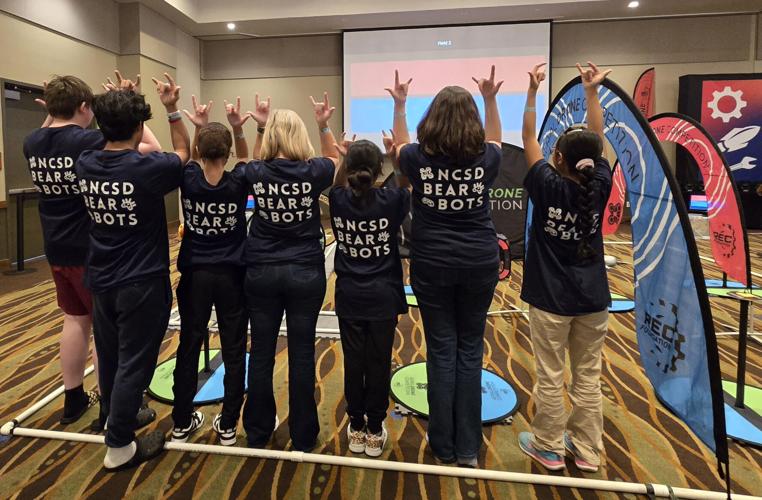

Five North Carolina School for the Deaf (NCSD) students put months of preparation to the test as they took to the skies at the third Annual NRSC-AIDB D/HH Aerial Drone Competition in LaGrange, Ga., last month.
NCSD has been a regular contender in the competition, which is hosted by the National Technical Institute for the Deaf Regional Stem Center at the Alabama Institute for Deaf and Blind (NRSC-AIDB). The school also participates in VEX IQ, VEX V5, and SeaPerch robotic events, offering students a range of STEAM opportunities to grow and test their skills.
The school fielded both a middle and high school team to compete at the event. Despite juggling robotics with sports and clubs, students dedicated months to mastering competition-specific tools and vocabulary, how to pilot drones, and even coding autonomous flight programs.
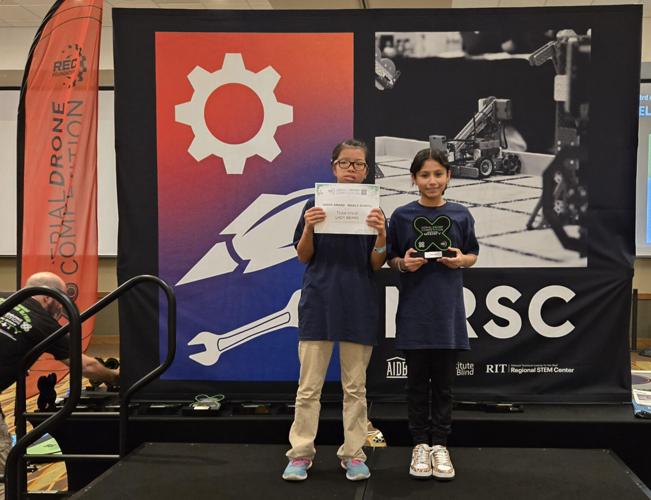
Their efforts paid off in a big way. The high school team advanced to the final qualification rounds and the middle school team earned the prestigious Judges’ Award, recognizing the team that stood out for dedication and achievement. The middle school team will go on to compete in the the 2025 Southeast Regional Championship in April.
“I’m very proud of our students,” said NCSD drone robotics coach Jennifer Willet. “They all gave 100% with their efforts and enthusiasm, and because of that, our trip was an amazing success.”
A unique part of the competition format is its alliances, which pair two teams from different schools together to collaborate on challenges. The format promotes and builds skills such as teamwork, problem-solving, and communication skills — one of the most rewarding takeaways for Willet.
One of her less outgoing students initially relied on Willet to break the ice with alliance teams, but as the day went on something clicked. The student began taking charge, seeking out other students, strategizing, and confidently communicating on her own.
For Willet, watching this student go from quiet observer to fearless competitor was a reminder that these competitions help students grow in ways that go far beyond the classroom.
“I’m thrilled to see them growing leaps and bounds in their academic learning of STEAM aspects and with self-confidence through their interactions with other students,” shared Willet.
The program has inspired many students to pursue careers in STEAM. A 2024 NCSD graduate is now studying engineering at the Rochester Institute of Technology, a journey that began in NCSD’s robotics program.
“We’ve seen students go from elementary school robotics to college-level STEAM programs,” Willet said. “The goal is to give them early exposure to these concepts, so they have a strong foundation when they graduate.”
NCSD supports students by offering after-school robotics practice for all grade levels. The program also maintains a Google Classroom filled with instructional resources, coding tutorials, and building guides for students wanting to keep their skills sharp year-round.
Older students are encouraged to mentor younger participants, reinforcing their own knowledge while fostering leadership skills. One student, now in her third year of the program, will showcase her new coding skills for parents at an upcoming event.
The school also integrates robotics into local initiatives like the Morganton Arts Design and Engineering (MADE) competition and partners with NC State’s STEAM collaborative learning program.
This year, Willet and her fellow coaches have focused on sustaining and growing the program after the retirement of longtime robotics instructor Jeff Lintz. Their long-term vision includes expanding participation to younger students, fostering collaboration with other deaf schools, and integrating the arts into robotics education.
“There are limitless possibilities for collaboration,” Willet said. “I’d love to see more interdisciplinary projects that reflect both the engineering and creative aspects of STEAM.”
The robotics team is now preparing for upcoming competitions, including the SeaPerch underwater robotics challenge. A key tool in their preparation is the competition logbook, where students document experiments, troubleshoot problems, and refine strategies.
“The logbook is essential — it teaches students how to analyze their work, adapt their designs, and think critically,” Willet explained. “It’s a tool they’ll use far beyond robotics competitions.”











(0) comments
Welcome to the discussion.
Log In
Keep it Clean. Please avoid obscene, vulgar, lewd, racist or sexually-oriented language.
PLEASE TURN OFF YOUR CAPS LOCK.
Don't Threaten. Threats of harming another person will not be tolerated.
Be Truthful. Don't knowingly lie about anyone or anything.
Be Nice. No racism, sexism or any sort of -ism that is degrading to another person.
Be Proactive. Use the 'Report' link on each comment to let us know of abusive posts.
Share with Us. We'd love to hear eyewitness accounts, the history behind an article.