

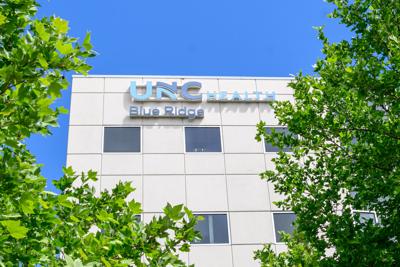


Burke County and rural family medicine are about to get a boost from the University of North Carolina System, with a $750,000 investment to UNC Health Blue Ridge to develop a new residency program.
The grant spans three years, the typical length of time needed to create a new residency program, and is centered around the expansion of rural access to family medicine . If development goes to plan, the program will be active by 2029.
“Educating doctors, nurses, and health professionals to serve our state is one of the university’s most important responsibilities,” said UNC System President Peter Hans. “Every North Carolinian deserves quality care close to home, and we are committed to that mission.”
This particular funding stream is one of 21 grants, totaling more than $6.4 million, and spread across a variety of UNC schools and hospitals.
The UNC System dedicates grant allocation to four avenues: development of residency programs, expansion of rural training opportunities, sustainability of existing programs that don’t receive full financing otherwise, and the innovation of pilot projects to improve health care provider retention.
After the three-year period ends, the hospital will have the option to file for an expansion grant, according to UNC System officials.
FILLING A NEED
The announcement comes just a few weeks after UNC Wilmington’s pitch to the UNC Board of Governors to develop a medical school program, where administrators highlighted a severe need for more practitioners in rural areas.
“One in three North Carolinians live in a small town or farm community far outside any city and its urban amenities,” said Katherine Martin, vice president for health affairs at the UNC System Office. “That means millions of people in North Carolina face long road trips for even the most basic health care, or worse, no access to care whatsoever.”
According to the North Carolina Office of State Budget and Management, the state boasts the second-largest rural population in the country, just behind Texas.
Burke County is deemed a rural county, garnering increased focus from the UNC System initiative.
“Currently, fewer than 4% of NC physicians practice in a rural area,” Martin said. “These rural residency funds will help us place more medical residents into those small-town communities for training, where we know they are more likely to stay and practice once their residency is complete.”
RESIDENCY
When medical graduates turn to the workforce immediately following their time at a university, they essentially apprentice under the supervision of a board-certified physician.
Residency programs are accredited by the Accreditation Council for Graduate Medical Education (ACGME). Once accreditation is achieved, graduates filter in to earn specializations and develop real-world skills under mentors.
NC System Director of Media Relations Andy Wallace explained, “Most medical school graduates are matched into their residency program in March every year on ‘Match Day,’ with their residency training beginning in July. The length of a residency program varies depending on the type of physician specialty. In the case of UNC Health Blue Ridge, the rural family medicine program is a three-year program.”
The $750,000 grant will cover start-up costs for development and the recruitment of a residency program director, coordinator, physician faculty, and preceptors to teach and supervise residents. The funds will also cover resident recruitment and salaries.






















(0) comments
Welcome to the discussion.
Log In
Keep it Clean. Please avoid obscene, vulgar, lewd, racist or sexually-oriented language.
PLEASE TURN OFF YOUR CAPS LOCK.
Don't Threaten. Threats of harming another person will not be tolerated.
Be Truthful. Don't knowingly lie about anyone or anything.
Be Nice. No racism, sexism or any sort of -ism that is degrading to another person.
Be Proactive. Use the 'Report' link on each comment to let us know of abusive posts.
Share with Us. We'd love to hear eyewitness accounts, the history behind an article.