

von Rohr
After one final 32-mile march, your 1780s neighbors finally made it back to Quaker Meadows with captured Loyalist prisoners in hand. There were fewer prisoners present than when their journey began; a good number of them were trampled under the hoofs of horses on the march, for little concern for their welfare was expressed by their Patriot captors.

von Rohr
FOR THE PAPERNow back home, Maj. Joseph “Quaker Meadows” McDowell once again displayed his concern for the welfare of his compatriot brothers by offering up his dry wooden rails so the assembled militiamen could burn them to keep warm and dry in the fall chill. On the other hand, the great majority of their Loyalist prisoners continued to suffer greatly under Patriot control.
In an obvious act of kindness, Joseph offered Loyalist Lt. Allaire and some of his officers refuge from the elements in the very house they had ransacked only months before. The matriarch of the family, Joseph and Charles’ mother, Margaret O’Neill McDowell, age 57, objected to this offer, noting that months earlier some of these same people came onto their property and stole her son’s “best clothes.” Maybe she expressed her opinion best when she referred to them as “those thieving, vagabond Tories!”
From that evening on, our militiamen and Overmountain men began to disperse, some back to their homes and farms, while others remained to escort prisoners to Hillsborough and Winston-Salem for eventual prisoner exchanges. While all of this was going on, you could have observed one of our Burke County residents, Capt. Robert Patton, flirting with a young local girl, Mary Elizabeth Dysart. Capt. Patton had performed his duties admirably under Maj. McDowell at Kings Mountain.
Charles McDowell married Grace Greenlee Bowman in 1782. She was later recognized as a Patriot in her own right. Appointed to the rank of Brigadier General of the Morgan District, he led his brigade in a second campaign to eliminate their Cherokee enemy and went on to serve in the U.S. Congress from 1792 through 1799. Charles is buried alongside his wife, Grace, up on a hill, in the family’s Quaker Meadows Cemetery.
Joseph “Quaker Meadows” McDowell further distinguished himself as a military officer when he was promoted to the rank of Brigadier General. He not only served as a delegate to both the Hillsborough Convention in 1788 and the Fayetteville Convention in 1789, but also in the Congress of the United States from 1797-99. Dying at age 45 in 1801, he was buried in the family cemetery. As more than two centuries have passed, his gravestone is missing, although it is believed he was buried there next to his older brother Charles and wife, Grace.
In relation to our present-day Morganton population, a relative of the “original” Capt. Robert Patton remains here in the form of Robert Patton IV. Two years after the Battle of Kings Mountain, in 1782 to be exact, a then 34-year-old Robert married 16-year-old Mary Elizabeth Dysart, who would become mother to their four children. Robert Patton IV, his namesake, a long-time revered teacher and school administrator in the local area, still resides within the city limits of Morganton. Robert IV has been president of not only the local chapter of the Sons of the American Revolution (SAR), but the Historic Burke Foundation.
It appears that only one actual McDowell relative, my cousin, Rebecca Heacock, still lives in Morganton, where she has served as historian of the local chapter of the Daughters of the American Revolution (SAR), America250 chair and, most recently, as the recipient of the SAR’s “Martha Washington Medal” for work as SAR/DAR Liaison. Because of these two Morganton residents, memories of the lives of the McDowells who lived here in 1780 remain with us today.
In conclusion of my 12 weeks’ worth of columns about your “1780’s Neighbors,” I highly recommend that you take a short trip to the intersection of Bost Road and N.C. 181 and read the scripture on the monument to the Patriot militia and Overmountain Men; take a look at the growing red oak sampling that replaced the now twice-deceased ones; and take pride in being part of a community that played a significant role in our countries fight to gain independence from the British. No doubt, Morganton will forever be recognized for its contribution to American history.
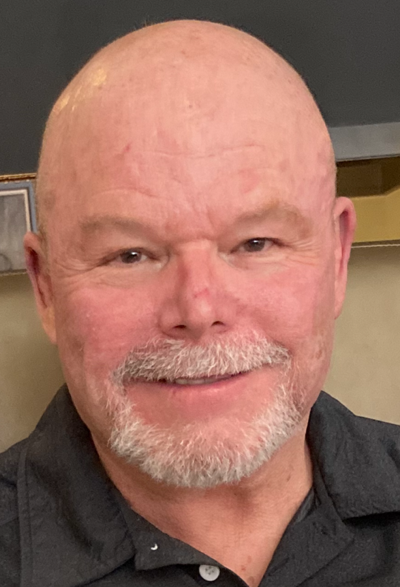
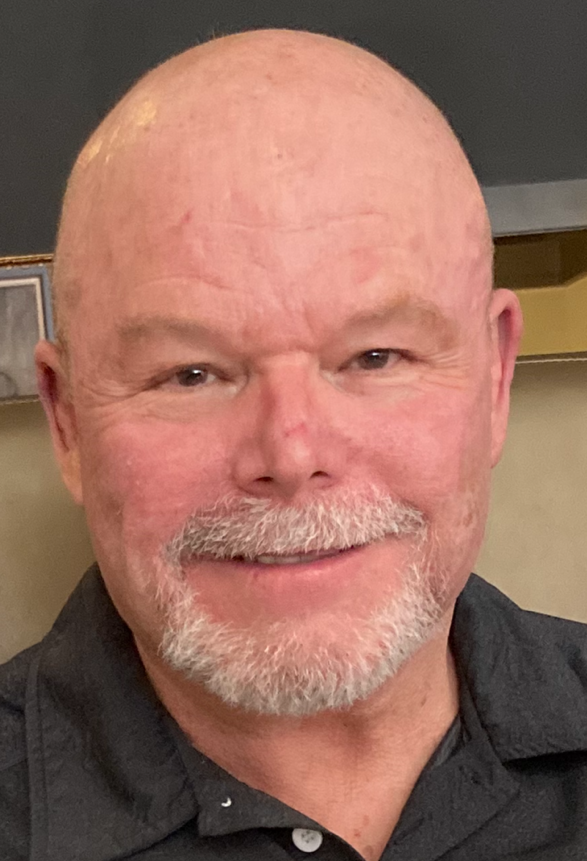
Maj. (Dr.) John von Rohr is an academician and former military officer. He is a member of the Col. Alexander Erwin Chapter of the Sons of the American Revolution.



Sorry, there are no recent results for popular videos.
Success! An email has been sent to with a link to confirm list signup.
Error! There was an error processing your request.


Sorry, an error occurred.
Already Subscribed!
Cancel anytime
Thank you .
Your account has been registered, and you are now logged in.
Check your email for details.
Submitting this form below will send a message to your email with a link to change your password.
An email message containing instructions on how to reset your password has been sent to the email address listed on your account.
No promotional rates found.
Secure & Encrypted
Thank you.
Your gift purchase was successful! Your purchase was successful, and you are now logged in.
| Rate: | |
| Begins: | |
| Transaction ID: |
A receipt was sent to your email.




(0) comments
Welcome to the discussion.
Log In
Keep it Clean. Please avoid obscene, vulgar, lewd, racist or sexually-oriented language.
PLEASE TURN OFF YOUR CAPS LOCK.
Don't Threaten. Threats of harming another person will not be tolerated.
Be Truthful. Don't knowingly lie about anyone or anything.
Be Nice. No racism, sexism or any sort of -ism that is degrading to another person.
Be Proactive. Use the 'Report' link on each comment to let us know of abusive posts.
Share with Us. We'd love to hear eyewitness accounts, the history behind an article.