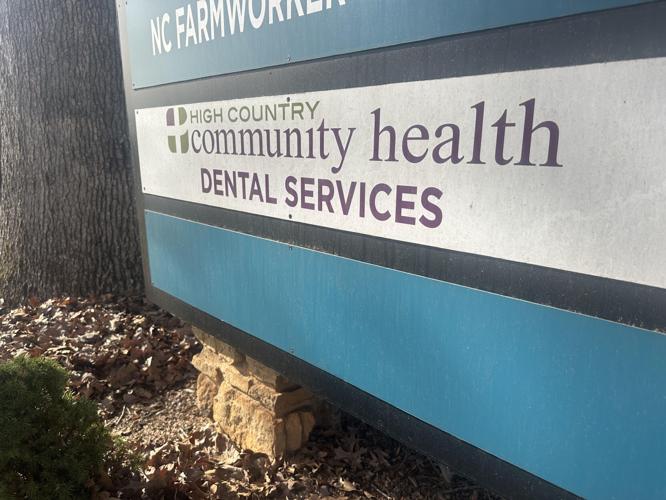
High Country Community Health Dental Services is Teeth in Need’s primary provider. Families can receive dental care on a sliding payment scale, according to their income. The dental office is at 500 E. Parker Road, Morganton.
Teeth in Need partners with the Burke County School Nurse Program, local dental offices, and will soon partner with the Community Foundation of Burke County. The program has provided financial assistance for over 600 Burke County families for dental care.
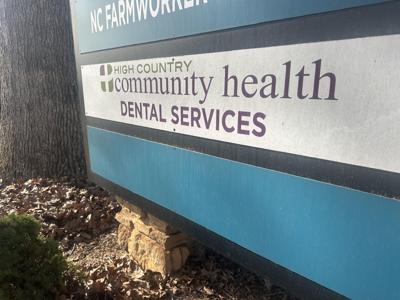
High Country Community Health Dental Services is Teeth in Need’s primary provider. Families can receive dental care on a sliding payment scale, according to their income. The dental office is at 500 E. Parker Road, Morganton.
The days of regular dental screenings in schools are declining, and with pediatric dental disease being the most common chronic disease among children, Nancy Ferguson Brown said it’s important that Burke County parents know about their community’s resources.
Brown, who worked as a dental hygienist in private and public practice for three decades, helped create Teeth in Need, which is a cooperative effort between the Burke County School Nurse Program, local dental offices, and soon, the Community Foundation of Burke County.
For more than two decades, the program has provided financial assistance to more than 600 Burke County families, helping parents provide for their child’s most immediate dental care needs. But with referrals down over the past few years, Brown said there’s a pool of funds waiting to be put to use.
THE PROGRAM’S BEGINNINGS
The program started 25 years ago in response to a mid-1990s community health assessment that revealed a great need for improved dental health. Teeth in Need’s mission is to relieve dental pain and suffering for underserved Burke County school children, and to promote prevention against pediatric dental disease, the most common, but largely preventable chronic disease.
Teeth in Need partners with the Burke County School Nurse Program, local dental offices, and will soon partner with the Community Foundation of Burke County. The program has provided financial assistance for over 600 Burke County families for dental care.
TEETH IN NEED / FOR THE PAPER
After the state withdrew funding for student remedial health needs, according to Brown, school nurses were faced with soliciting money from the community to pay for dental care for K-12 grade students in need. Supported by Burke County United Way, the Healthy Mouths Task Force started the program in 2000 and was initially funded in partnership with the former Grace Healthcare Foundation.
After Grace Hospital went through reorganization, Brown shifted the partnership to the local Good Samaritan Clinic, Inc., which provides a wide range of medical care to the uninsured. The nonprofit has been TIN’s agent for administering funds for almost 23 years.
CHANGES AHEAD
But in the new year, change is coming. Teeth in Need will transition its funds to the Community Foundation of Burke County, which Brown said will be able to better manage the funds and grow the program’s endowment. Currently, there is $5,000 in funds, and Brown said very little of those funds are being used.
Having the Community Foundation of Burke County distribute the funds will give Brown a break after 25 years of managing the process. The foundation’s grants committee will be able to step in and evaluate where the funds should go.
DECLINING REFERRALS
Referrals, which come from the school system, have dropped off, Brown said, so the program hasn’t paid out as much money as it has in the past. Referrals are down for various reasons, including fewer dental screenings in schools and North Carolina’s newly established Parents’ Bill of Rights.
“Before, usually when we went to school, we had health screenings, we had vision, hearing, we had dental checks, and we had scoliosis checks,” Brown said. “But now, parents have a choice whether or not they want their child to be screened, so there’s fewer parents giving permission.”
Many children can have health issues that are going unnoticed, Brown said. When she retired in 2008, her position, which was funded by the state through the Department of Health and Human Services, was moved to the Eastern part of the state. Now, Burke County is just one of the 11 counties that one public health hygienist covers.
“It’s good for our children, and it’s good that parents know their child’s needs, because we’re in a very fast-paced world, and parents are not always aware of their child’s health needs.”
WHO THE PROGRAM SERVES
Teeth in Need’s primary demographic is children who come from immigrant households. Brown said that several of those children are coming in with no dental education and have not been drinking fluoridated water. For some, it’s their first time visiting a dentist.
Hygienists will complete an assessment, looking for filled, missing, or decayed teeth. The most common issue, Brown said, is obvious decay, and the child will be referred to visit a dentist. Many children use Medicaid, Brown said, but some parents earn just a little too much to qualify, so they may use TIN funds.
Teeth in Need partner and primary provider, High Country Community Health, has a dental clinic on Parker Road where parents can take their children and pay on a sliding fee scale based on their income. The clinic also accepts insurance and Medicaid.
COMMUNITY PARTNERSHIPS
High Country Community Health’s clinic also takes the load off Teeth in Need. “They have another avenue without tapping into these funds, because these funds were for the child’s most pressing need,” Brown said, “to get them out of pain and infection so that they can stay in school.”
Community dentists have also been a great help in supporting Teeth in Need’s mission, Brown said, adding that some offices will see kids for free or reduced rates. Community foundations and churches, including the Kiwanis Club, First Methodist Church, First Baptist Church, the Mull Foundation, and Grace Episcopal Foundation have all been the program’s biggest contributors over the years, Brown said.
Around the holidays is usually the busiest time for donations, Brown said. So, with the transition to the Community Foundation of Burke County, Brown is asking any donors to make their payments out to the foundation instead of the Good Samaritan clinic.
Madison Lipe is the municipal reporter for The Paper. She can be reached at 828-445-8595 or madison@thepaper.media.
Keep it Clean. Please avoid obscene, vulgar, lewd,
racist or sexually-oriented language. PLEASE TURN OFF YOUR CAPS LOCK. Don't Threaten. Threats of harming another
person will not be tolerated. Be Truthful. Don't knowingly lie about anyone
or anything. Be Nice. No racism, sexism or any sort of -ism
that is degrading to another person. Be Proactive. Use the 'Report' link on
each comment to let us know of abusive posts. Share with Us. We'd love to hear eyewitness
accounts, the history behind an article.












(0) comments
Welcome to the discussion.
Log In
Keep it Clean. Please avoid obscene, vulgar, lewd, racist or sexually-oriented language.
PLEASE TURN OFF YOUR CAPS LOCK.
Don't Threaten. Threats of harming another person will not be tolerated.
Be Truthful. Don't knowingly lie about anyone or anything.
Be Nice. No racism, sexism or any sort of -ism that is degrading to another person.
Be Proactive. Use the 'Report' link on each comment to let us know of abusive posts.
Share with Us. We'd love to hear eyewitness accounts, the history behind an article.