

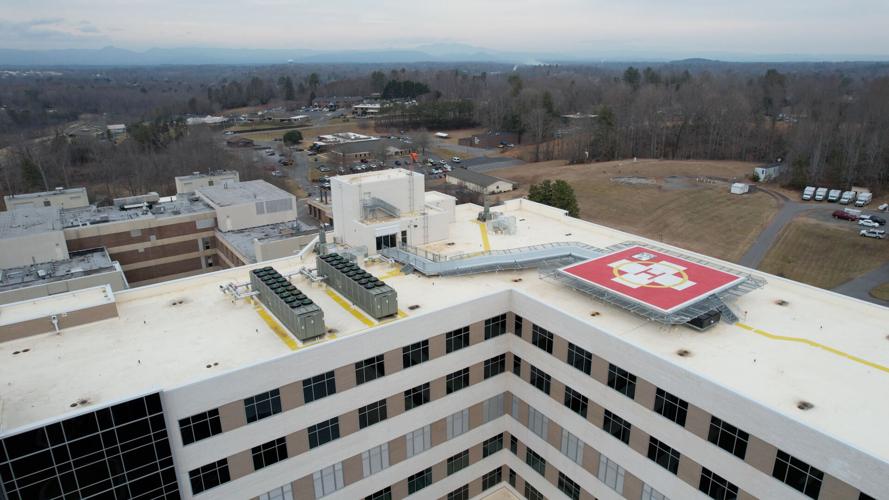




Editor’s note: UNC Health Blue Ridge Morganton was recently designated as a Level III Trauma Center by the N.C. Office of Emergency Services. Wanting to know more about the process of earning that designation and what it will mean to the hospital and its service to the community, The Paper questioned Trauma Program Manager Kaylee Pittman, RN.
In the hospital’s announcement of the Level III Trauma Center designation, it was noted that it was received “after more than a year of preparation.” Could you give the specifics of what that preparation entailed?
Pittman: Achieving the Level III Trauma Center designation was the result of over a year of rigorous preparation, strategic planning, multidisciplinary collaboration, and commitment from all service areas across UNC Health Blue Ridge.
The N.C. Office of Emergency Medical Services (NCOEMS) mandates that a trauma program be fully operational for at least 12 months before applying for designation.
Prior to being operational, there were many barriers to overcome.
This journey began with building a robust trauma infrastructure, including the recruitment of a trauma medical director, trauma program manager, trauma registrar, performance improvement nurse, and establishing 24/7 trauma surgeon coverage.
Developing trauma-specific policies and procedures required extensive research, benchmarking with other trauma centers, and close coordination with our multidisciplinary teams.
A cornerstone of our preparation was comprehensive staff education and training to ensure our clinical teams were equipped to deliver high-quality, evidence-based trauma care.
Additionally, we implemented a rigorous performance improvement process, including regular case reviews, data-driven analysis, and continuous quality enhancement initiatives. This designation reflects our unwavering commitment to excellence in trauma care.
Does the N.C. Office of Emergency Services have a checklist of requirements for the Level III designation, and could you share some of the more important items on that checklist?
Pittman: Yes, NCOEMS aligns its requirements with the standards set by the American College of Surgeons (ACS), as outlined in the foundational document Resources for Optimal Care of the Injured Patient, commonly referred to as the “Gray Book.”
This comprehensive guide spans 174 pages and includes over 100 standards that trauma centers must meet to achieve and maintain designation to consistently deliver high-quality, evidence-based trauma care.
Key requirements include:
- 24/7 availability of trauma-trained physicians and surgeons
- Dedicated trauma resuscitation areas
- Ongoing staff education and credentialing
- A robust Performance Improvement and Patient Safety (PIPS) program
- Disaster preparedness and injury prevention initiatives
Throughout this journey, numerous advancements have emerged as a result of our Level III designation.
One notable advancement is the implementation of a Massive Transfusion Protocol (MTP), which enables rapid, balanced resuscitation for patients experiencing life-threatening hemorrhage — an essential capability that was not previously available at our facility.
Was the Level III designation tied into the opening of the new emergency department and expanded intensive care unit? If so, in what way?
Pittman: While UNC Health Blue Ridge receiving the Level III Trauma Center designation was not contingent upon the completion of our new tower, the timing has been fortuitous. The new tower has markedly improved the quality of care that our patients receive.
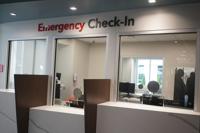
The new emergency department and expanded intensive care unit have significantly enhanced our ability to deliver high-quality trauma care.
The new facilities feature state-of-the-art equipment and dedicated trauma bays designed specifically for rapid trauma resuscitation.
Together, the trauma program, new ED, and ICU expansion represent a unified commitment to providing advanced, accessible health care right here in our community.
At what point did UNC Health Blue Ridge decide to pursue the Level III designation and what was the reasoning behind that decision?
Pittman: In 2022, UNC Health Blue Ridge identified a critical need to expand access to trauma care for our region.
Given our proximity to Interstate 40, Linville Gorge, Lake James, and other high-traffic recreational areas, we are strategically positioned to serve patients with a wide range of traumatic injuries.
With the nearest Level I trauma center 74 miles away, Level II at 57 miles, and Level III at 37 miles, our decision to pursue designation was driven by a commitment to provide timely, life-saving care closer to home.
As a Level III Trauma Center, we can deliver early stabilization, manage many injuries independently, and coordinate rapid transfers to higher-level centers when necessary.
Is UNC Health Blue Ridge Morganton required to “reapply” for this designation each year and if so, how extensive a process will that be?
Pittman: Yes, trauma centers undergo a structured re-verification process. UNC Health Blue Ridge is currently in its initial designation period and will participate in a follow-up survey after one year.
Upon successful completion, UNC Health Blue Ridge will receive an additional two years of Level III Trauma designation.
After the initial three-year period, trauma centers are re-evaluated every four years. The preparation for every survey will be like our initial designation survey.
Each survey involves a comprehensive review to ensure continued compliance with ACS standards and a sustained commitment to excellence in providing quality trauma care to our patients.
Anything else you’d like to add about the designation or its importance for our community?
Pittman: This designation is a transformative achievement for our region. Level III Trauma Centers play a vital role in improving patient outcomes by reducing time to treatment, enhancing survival rates, and ensuring access to high-quality trauma care.
UNC Health Blue Ridge is committed to moving health care forward and is proud to bring this level of care to our community.
This milestone reflects our unwavering commitment to advancing health care, expanding access to critical services, delivering life-saving trauma care, reducing time to treatment, and ultimately enhancing the health, safety, and outcomes of the patients and communities we serve.

























(0) comments
Welcome to the discussion.
Log In
Keep it Clean. Please avoid obscene, vulgar, lewd, racist or sexually-oriented language.
PLEASE TURN OFF YOUR CAPS LOCK.
Don't Threaten. Threats of harming another person will not be tolerated.
Be Truthful. Don't knowingly lie about anyone or anything.
Be Nice. No racism, sexism or any sort of -ism that is degrading to another person.
Be Proactive. Use the 'Report' link on each comment to let us know of abusive posts.
Share with Us. We'd love to hear eyewitness accounts, the history behind an article.