

Hyujin (Hun-gin) was originally from South Korea, raised in Chicago and attended Tufts University in Boston. By the time I met her, she was the mom of two almost-teenagers and had become an engineering teacher of the year in a suburban Atlanta, high-achieving, STEM high school. And although her husband still lived and worked in South Korea, he planned extraordinary, global vacations that always involved some kind of gastronomic adventures. Like me, they are foodies. So, of course, we became fast friends.
We bonded over what we eat, but I treasured more her willingness to share her Korean culture with me. I’ve always thought of myself as a collector of people, but not in a creepy, “Silence of the Lambs” kind of way. Instead, I love discovering the experiences that are tucked away on a shelf in someone’s narrative. Those pieces of a person’s story make me a more understanding and empathetic member of society. I cannot walk a mile in their shoes but hearing them tell their lived experiences is perhaps the next best thing.
Enter Dr. Leslie McKesson and Thea Yang. We were introduced professionally, but I immediately knew these two dynamic women could teach me so much. The three of us are diverse both racially and ethnically, and much like when I first met Hyunjin, I wanted to find out about their culture, foodways and lives in Burke County. What kinds of things would I learn from them? It turned out to be a great deal.
Neither of these two women is a native Morgantonian, but connections here run deep. Thea immigrated to the area from Laos, by way of California, in 1993. Leslie, whose grandparents lived in Burke County, hails from Caldwell County. She moved here in 1993 as well. Each makes this place their professional or personal home, and they have seen it evolve significantly in those thirty plus years.
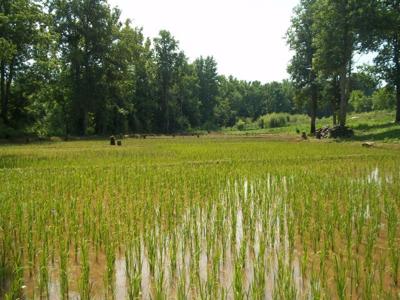
Changes include both a move away from textile manufacturing to different industries and a broadening of language, social and economic factors. Home to the fourth largest Hmong population in the U.S., there can be no doubt that our county has benefited from not only their influence but also that of our Guatemalan neighbors. In both instances, it was the mountains that drew them to this place. It felt like their homelands, and so they put down roots.
What had begun as an outreach by me that was based on the assumption these women would be just as passionate about cooking as I am, actually turned into an enlightening conversation about their self-professed lack of culinary skills. To be sure, Leslie and Thea wish they were great cooks (don’t we all). And in Thea’s mind, she is, even if (as she openly shared) the result never quite reaches the pinnacle of her parents’ inherent abilities.
And not to misrepresent, these two know good food when they taste it. As Leslie put it, she lives by the Southern African American expression, “If the food is good, she put her foot in that.” For those who may not know, this is a compliment to any cook whose food is absolutely delicious.
One of the incredible things that happens when you engage others about their foodways is the level of authentic and deep conversations that unfold. Thea’s willingness to share her Hmong culture is contagious. According to Thea, the Hmong diaspora caused their ways of cooking to adapt. Still, the food maintains its rustic origins — no chopsticks, herb-based, ever-present Asian rice and spicy undertones. It is an integral part of their cultural identity and reflects the Hmong community’s ability to create sustenance from accessibility.
And this concept of nourishing the soul and body through what was available is where Leslie carried us: an examination of the profound impact of African Americans’ Soul Food. Brought across The Middle Passage, enslaved Africans were forced to cook for white slave owners and became the experts in preparing everything from barbecue to biscuits. Later, accessibility to food was based on income, and African Americans made it taste as delicious as possible using whatever they had. Now their own beloved dishes like potlicker, collard greens and chitlins are perceived as synonymous with “Southern cuisine.”
The intersection of food and culture is profound. For Leslie, the happiest memories involve her family seated around a table that includes her famous broccoli casserole and crock pot mac & cheese. Those dishes “reign supreme and no gathering can proceed without”. For Thea, it is hearing her father’s words: “You need three things to live — shelter, love and food.”
According to Leslie, sharing about our ways of eating “enhances cultural competence.” She’s right. It is a push and pull to expand one’s conscientiousness.
Hyungin introduced me to Korean fried chicken paired with Korean beer. Thea and Leslie taught me that, oftentimes, our foodways reflect our need to adapt to change and persevere in spite of it.










(0) comments
Welcome to the discussion.
Log In
Keep it Clean. Please avoid obscene, vulgar, lewd, racist or sexually-oriented language.
PLEASE TURN OFF YOUR CAPS LOCK.
Don't Threaten. Threats of harming another person will not be tolerated.
Be Truthful. Don't knowingly lie about anyone or anything.
Be Nice. No racism, sexism or any sort of -ism that is degrading to another person.
Be Proactive. Use the 'Report' link on each comment to let us know of abusive posts.
Share with Us. We'd love to hear eyewitness accounts, the history behind an article.