




The 43-day government shutdown ended last week, but the bill that returned federal workers to their jobs included a caveat that hemp supporters say could demolish North Carolina’s entire hemp industry in less than a year.
According to a provision in the bill that reopened the government, Section 781 of H.R. 5371, a hemp ban will become “effective 365 days after the enactment of this Act,” which President Donald Trump signed into law on Wednesday of last week.
Local shop owners and hemp users are pushing back, trying to save an industry that seemed to be catching solid footing in the Tar Heel State.
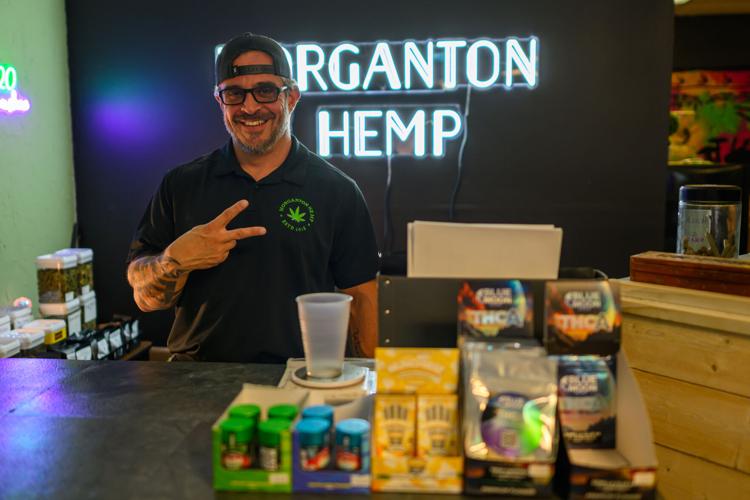
“They want to go to a 0.4 milligram [THC amount] — so less than a half a milligram per any product,” Morganton Hemp shop owner Shaun Simons said. “It’ll eliminate even full-spectrum CBD, with those trace amounts and stuff like that. It’ll eliminate pretty much every product on the market … And it destroys the agricultural part of hemp that was still left in North Carolina.”
The law specifically targets tetrahydrocannabinol (THC) percentages in hemp products. THC is the psychoactive chemical found in hemp and marijuana that produces intoxicating effects.
According to the language of the new bill, hemp contains no more than “0.3% of THC on a dry weight basis.” However, the existing federal criminal law focusing on marijuana primarily refers to the Delta-9 compound.
Many hemp shops carry products that contain Delta-8 or THC-A, which function similarly to, but are legally different from, Delta-9.
The language of the new law expands regulations to include total THC and “any other cannabinoids that have similar effects on humans or animals as a THC … greater than 0.4 milligrams combined total per container.” This would include Delta-8 and THC-A on top of the small amount of Delta-9 in hemp.
Although hemp and marijuana both fall under the Cannabis sativa species, their uses, strengths, and subsequent effects can vary immensely. Think of wolves versus dogs — both are identified as the species Canis lupus, but there’s quite a distinction between a wild gray wolf and the queen’s corgis.
Supporters say hemp, while having recreational use, mainly finds its place in the medicinal and industrial world, utilized for everything from seizure medicine to paper and textile products.
“From a medicinal standpoint, CBD with trace amounts of THC works better than CBD standalone, by itself,” Simons said. “We won’t be allowed to have those trace amounts of THC that were legal and common in the market 10 years ago. It’s like we’re backpedaling 10 years in regulation.”
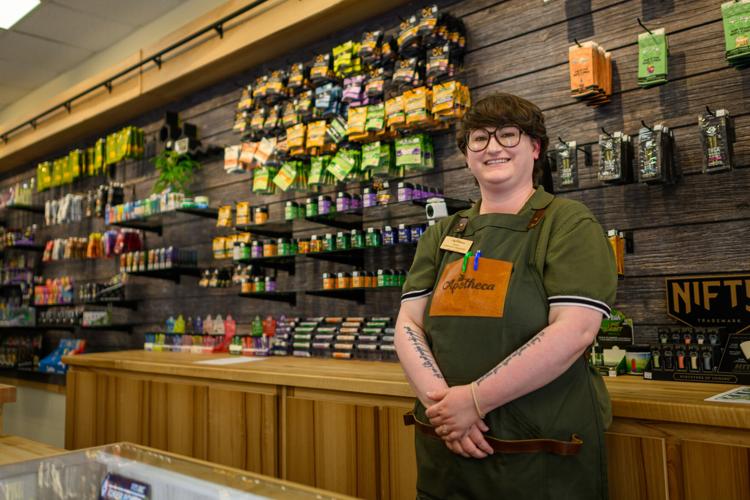
Apotheca Cannabis Consultant Kasey Buchanan explained how she uses hemp to cope with her postural orthostatic tachycardia syndrome (POTS), an autoimmune disease that patients say causes chronic pain and discomfort.
“I completely came off pharmaceuticals,” Buchanan said. “Four years ago, when I completely stopped, I was like, I feel like I get just as much off of smoking as I do off taking medicine. I just stopped because I was like, I’m literally taking eight pills a day … I take this one to help with this, this one to help with that. I just don’t want to do it.”
While many hemp customers report use for medicinal purposes, some supporters say the benefits also extend to people who aren’t in constant pain.
Catawba County local Noah Wurth sometimes floats across the Burke County line to visit friends and the local Apotheca. Wurth uses flower — the raw plant material traditionally associated with hemp — and vaporizers.
“It does help me sleep,” Wurth said. “I have issues with insomnia and the general night-owl habits that go along with it. I have deeper sleep while using it, and the only downside, for me, is a lack of dream retention.”
Wurth believes a hemp ban will simply push people toward illegal sources for hemp products.
“If your goal in restricting hemp access is less drug use, and not just protecting the alcohol industry, you must realize that this is only going to expose the public to harder drugs that wouldn’t otherwise be easily accessible to them,” Wurth said.
While the most recent legislation deals a heavy blow to the hemp industry across the country, states such as Colorado and New York won’t see as much of a change due to their current policies surrounding legalized marijuana.
“This really only affects the states that still don’t have a marijuana program,” Simons said. “The states that haven’t have let us operate like we are now. Those states have a decision to make, and if they can let us operate under those rules, then I think North Carolina could continue to operate really well and have shops like this get licensed.”
Past the future of hemp, one of Buchanan’s biggest concerns lies in the confusion of her customers surrounding the timeline of the ban and what they’ll do after.
“We’re trying to stave off that anxiety to say we are fighting against the bill,” Buchanan said. “As a company, as a whole, we have over 300 employees that literally would be without a job if that happens next November … It won’t just hurt us. It hurts farmers. It hurts our customers who come in here for pain relief or sleep relief.”













(0) comments
Welcome to the discussion.
Log In
Keep it Clean. Please avoid obscene, vulgar, lewd, racist or sexually-oriented language.
PLEASE TURN OFF YOUR CAPS LOCK.
Don't Threaten. Threats of harming another person will not be tolerated.
Be Truthful. Don't knowingly lie about anyone or anything.
Be Nice. No racism, sexism or any sort of -ism that is degrading to another person.
Be Proactive. Use the 'Report' link on each comment to let us know of abusive posts.
Share with Us. We'd love to hear eyewitness accounts, the history behind an article.