

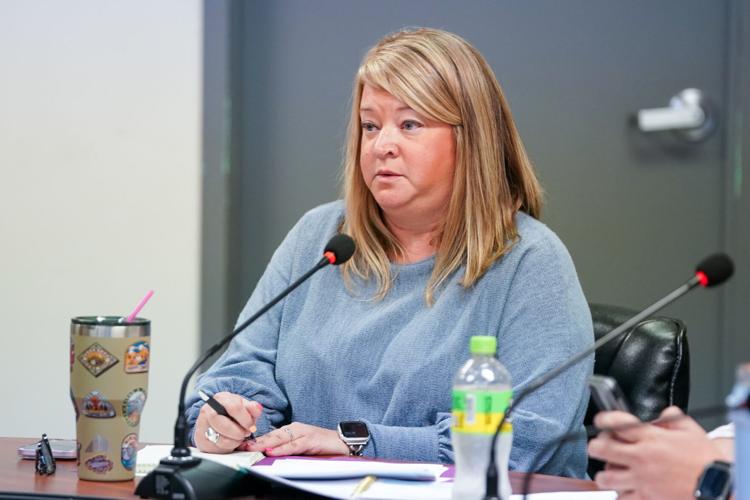

Glen Alpine’s form of government is one that local government professionals say can lead to fragmented oversight and inefficient decision-making. With one woman handling all of the town’s administrative work, she said the setup has been stressful at times.
The town is one of two municipalities in Burke County that still uses the mayor-council model, which local government professionals say can magnify existing problems rather than cause them outright.
Crystal Carswell has been working for the town as its administrator for two years now, having come from the City of Morganton’s Development and Design Department, where she worked as a permit tech for almost 18 years.
She jumped into the role headfirst, relying heavily on support from the Western Piedmont Council of Governments, as well as the UNC School of Government. Attending clerk certification classes and networking with other clerks from across the state, Carswell has learned how to fulfill the duties of clerk, finance officer, and more, all in one.
During her time with the town, Carswell has witnessed board infighting, disputes between board members and town staff, recurring agenda items that have been difficult to resolve, and an outdated personnel policy.
Although the roles differ legally, Carswell still handles many of the same day-to-day responsibilities as a town manager, though she does not have the ability to hire and fire personnel. Which department heads report to Carswell has changed during her time as administrator. The town’s department heads part in two directions, with the police and fire chiefs reporting to Carswell, and the chief of public works reporting to the board, a decision made after Alderman Reid Scott was appointed to the position.
Municipal governance experts say inconsistency in reporting protocol is more common in a mayor-council form of government.
TOWN MANAGER VS. TOWN ADMINISTRATOR
According to Rob Shepherd, executive director of the North Carolina City & County Management Association, the council-manager form of government is more consistent because the manager’s duties are outlined in law. A manager is bound by North Carolina General Statutes to perform certain tasks, and is often accompanied by a clerk, who can provide assistance. An administrator can perform many of those same tasks, but their duties are ultimately decided by the will of the elected board and can be taken away or added to at any time with board approval.
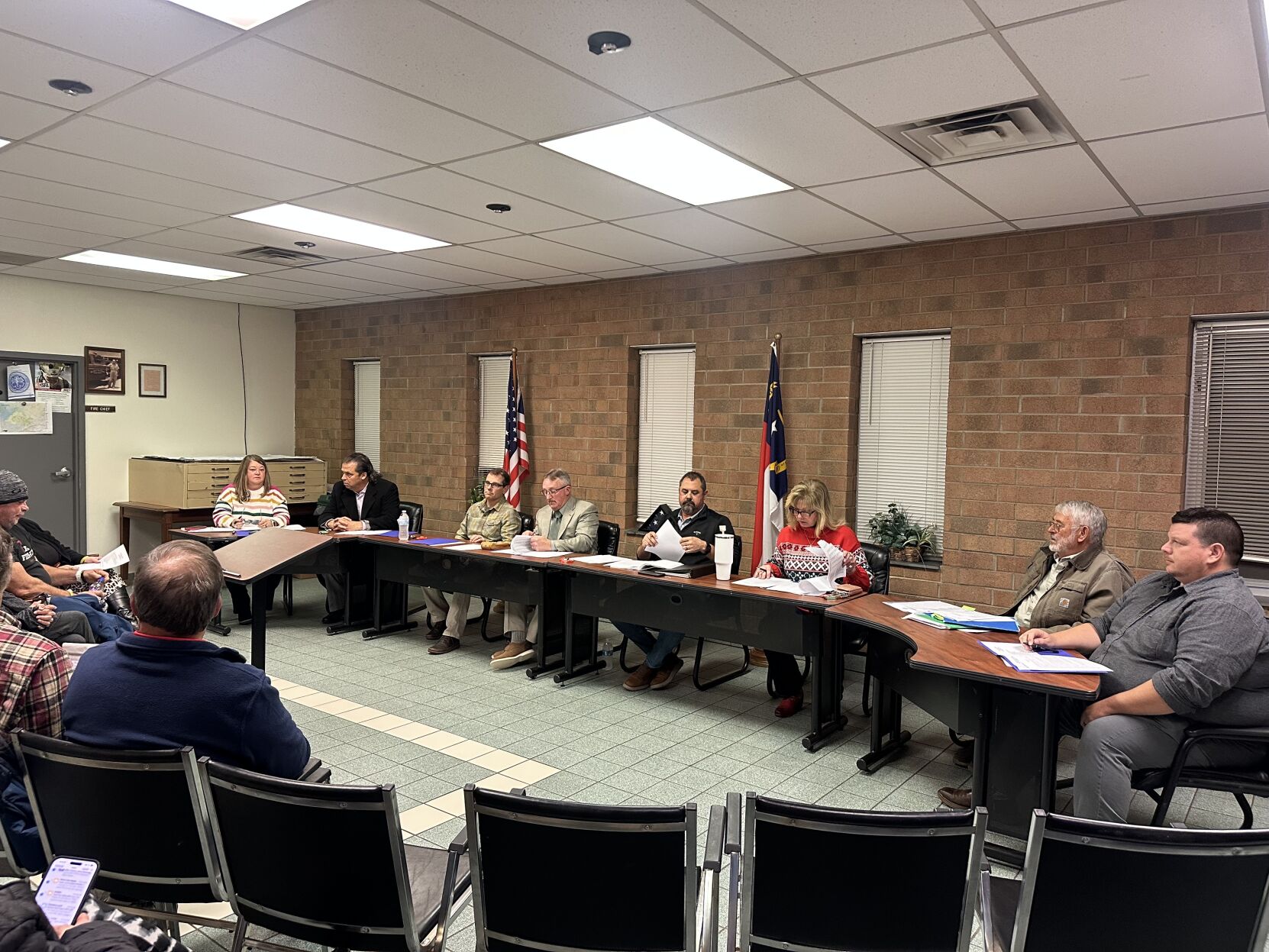
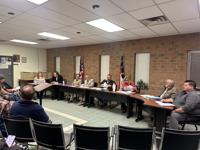
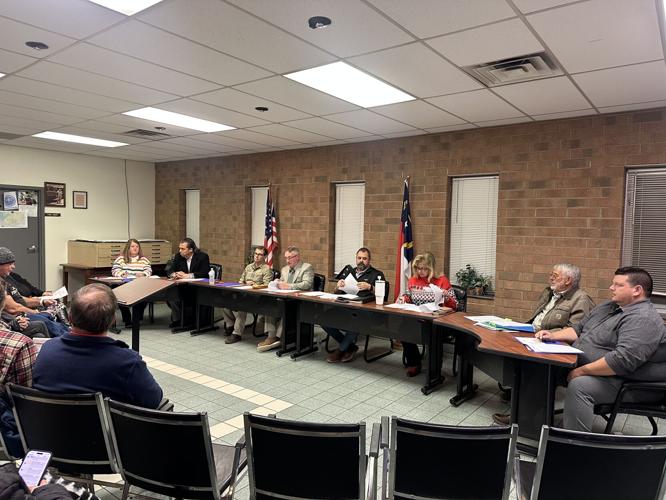
Members of the Glen Alpine Board of Aldermen include Chad Wykle, Jason Miller, Sheila Perkins, Reid Scott, and Luke Boone. The town’s mayor is Kevin Herron.
MADISON LIPE / THE PAPERWhile a manager typically oversees employees, Shepherd said board members and the mayor in a mayor-council form of government are often assigned to specific departments as de facto supervisors, similar to the role Scott now holds as supervisor of the public works department.
Shepherd said that, while not always the case, most managers have graduate-level training in local government administration. “I’m not saying this is in every case, but you tend to see better qualified and more professional administration with a city manager,” Shepherd said.
Inconsistency and vagueness related to employee responsibilities have led to public disputes between board members and personnel. Glen Alpine employees are often questioned publicly about their performance, but the town has no clear policy to hold them accountable, and, according to board members, some employees lack clear job descriptions.
The board’s personnel policy was last updated in 2007 and is missing important sections such as leave approval, tobacco use, vehicle use, and material safety data sheet (MSDS) policies. Back in June, the board voted to adopt the outdated version, with the condition to review and upgrade it month by month.
But the efforts to upgrade didn’t last long. The topic was abandoned in subsequent meetings. Often, a single item stretches across several meetings, slowing progress on town business.
The Town of Rutherford College had a similar issue before changing its form of government to council-manager in 2011, according to Manager Jessica Bargsley. The change has streamlined decision-making and enabled shorter town meetings, she said.
“The biggest [benefit] for me was our meetings would be three hours long then,” Bargsley said. “Our meetings now are anywhere from 20 to 30 minutes. I mean, they’re never over an hour.”
In Glen Alpine, meetings can go on for hours, rehashing old material. With board members balancing full-time jobs, completing the necessary legwork can be time-consuming and can push decisions back. Bargsley said she has also been able to make key decisions without having to wait for approval during a board meeting.
“So, if we need a new computer, if Terra’s (the town’s deputy clerk) computer breaks down, I do not have to wait a month or call an emergency meeting,” Bargsley said. “I can just make that decision myself and get it done, so that whole thing just makes everything so much easier.”
The only other municipality in Burke County without a manager is Connelly Springs. But with town services contracted out to surrounding municipalities, Administrator Tamara Stamey is the town’s only full-time employee. When Stamey isn’t in the office, she has backup from part-time Assistant Administrator Sarah Pfeiffer.
However, there are benefits to the mayor-council government, Shepherd said, particularly the closeness between the community and elected officials.
“They do say the mayor-council form of government is more close to the citizens because citizens do elect the mayor and the council, and they can go directly to the mayor and council if they want something done,” Shepherd said. “Under council-manager, citizens can still go to the mayor or council, but they have to work through a manager to accomplish things.”
Shepherd said that some residents can feel like having that buffer leads to the town relinquishing authority and accountability, but at the end of day, he said the board still makes the key decisions that shape the town.
Two of Glen Alpine’s neighboring cities in the region, Morganton and Hickory, although much larger, were the first two municipalities in North Carolina to adopt the council-manager government, both in 1913, which Shepherd said was an effort to get rid of the “spoils system.”
“One of the reasons that this form of government was created back in the 1900s was there was the spoils system that was going on in the federal and state governments that employees were being hired by who they knew and not what they knew,” Shepherd said, adding that overall the form of government has made local government services more equitable and professional.
While one form of government may be more efficient, conflicts will still get in the way of success. “If there’s disagreement amongst the elected officials, just changing the form of government isn’t necessarily going to make that better,” Shepherd said.
Carswell said she believes that Glen Alpine is ready for growth and modernization, but strong leadership will be needed to get there. She said that although the mayor does not have a vote, a leader who is willing to speak up can still serve the town in a more managerial capacity.
New Mayor Kevin Herron will be able to serve as a full-time mayor for the town, whereas former Mayor Michelle Lewis was also balancing the position with her full-time career.
“So far, from what I can tell we’ve been fine. I mean, he will call me and ask me questions about something, and it’s early, but I’m feeling real positive about the way things will maybe be handled in a different way,” Carswell said.
Carswell said that getting an up-to-date personnel policy would help make her role easier, eliminating any gray areas for personnel. With the item on the agenda in January, the board has decided to start tackling sections month by month.
For Carswell, she has taken the heat at times when she has been out of office, resulting in town hall being closed. Some residents have voiced that they feel like they aren’t receiving the services that they pay taxes for by not being able to access town hall. Some community members have also asked Carswell why she doesn’t live in the town she serves.
“I think, too, that’s where a lot of people maybe misunderstand me, because no I don’t live in the town of Glen Alpine, but that doesn’t mean I don’t care,” Carswell said. “You know, I take a lot of pride in my job and I’m a people pleaser. If I can help somebody, I enjoy that part.”
“I care about what’s going on in the town,” Carswell said. “I would love to see some revitalization right here, and the little downtown that we have, I mean I think there’s so much potential here that maybe it’s just kind of gotten overlooked over time.”





















(1) comment
Glen Alpine's challenges are not due to its "structure" any more than the Burke County School Board's challenges are due to one of The Paper's headlines. The issue in each case is "leadership." The town of Connelly Springs (C.S.), with the same population and governance model as Glen Alpine, has been in the news very little since 2014, when one of its "leaders" pled guilty to embezzling $25,000. C.S. appears to be stable and well run. Its ad valorem tax rate is the lowest in Burke County. Perhaps that is why it is growing faster than Glen Alpine and why its lakefront subdivisions are booming while Valdese's "The Settings" has been floundering for fifteen years. Perhaps an in-depth article on the successful "leadership" of Connelly Springs would be more enlightening than blaming Glen Alpine's "newsworthy challenges" on its governance structure.
Welcome to the discussion.
Log In
Keep it Clean. Please avoid obscene, vulgar, lewd, racist or sexually-oriented language.
PLEASE TURN OFF YOUR CAPS LOCK.
Don't Threaten. Threats of harming another person will not be tolerated.
Be Truthful. Don't knowingly lie about anyone or anything.
Be Nice. No racism, sexism or any sort of -ism that is degrading to another person.
Be Proactive. Use the 'Report' link on each comment to let us know of abusive posts.
Share with Us. We'd love to hear eyewitness accounts, the history behind an article.