

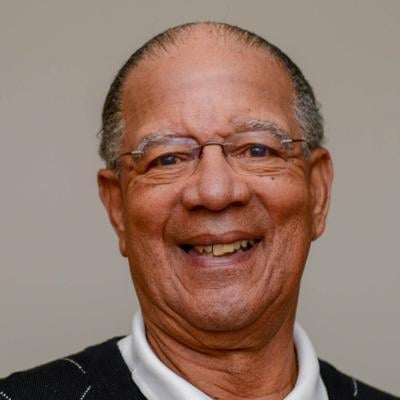
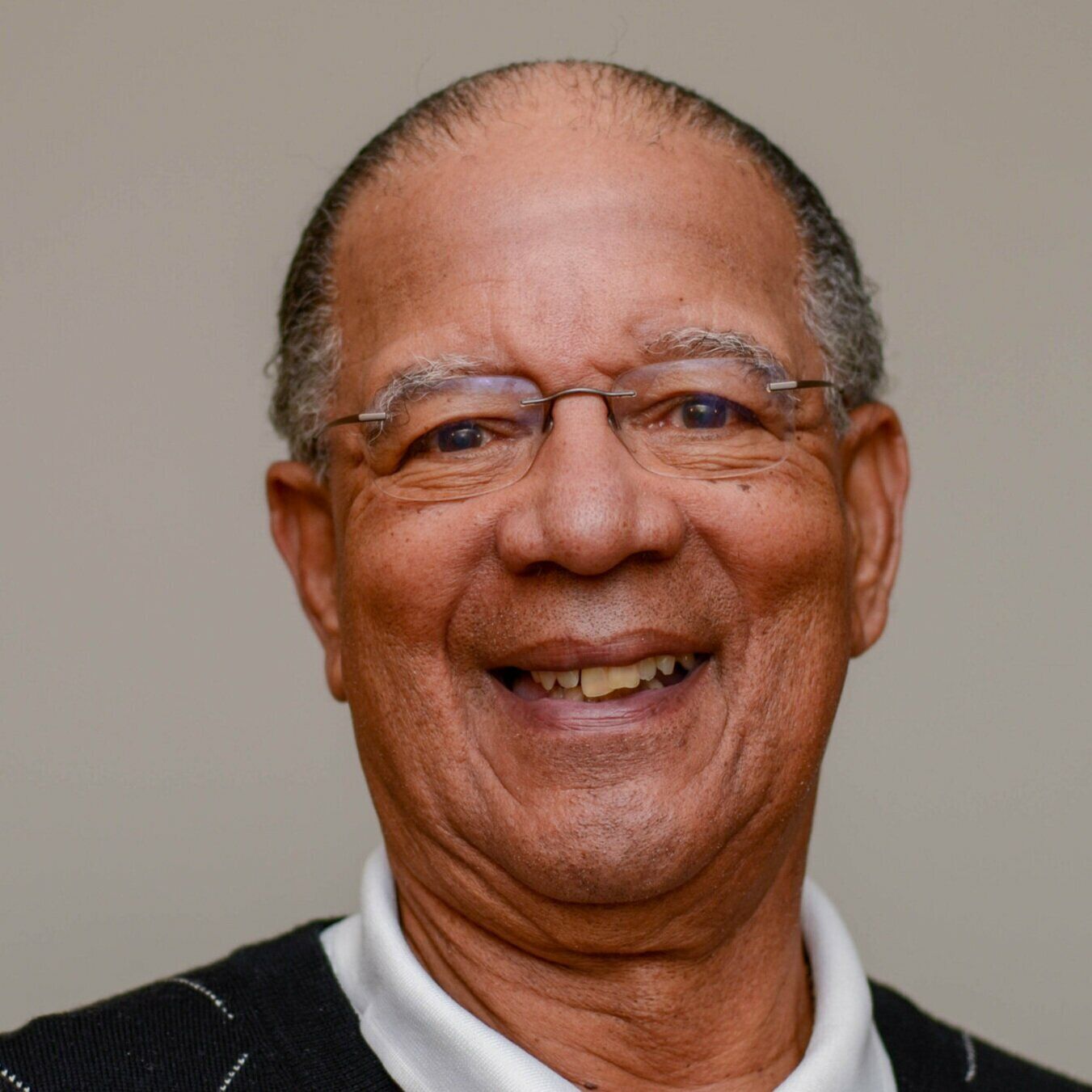
As a young man fresh out of college, full of energy and ideas, Allen Fullwood could have gone most anywhere and done most anything.
Fortunately for Burke County, he came home.
What followed after the 1964 graduate of North Carolina College at Durham (now N.C. Central University) settled down in his hometown of Morganton has been a lifetime of service to his community – African American and otherwise.
Now almost 83, Fullwood still strides gracefully and with purpose. His mind and memory are razor-keen. His eyes shine with hope when he speaks about the future, but they grow softer and more wistful when he recollects the past. There is a wisdom behind those eyes only decades of intellectual curiosity and determined introspection can impart.
His deep voice is nothing short of majestic – warm, resonant, and sincere – as he begins to tell his story.
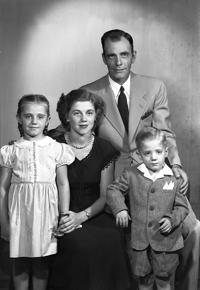
Fullwood grew up on Bouchelle Street during an era of soul-crushing racial injustice. His late mother, Evelyn, and sister, Clara, comprised his immediate family, but his circle of supportive relatives was much broader, populated by a host of aunts, uncles, and cousins.
Life was a strange dichotomy: joyful, yet tempered by a nebulous, pervasive sense of uneasiness.
“My family was very protective of us,” he said. “They didn’t allow us to just wander downtown. They felt OK for us to be within the Bouchelle Street area, but St. Stephen’s Episcopal Church was the end of what I saw as a safety zone, because once you passed St. Stephen’s, you were getting into a totally different environment, where you might hear the n-word, you may hear some derogatory statement as you were walking through the street. That did not happen there on Bouchelle Street.
“It wasn’t that you feared it, but it was a different zone compared to Bouchelle where I had the safety of people who looked like me.”
Bouchelle was indeed an oasis of comfort and security.
Fullwood fondly recalls Sunday afternoons socializing with friends and family at the home of his poetically named grandmother, Mary Maldonia McGimsey Fullwood. He reminisces about an enormous rose bush that grew beside her bannistered front porch. When Mother’s Day approached each spring, she would offer passers-by a flower to give to their mothers.
He harbors precious memories of another type of blossom as well.
“I often have this picture in my mind, I recall – even though the blight had occurred – the abundance of mimosa trees that were here,” he said. “It was called the Mimosa City. We had several in the yard. And still, those you find now, if I get close, I’ve got to pick one of those blooms off and smell it, because it reminds me of my childhood.”
More often than not, those reminders bring a smile to his face.
“In spite of growing up in that segregated, Jim Crow Era, life was pretty good,” Fullwood said. “We were not wealthy people at all, but everything was provided for our family because we were close. Our family was close. Any opportunity we had to get together, my aunts and uncles and cousins, they gathered.”
COMING OF AGE IN AN ERA OF OPPRESSION
Still, fully escaping the shadow of racial exclusion was impossible.
Some of the neighborhood’s elder residents had been born just after emancipation. Their parents had been slaves. They passed down family histories interwoven with the blood-stained fabric of those ghastly, bitter times.
There were other constant reminders as well. Fullwood said Bouchelle was book-ended by the stench of the city dump and the nerve-wracking pounding of a rock crusher.
“That gives you a picture,” he said. “And people had lived in that for years. I don’t know when the dump was closed, or the rock crusher removed.
“(There was) No regard by the leadership for the citizens of the Bouchelle Community,” he added.
Fullwood had a chance to leave Morganton, perhaps for good, when his mother married and moved to Maryland, and later, Washington, D.C. He tried it, but even then, at just 13, he knew his place was here.
“I was just not a city person,” he said. “I was used to romping the woods and I had my friends here. I guess I was about 13, and I had to tell my mother, ‘I’m going back to North Carolina.’ It hurt her. But I knew the city wasn’t for me.”
Fullwood graduated from Olive Hill School, which he attended along with other students who were bussed in from African American communities throughout the county prior to desegregation.
He then spent two years at Friendship Junior College in Rock Hill, S.C. It was the dawn of the civil rights era, and Fullwood sometimes participated in sit-ins at lunch counters.
Among his friends and football teammates at the college were members of the “Friendship 9,” a group arrested for staging a sit-in and who subsequently broke new ground in the struggle by spending 30 days at hard labor rather than paying their court-imposed fines.
WORK TO DO
Fullwood subsequently enrolled at N.C. Central and graduated in 1964 with a bachelor’s degree in sociology. During his senior year, Fullwood met a young lady named Doris, who was a first-year teacher at Olive Hill. Sparks flew. They got married and have been together ever since.
A job opening at Broughton Hospital opened the door for Fullwood’s professional career as a social worker, which lasted the next 33 ⅓ years. He worked with a team that helped pioneer the implementation of deinstitutionalization, a movement that essentially reshaped mental health care.
The team provided care in a five-county area that included Avery, Wilkes, Watauga, Allegheny, and Ashe. “Many of those inhabitants had not seen African Americans,” he said with the hint of a grin. “It was interesting and very educational.”
Later, Fullwood worked at the N.C. Department of Health and Human Services’ regional office in Black Mountain, before finishing his career at the J. Iverson Riddle Center in Morganton.
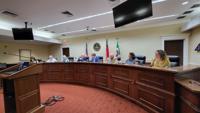
In 1967, he was approached about filling a recently vacated chair on the Board of Education. Fullwood agreed, finished out the term, and ran for re-election. He won, and spent the next 12 years on the board. He was the first African American elected to public office in Burke County’s history.
Fullwood isn’t especially proud of that fact. He sees his service to the board as a necessary component of citizenship. “There always has to be a first, and I’m not so much proud of that; that’s just the reality,” Fullwood said.
By 1979, with a dozen years of school board politics behind him, Fullwood retired from the board, a decision he made with typical selflessness: “You get beyond the point of making a contribution, because then you become a part of the institution,” he said.
A NEW CAREER OF SERVICE TO OTHERS
Since retiring from work, Fullwood has been busier than ever. He sees public service as a duty. “It’s something that I think benefits the community, the things I am involved with, like Foothills Conservancy and several others,” Fullwood said.
He currently serves on boards of directors for Foothills Conservancy; Carolina Land and Lakes out of Lenoir (a nonprofit promoting rural economic development and natural resource protection); and ARC, which provides services to people with intellectual and developmental disabilities.
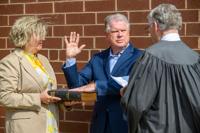
In 2022, he and Doris were jointly awarded the Order of the Long Leaf Pine, North Carolina's highest civilian honor, for their significant contributions to the state.
Fullwood is also a key member of the Burke Coalition for Reconciliation, a grassroots organization that has advocated for racial unity and for the removal of the Confederate memorial statue that stands on the grounds of the Historic Burke Courthouse.
A man of strong faith, Fullwood also serves on the foundation board for the Episcopal Diocese of North Carolina. He’s active in his parish, St. Mary’s and St. Stephens, currently serving as an interim vestry member.
Fullwood is a passionate student of history and was instrumental in developing the History Museum of Burke County’s “Children of the Struggle” exhibit, which chronicles the story of school integration in the county.
“There is so much history in this community in terms of African Americans that hasn’t been told,” he said.
HOME AND FAMILY: THE GOOD LIFE
When Allen and Doris aren’t volunteering, they cherish spending time with their daughters, Valaida and Diatra.
Both live in Charlotte.
Both are enormously successful – listing their accomplishments would take far more space than is available here – and, naturally, both are active in public service.
Fullwood’s face fairly glows as he talks about his children.
“We’re very proud of them,” he said. “They’re go-getters. I tell them to slow down, and they say, ‘Daddy, you can’t tell us to slow down.’ They’re our daughters, but they’re our best friends, too. We do a lot of things together.”
But Fullwood likes to spend time alone as well, especially with a rifle or fly rod in his hand. True to his country roots, he chases trout and hunts deer and rabbit. He is especially enamored of listening to a bawling pack of hounds pursuing a bear across the dark slopes of the Blue Ridge. He’s starting to get into outdoor and wildlife photography.
“I love to just go out and sit in the woods deer hunting,” he said. “It doesn’t matter to me whether I kill a deer or not; just getting out there. I’ve always loved the outdoors. There’s something wonderful about Mother Nature, out there by yourself or with friends.”
‘SOMETHING IN THE GROUND’
He insists there’s something wonderful about Morganton, too, an elusive, intangible quality that draws people in and invites them to stay.
“Morganton is a somewhat unique little town,” he said. “It has its own little uniquenesses, some not so positive and some very, very positive, and I can’t put my finger on it. As I’ve told people, there’s something in the ground here, and I don’t know what it is.”
Whatever it is, it brought Fullwood back and kept him here. He’s the first to admit this place isn’t perfect. The racism that clouded his younger years still hangs in the air, though it is perhaps less virulent and overt.
But he wouldn’t want to live anywhere else.
“I don’t think it was ever my goal after college to come back here and live,” he reflects. “But circumstances certainly occurred. In the 60s, there weren’t many employment opportunities here. “I have no regrets of remaining here in this community, but then sometimes I think, ‘would it have been different?’ Where would I have ended up and what would have been different about my life? I hope, at some point, I have made some kind of positive contribution to this community, because it’s a community I love. This is my home. I raised my kids here. My wife is here. It is a wonderful place, but like every place, there are so many improvements that can be done. It can be better.”
And it will be, if Allen Fullwood has anything to say about it.
After all, his life, a journey of adventure, discovery, and compassion, is, in some ways, just getting started.
“That journey,” he said in his melodic bass voice, “has brought about many very wonderful memories.”
Marty Queen is the senior reporter for The Paper. He may be reached at 828-445-8595 or at marty@thepaper.media.

















(0) comments
Welcome to the discussion.
Log In
Keep it Clean. Please avoid obscene, vulgar, lewd, racist or sexually-oriented language.
PLEASE TURN OFF YOUR CAPS LOCK.
Don't Threaten. Threats of harming another person will not be tolerated.
Be Truthful. Don't knowingly lie about anyone or anything.
Be Nice. No racism, sexism or any sort of -ism that is degrading to another person.
Be Proactive. Use the 'Report' link on each comment to let us know of abusive posts.
Share with Us. We'd love to hear eyewitness accounts, the history behind an article.