

At least a few of those dealing closely with addiction in Burke County are tired of what they consider ineffectual solutions to the opioid dilemma.
They want something different, and they want to be involved in the decision-making process that will determine how $25 million from the massive opioid lawsuit settlement is spent.
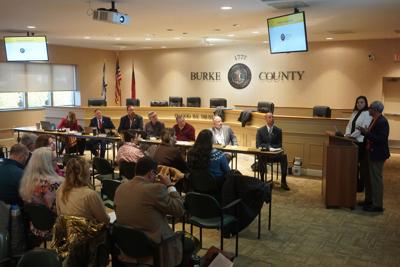
That quickly became apparent during a public input session at the Burke Board of Commissioners’ opioid settlement forum last Friday.
The forum was part of a “reset” for the county in its approach to deciding how best to use Burke’s share of the $1.4 billion awarded the state, which will be disbursed in increments annually until 2038.
The process is still in its infancy despite the fact it’s been going on for three and a half years. So far, the county has received $5.8 million, $5.5 million of which is still in the bank.
The decision on how to put the money to work belongs to the commissioners, and they are looking for guidance from the experts, some of whom spoke as part of the panel at the meeting.
Among the measures the board took Friday were launching a search for a new coordinator for the program after former director Dr. Katie Varnadoe-Samuels resigned last December; appointing the county’s first opioid advisory board; and pursuing a grant-funded “triage center” to help those battling addiction find the right recovery providers.
The next step is the unveiling of a long-range, strategic plan at the commissioners’ budget retreat March 6-7.
One speaker said she hopes to see some new ideas included in the plan.
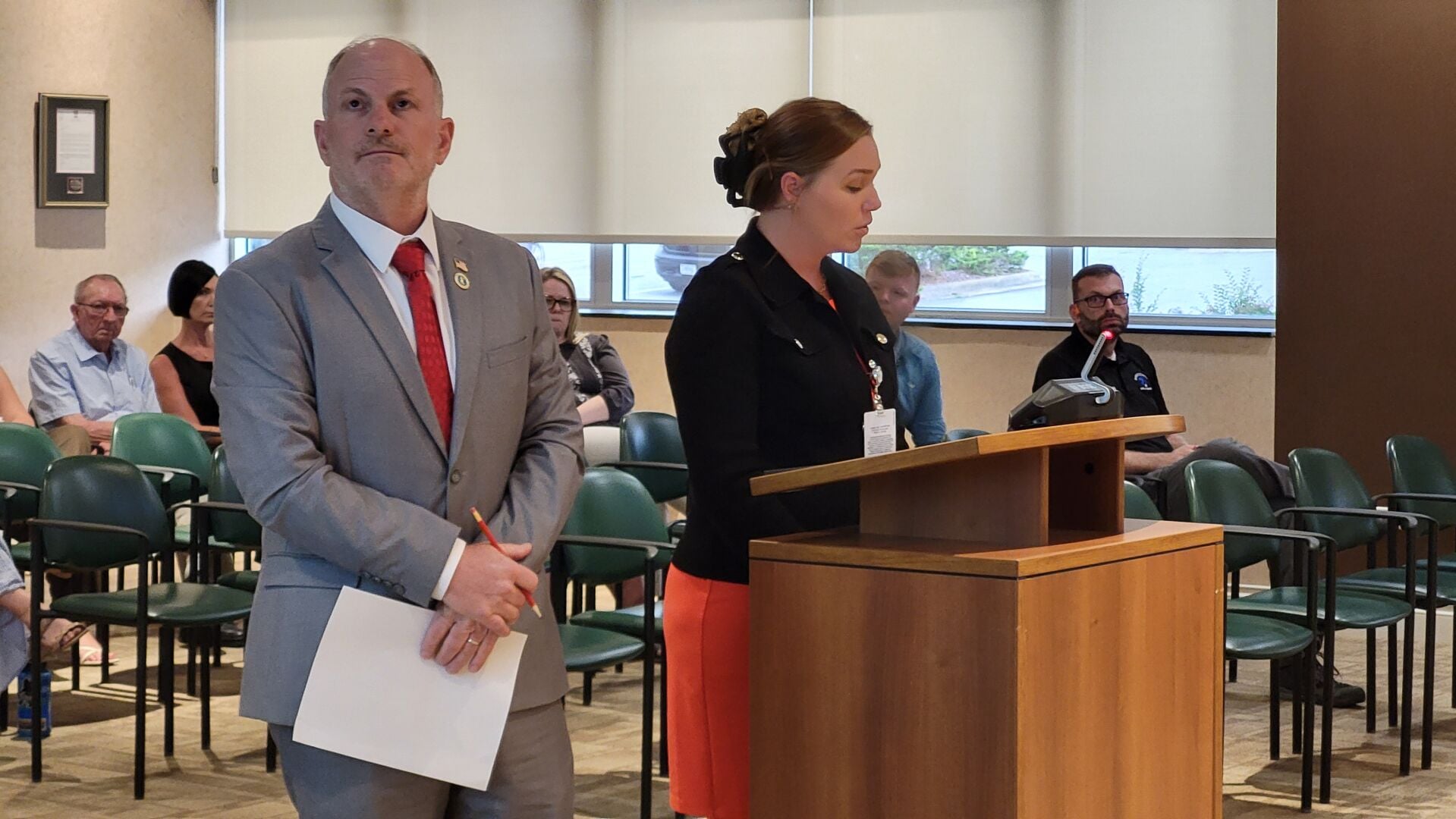
“As a parent of an adult child who has an active addiction, what I’m hearing is that we’re tapping into a menu (of options) that’s available,” said Tracey Stamey. “We’re not looking at necessarily what works, because clearly those do not work. We’re not saving those lives. So, I don’t know why we’re going back to the same menu. Why are we keeping the same choices if we want different results?”
Drew Amburn, executive director of Burke Recovery, said the voices of local providers like his organization haven’t been heard so far. Amburn said local recovery groups know better than anyone how to help those seeking recovery.
“There’s a way to include workforce development,” Amburn said, “there’s a way to include harm reduction, there’s a way to include prevention, there’s a way to include education, there’s a way to include the whole individual, a complete recovery ecosystem. And you don’t need to shop that out. You need to come to us, because we know what we’re doing.”
A. Toni Young, founder and executive director of Community Education Group — the nationally known consulting firm contracted by the county to produce the strategic plan — responded by saying involving the entire community is exactly the kind of approach her group advocates.
She said since the settlement funds are allocated primarily to county governments — they’ll receive $1.2 billion of the $1.4 billion total — Burke has a golden opportunity to tailor the program to fit its needs.
“What we know is that we’ve got these resources from the opioid settlement, which are way more flexible and out of the control of the federal government,” Young said.
One way to make sure the county gets more bang from its settlement bucks is to facilitate a comprehensive approach to recovery, one that treats every aspect of addiction, from triage to recovery to workforce development, according to another panelist, Nidhi Sachdeva, director of strategic health and opioid initiative from the North Carolina Association of County Commissioners.
“I hear your heartbreak, and I hope that your child can stay safe,” Sachdeva said in response to Stamey. “I appreciate and understand and agree that we need to do more, and we need a much more comprehensive course than we’ve been able to do so far.”
Commission chair Jeff Brittain wrapped up the 20-minute session moments later.
In the boardroom atrium after the meeting, Amburn reiterated his desire for local folks to be part of the process.
“They’re going to see that we’re over here, and we actually have all the data and all the results and the good stories and statistics that they’ve been talking about, but no one’s come to us yet,” he said.
Burke United Christian Ministries Executive Director Alice Horton, whose organization helps addicted people find resources, passed by on her way out the door.
She was cautiously optimistic the effort would yield good results.
“If we continue to communicate and include everyone,” Horton said, “we will have success.”









(0) comments
Welcome to the discussion.
Log In
Keep it Clean. Please avoid obscene, vulgar, lewd, racist or sexually-oriented language.
PLEASE TURN OFF YOUR CAPS LOCK.
Don't Threaten. Threats of harming another person will not be tolerated.
Be Truthful. Don't knowingly lie about anyone or anything.
Be Nice. No racism, sexism or any sort of -ism that is degrading to another person.
Be Proactive. Use the 'Report' link on each comment to let us know of abusive posts.
Share with Us. We'd love to hear eyewitness accounts, the history behind an article.