

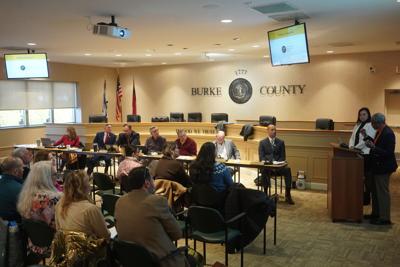
The Burke Board of Commissioners made some landmark decisions concerning the county’s battle against the opioid crisis Friday morning that will have ramifications for years to come, including plans to move forward with a “triage center” that would help those struggling with addiction find the appropriate providers.
The board also voted to search for a new coordinator to oversee the expenditure of the $25 million the county will receive over the next 13 years as part of the opioid settlement lawsuits.
In addition, commissioners named an 11-person advisory board that will help decide how the settlement money is put to use.
All those decisions came on the heels of an exhaustive information session that included presentations detailing virtually the entire scope of the opioid settlement and the steps the county has already taken with the funds it has received.
Money for the triage center — a total of $6.25 million — won’t come from opioid settlement funds, but rather from the state.
The county had been awarded a $3.25 million capital grant in 2021. The money wasn’t tied to a specific project but was earmarked for use in fighting substance abuse.
In 2023, Partners Health Management, Burke County’s LME/MCO (Local Management Entity/Managed Care Organization) — the firm contracted to handle the county’s Medicaid and uninsured mental and behavioral health patients — received an additional $3 million grant on Burke’s behalf.
Commissioner Randy Burns said steering folks who need help in the right direction is crucial.
“It’s a triage one-stop shop,” Burns said of the board’s vision for the center. “At the end of this process, there shouldn’t be anybody who wants help that doesn’t understand where to go. From there, they’ll be guided through the process.”
Friday, commissioners voted 5-0 to direct Partners Health Management to begin the process of deciding the best way to put the money to work.
The state requires a scope of work — a detailed document that outlines all aspects of a project — before it will release the funds.
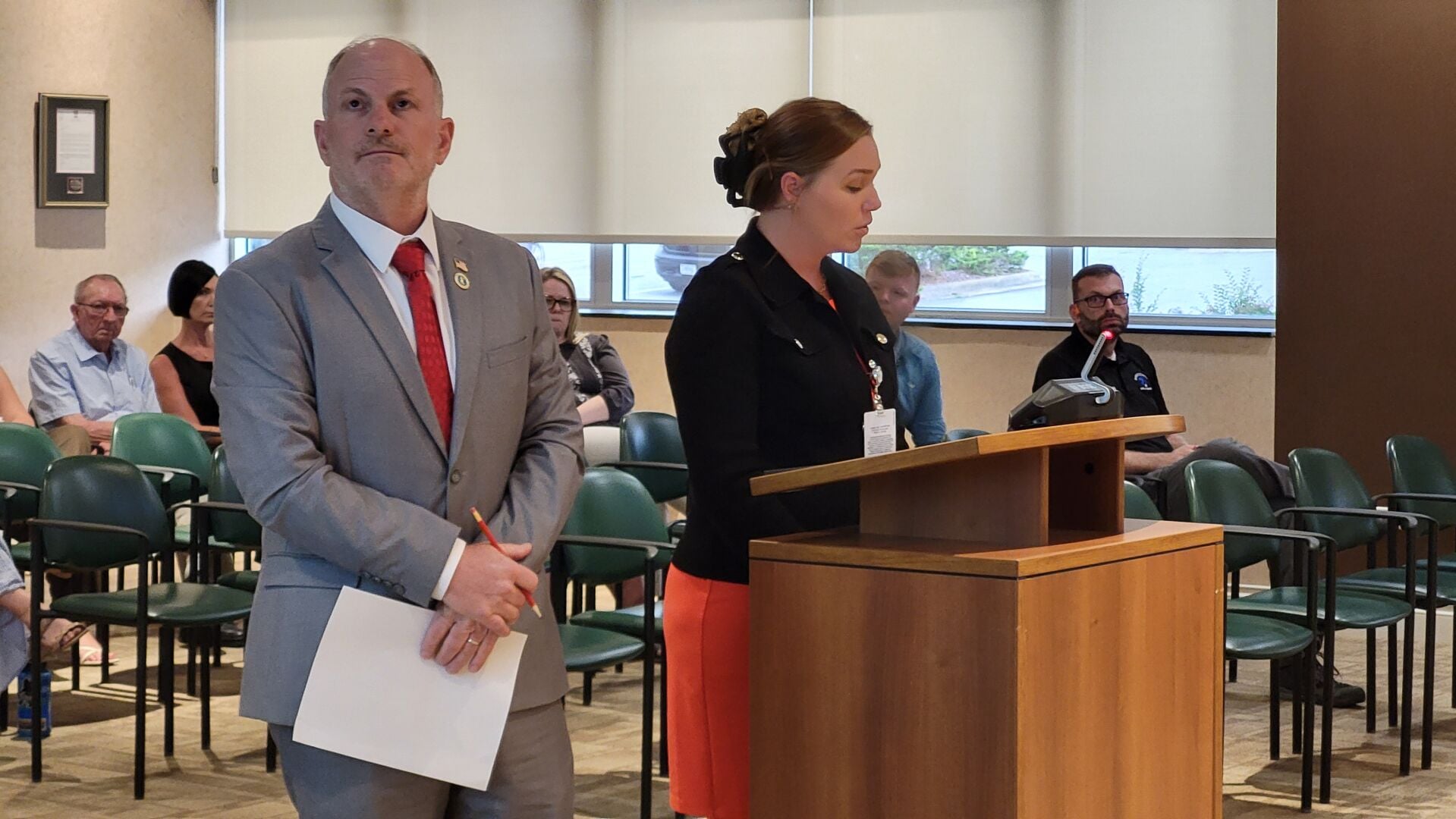
Dr. Paul Holden, regional director of Partners, said producing that document will be its first order of business.
“That’s in the next two weeks,” Holden said. “We’ve been in touch with the county manager (Brian Epley), and we have some ideas about it. It’s more like a hub for substance use treatment.”
Commissioners Brian Barrier and Phil Smith separately floated the idea of repurposing county or state buildings for the facility rather than building from the ground up, and Epley said that was a reasonable and attractive option.
Holden wants to make the money go as far as it can.
“Six million dollars is not a lot of money in Morganton,” Holden said. “You don’t want to buy a three-room building. Once the money gets here from the state in a couple of months, we’ll take a look and see what the county can afford.”
Commission chair Jeff Brittain said the board’s options are open.
“We’re trying to determine what’s best for us, whether it’s triage that leads to more specific treatment or something else,” Brittain said.
The board also voted 5-0 to begin the search for a replacement for Dr. Katie Varnadoe-Samuels, who resigned as the county’s director of behavioral health in December. The position is funded entirely by the county’s opioid settlement money, released in yearly increments from 2023-2038.
Commissioners agreed unanimously to hire the new director on a three-year basis and to have that person report directly to the county manager.
The county’s first Opioid Advisory Committee will work with the new director. Commissioners named 11 people to the committee.
Among the members are the chair of the board of commissioners (Brittain), a health care provider (UNC Health Blue Ridge Chief Medical Officer Dr. Anthony Frank), and an at-large citizen (former commissioner Johnnie Carswell).
Carswell, who served on the board for 13 years before losing his seat in last year’s primary election, is a longtime proponent of substance use treatment. His “One More Thing” presidential campaign, instituted when he was president of the N.C. Association of County Commissioners, is still being implemented across the state.
In one other action, commissioners voted to direct staff to pursue Option A — a list of 12, high-impact abatement strategies like the use of naloxone — as instituted by the NCACC’s memorandum of agreement with the state, as opposed to immediately pursuing Option B solutions, which are long-range fixes.








(0) comments
Welcome to the discussion.
Log In
Keep it Clean. Please avoid obscene, vulgar, lewd, racist or sexually-oriented language.
PLEASE TURN OFF YOUR CAPS LOCK.
Don't Threaten. Threats of harming another person will not be tolerated.
Be Truthful. Don't knowingly lie about anyone or anything.
Be Nice. No racism, sexism or any sort of -ism that is degrading to another person.
Be Proactive. Use the 'Report' link on each comment to let us know of abusive posts.
Share with Us. We'd love to hear eyewitness accounts, the history behind an article.