





National Drug Czar Dr. Rahul Gupta’s flight was delayed, and he didn’t make it to the Burke Community Forum on addiction Wednesday night, leaving Josh Stein to go it alone.
But the state’s Attorney General and Democratic gubernatorial candidate had plenty to say.
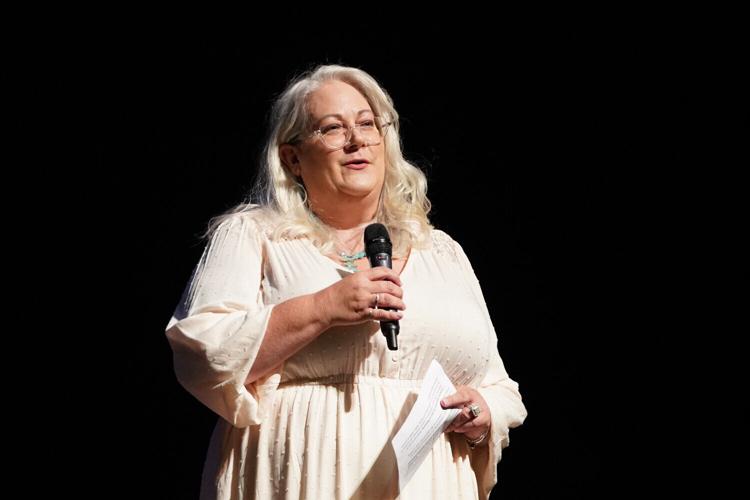
Stein and NPR addiction correspondent Brian Mann occupied the stage at the City of Morganton Municipal Auditorium (CoMMA) for more than an hour, discussing the addiction and overdose epidemic which has hit Burke County hard in recent years, and answering questions from the audience.
The topics Stein addressed included everything from the county’s efforts to develop a strategic plan to put opioid lawsuit settlement funds to use, to public safety strategies to the stigma associated with harm reduction to the importance of peer support specialists.
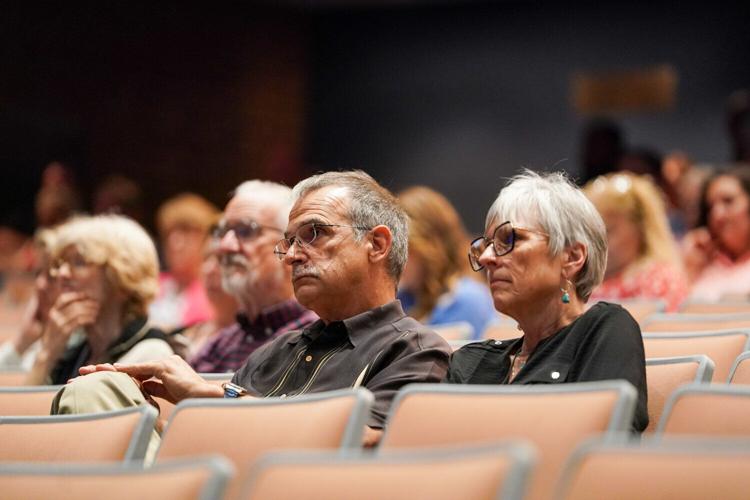
In addition to the public, the crowd included a number of local elected officials, medical professionals, and those involved in the gritty, day-to-day fight against substance use disorder.
The forum was the third such event for Morganton in the past year, and was sponsored by Burke County Public Health, UNC Health Blue Ridge, Olive Branch Ministry, and Dogwood Health Trust.
Stein was instrumental in the national movement to hold pharmaceutical companies accountable for their role in the opioid crisis. The lawsuits Stein helped spearhead led to a $50 billion settlement that was divided among the states. Burke is receiving $24 million over the next 15 years.
Even though an average of 12 North Carolinians die from overdose each day, Stein said there are reasons for optimism, especially in Burke County, which is channeling its opioid funds into a strategic plan which is currently in its early stages. Dr. Katie Varnadoe, Burke Public Health’s Behavioral Health Director, is heading up the effort.
Some counties have been slower to act with settlement funds. As a result, Burke’s plan could become a model for other counties to follow.
“There are a lot of reasons for hope, and Burke County is a perfect example of why there should be hope in the community,” said Stein, “because a bunch of people with big hearts and big brains have come together to come up with a strategic plan, and now, there is a dedicated source of funding to help finance that plan.”
“Not all counties are on their toes the way Burke County is. Burke County has a really great initiative that they’re considering.”
Other areas of concern Stein addressed included:
The fact that much of the illicit drug supply is tainted with potentially deadly synthetic opioids, of which fentanyl is most common: “Now what we’re seeing is the entire illicit drug supply completely corrupted, so that it doesn’t even matter what it is out there you’re trying to buy.”
On the dispersal of settlement funds, which is stretched out over a period of years to encourage counties to be more deliberate about how the funds are spent: “What we need is a permanent infrastructure of providers and services for people who are struggling with addiction.”
On what he wanted to achieve with the settlements: “I wanted to achieve three things with the settlements. I wanted to make these companies pay for the damage that they had done; I wanted to change the way they do business so that none of this can ever happen again; and I wanted the money to make a difference in people’s lives.”
On the fact he’s seen little pushback from law enforcement agencies to the idea addiction should be treated medically and not with wholesale incarceration: “I do believe that there is a broad consensus — that doesn’t mean it’s universally held — that we should be approaching this from a public health perspective.”
On the importance of peer support: “Those people, these peer support specialists, I think they’re the ones who give us the most hope, because they have walked a mile in that person’s shoes, and if you haven’t, you just aren’t going to be as effective a messenger.”
On the future of drug enforcement: “We can reduce the supply, we can increase interdiction, we can make the cost of doing business more painful. That said, I don’t think we’ll ever stop it altogether.”
On the Department of Justice’s collaborations with the Department of Instruction to develop plans that help keep young people off drugs: “What we want is for our kids to have the skills to make good decisions on the whole array of challenges and risks that are in front of them. There are curriculums that do that, and we have worked to promote them to school systems across the state.”
“We have to do a better job of wrapping our kids with love, and making sure they understand their value on this planet and in our homes, so that they have the resilience to deal with life’s adversities, because life’s hard, and it will always be so.”
Marty Queen is the senior reporter for The Paper. He may be reached at 828-445-8595 or marty@thepaper.media.









(0) comments
Welcome to the discussion.
Log In
Keep it Clean. Please avoid obscene, vulgar, lewd, racist or sexually-oriented language.
PLEASE TURN OFF YOUR CAPS LOCK.
Don't Threaten. Threats of harming another person will not be tolerated.
Be Truthful. Don't knowingly lie about anyone or anything.
Be Nice. No racism, sexism or any sort of -ism that is degrading to another person.
Be Proactive. Use the 'Report' link on each comment to let us know of abusive posts.
Share with Us. We'd love to hear eyewitness accounts, the history behind an article.