

The rising cost of prescription medications has been the talk around dinner tables for years, and studies show Americans have reason to complain.
Drug prices have left patients with few options: pay out of pocket, switch medications, or go without.
A 2022 study by the Rand Corp., a nonpartisan research organization, found that U.S. prices were 2.78 times higher than the prices in 33 advanced, industrialized countries. The increase was even larger — 4.22 times — for brand-name drugs.
Medications like Ozempic or Wegovy routinely ring up at hundreds or even thousands of dollars even for those with insurance. Ozempic, a diabetes drug that has also gained popularity as a weight-loss aid, costs $936 per month in the U.S. — more than six times what Canadian patients pay ($147).
On May 12, the Trump administration announced a new executive order aimed at tackling that system. The order instructs the Department of Health and Human Services to tie what Medicare pays for drugs administered in doctors’ offices to the lowest prices paid in other developed nations.
Drugmakers have 30 days to voluntarily lower their prices before potential changes to Medicare payment rules take effect. For pharmacists across Burke County, the order raises hopes — but also fresh concerns.
Jessi Stout, owner of Table Rock Pharmacy and Compounding, said the executive order’s impact will depend heavily on how it addresses Pharmacy Benefit Managers (PBMs), middlemen in the pharmaceutical supply chain that negotiate drug prices and rebates on behalf of insurers.
“Drug pricing in the U.S. is incredibly complex, largely due to the role of PBMs,” she said. “In theory, efforts to reform the system could be positive — especially if they put an end to the PBM rebate model. However, it’s likely PBMs would find alternative ways to maintain their profit margins, such as by increasing administrative or service fees.”
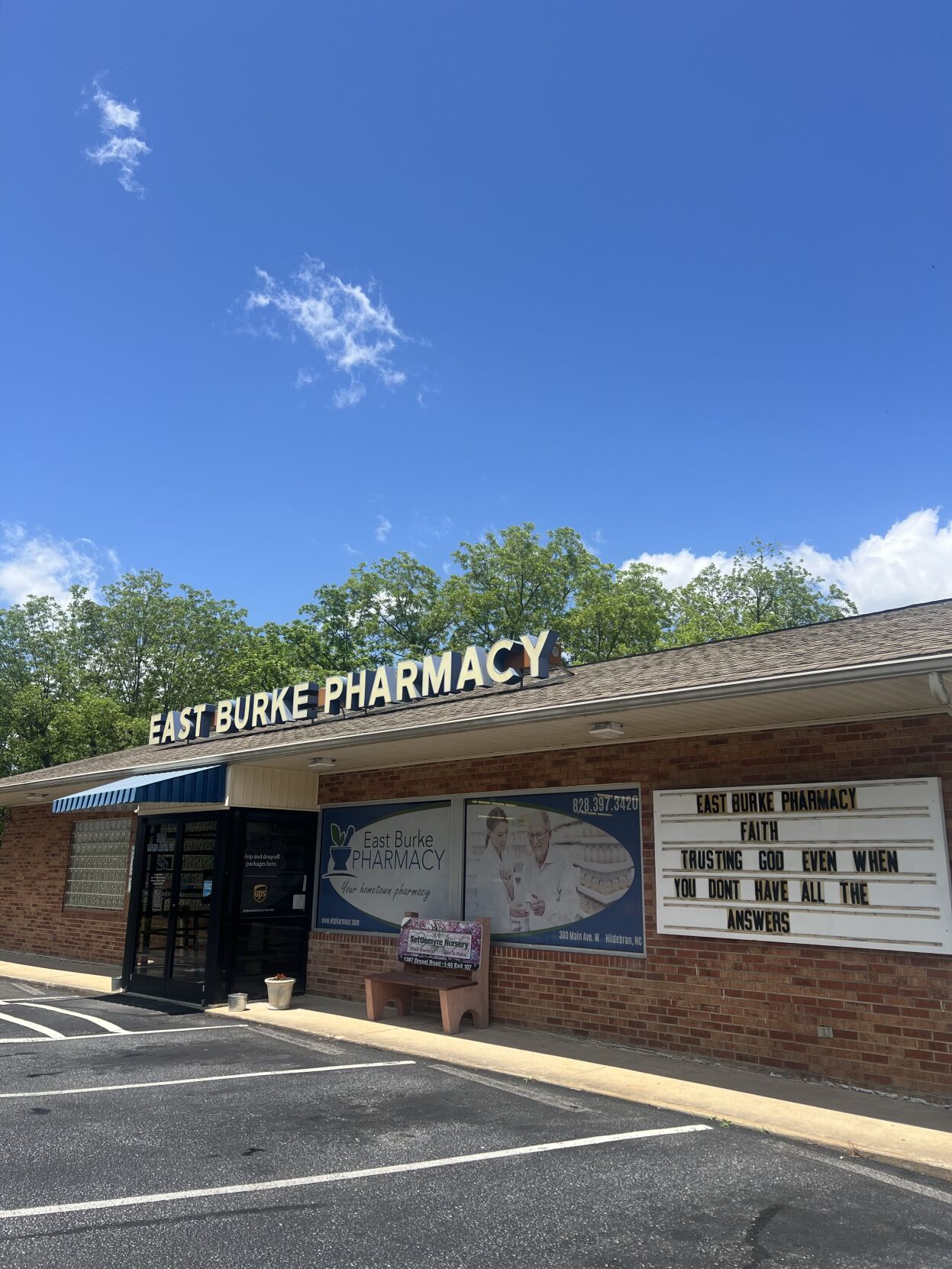
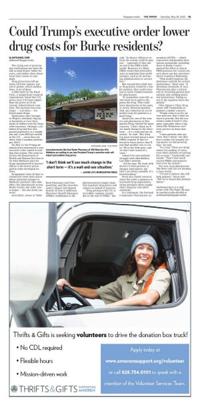
Local pharmacies like East Burke Pharmacy at 300 Main Ave. W in Hildebran are waiting to see how President Trump’s executive order will impact prescription drug prices.
She warned that while lower drug prices would be a win for patients, they could translate to lower reimbursements for pharmacies.
“If acquisition costs fall, so will what we’re paid to dispense the drug. That could leave pharmacies in the same, or worse, financial position. Still, any reduction in out-of-pocket costs for patients is a good thing.”
Jason List, one of the owners and pharmacist at Morganton Drug, echoed the same concern. “I don’t think we’ll see much change in the short term — it’s a wait-and-see situation,” he said. “But what I’m most worried about is how PBMs respond. If they’re forced to lower prices, they’ll just find another way to cut us. We’re the little guys, and we don’t have much of a voice.”
Asked if he sees patients struggle with affordability, List didn’t hesitate.
“All the time. We work with doctors to find generics or cheaper alternatives, but that’s not always possible. It’s heartbreaking.”
Stout also raised concerns about the order’s openness to increased drug importation, citing questions about supply chain integrity and safety standards.
In a statement, the National Community Pharmacists Association (NCPA) — which represents independent pharmacies nationwide, including those in Burke County — praised the effort to rein in PBM practices but voiced concern about one key provision: direct-to-patient dispensing.
“That model bypasses the pharmacy entirely for certain medications,” Stout said. “It threatens continuity of care. Pharmacists play a critical role in reviewing patient medications and catching potential interactions. Taking us out of the equation hurts the patient.”
Glen Alpine’s Clinic Drug owner Jeff Czarkowski explained a similar concern.
“People come to us for advice and care, that’s what we want to provide. But the economics make it hard to stay open, especially when a big chain like Walgreens can’t even survive on these margins.”
“I have patients who say, ‘wow, that’s cheap,’ but they don’t realize I’m actually losing money on that prescription,” he said.
“It’s crazy. There are drugs where I’m making 13 cents, even when patients are paying $75 or more,” Czarkowski continued. “That’s how much control PBMs and insurers have over the system.”
Dr. Ji Yan, economics professor in Appalachian State University's Walker College of Business, said the Most-Favored-Nation pricing model is essentially a binding price ceiling for U.S. drug costs.
“The economic rationale for MFN pricing rests on the assumption that the benefits of lower prices, increased consumer welfare, and more equitable pricing outweigh the risks of dampened innovation,” he said.
While the policy could, in theory, bring some relief to patients, Dr. Yan noted that structural challenges and powerful intermediaries like Pharmacy Benefit Managers (PBMs) might blunt the immediate impact on pharmacy shelves.
“The pharmaceutical market’s inelastic demand, multi-layered supply chain, and industry lobbying power may limit MFN’s near-term impact on prices,” Yan said. “In some cases, independent pharmacies might feel further squeezed if cost savings are absorbed by PBMs’ profit margins.”
Looking to the long term, Dr. Yan expressed cautious optimism — but warned that the changes might not reach small pharmacies or patients without deeper reform of the system’s entrenched middlemen.
“As a patient or pharmacy owner in Boone or Morganton, I’d be cautiously optimistic about MFN pricing,” he said. “But entrenched PBM practices might absorb much of the savings before they reach patients or independent pharmacies.”
For now, local pharmacists like Stout and List are keeping a close watch.
“I’d love to believe this will help patients,” Stout said. “But we’ve heard that promise before.”
Nathanael Eure is a staff writer with The Paper. He may be reached at 828-445-8595 or nathanael@thepaper.media.