
State to clear Burke waterways of storm debris

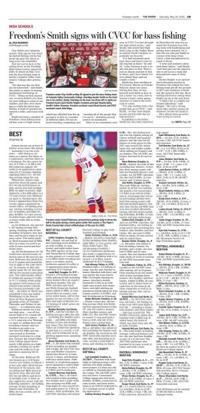
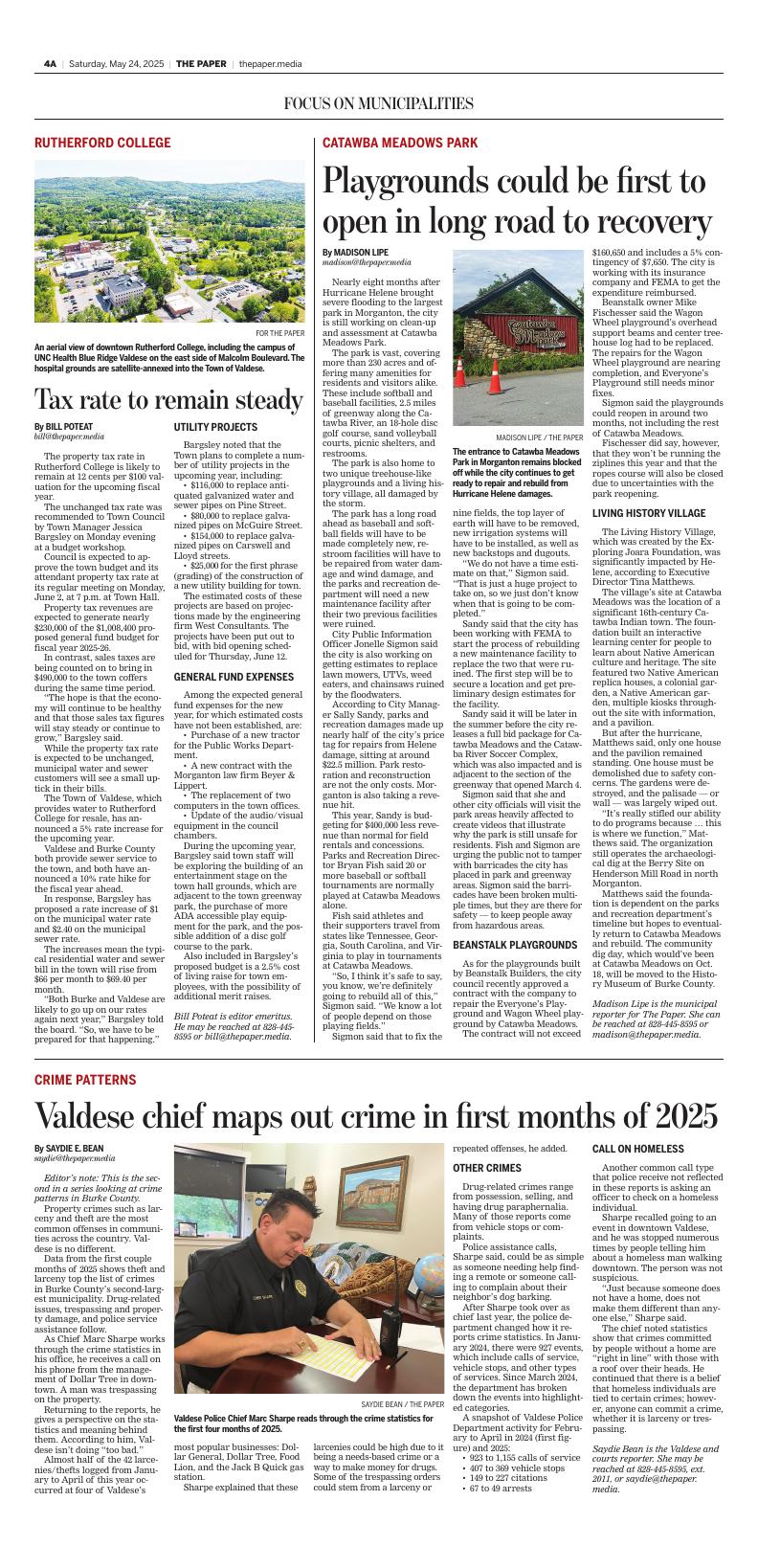
The Burke County Board of Commissioners stands behind winners of the Burke Chamber’s annual Spring Litter Sweep. The Burke River Trail Litter Gitters (left) took first place, and were followed in the top three by former three-time winner Gary Jennings (far right) and Foothills Conservancy. The CoMMA Drama Volunteers collected the most recyclables.
The Army Corps of Engineers couldn’t get around to clearing Hurricane Helene debris out of Burke County’s waterways quickly enough to suit local officials.
The state, however, says it’s ready to get the show on the road.
The county’s board of commissioners approved a memorandum of agreement (MOA) with the N.C. Department of Emergency Management to remove storm debris from its rivers and streams and from commercial and private property Monday at the monthly meeting.
Joe Stanton, assistant director of N.C. Emergency Management, attended Monday’s meeting along with two other staff members. Board chair Jeff Brittain asked Stanton how quickly the state could get started.
“We’re pretty much ready as soon as possible,” Stanton replied. “Our goal is to get this debris removed as fast as possible.”

Debris Tech, which has worked in the county since September, flew drones over the Catawba River a few months ago to inspect the damage and estimated the cost of the operation at $900,000.
Stanton said since the county already has a government-vetted engineering subcontractor, The Wright Group — which Burke employed for previous debris removal — to perform the work, the project will not have to be bid out again.
The work still has to be approved by FEMA (Federal Emergency Management Agency), but Stanton said his office works closely with them on a day-to-day basis.
He said the goal is to work quickly and save money.
The MOA sets Burke up in direct partnership with the state, which then acts as a property management group, as well as assumes liability on right-of-way entries, regulatory permits, and handling cash flow.
Waterway, private, and commercial removal pose higher risks and involve more regulations than the right-of-way removal that began in the days following the storm.
Debris Tech, which has worked in the county since September, flew drones over the Catawba River a few months ago to inspect the damage and estimated the cost of the operation at $900,000.
At their March 3 pre-agenda meeting, commissioners directed Epley to request assistance from the Corps of Engineers. The request was submitted March 4. Additional written communications were sent by the county March 11 and 17 and April 8. But Epley said the county never got an answer from the Corps.
The board directed Epley to engage the state, and Burke officials met with emergency management staff April 15.
By May 16, the county had the MOA in hand.
ZONING GETS MORE DEVELOPER-FRIENDLY
In other action, the board passed text amendments to the county’s zoning codes that should make things easier for housing developers.
The changes eliminate some portions of the code that contain redundant information and graphics, but the most substantive changes concern minimum lot sizes for new construction.
All of those minimum sizes will get substantially smaller. Previously, single-family homes with no public water and sewer were required to have lots of at least 1 acre.
The new code cuts that limit in half, allowing developers to fit more homes on a given tract of land. The size limitation gets smaller the more county utilities (water, sewer) a lot has available.
“The zoning code itself is meant to be a community document,” Deputy County Manager Alan Glines told the board. “It’s meant to reflect the goals and the needs we have here for the county so we can adjust over time when it makes sense and it’s appropriate.”
(For more information about the changes to the zoning code, read the May 10 edition of The Paper.)
OTHER ACTION BY THE BOARD
In addition to making the zoning changes, the board adopted resolutions opposing a couple pieces of legislation currently being considered in the General Assembly.
House Bill 765 proposes taking away the right to zone property from county and municipal boards and placing it in the hands of the state. House Bill 675 would place additional training requirements on volunteer firefighters.
The board also approved funding that keeps the Burke Recovery Court operational through December 2026. The $216,000 allocation comes from the county’s $25 million portion of the national opioid lawsuit settlement.
Recovery Court, which has a high success rate, helps those addicted to substances recover while providing an avenue for them to remain out of jail.
(For more information on Burke Recovery Court, see the May 10 edition of The Paper.)
Marty Queen is the senior reporter. He may be reached at 828-445-8595 or marty@thepaper.media.
Related

Notable quotes from the Monday, May 19, Burke Board of Commissioners meeting.