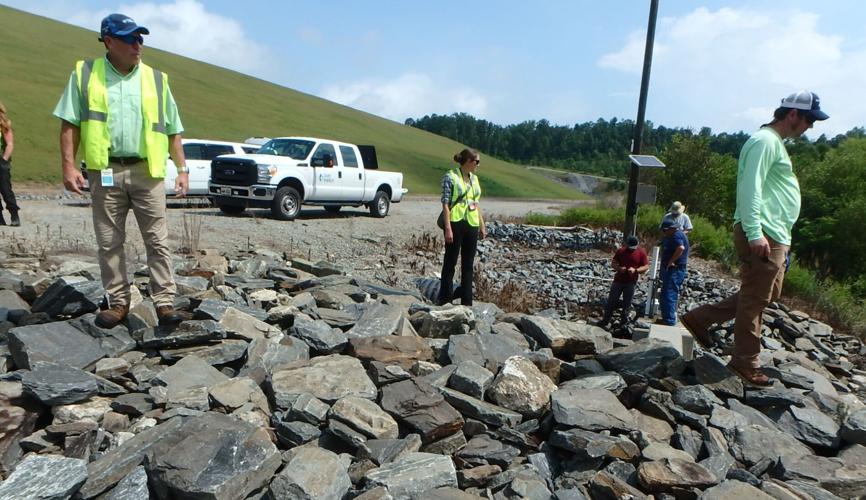
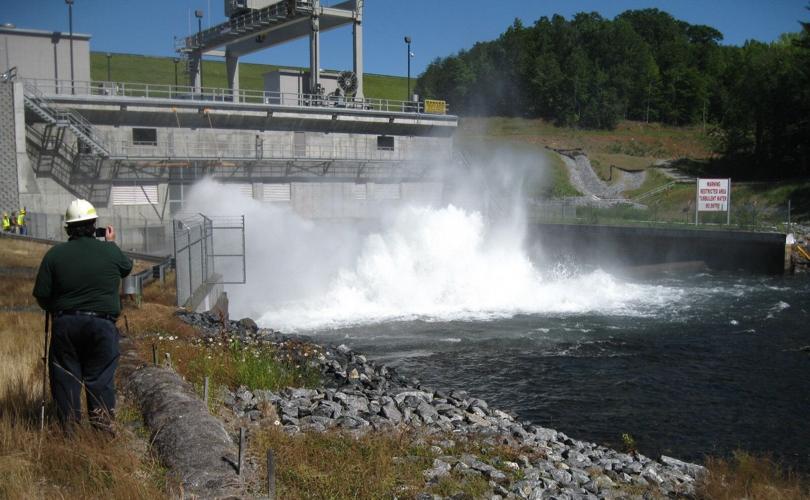
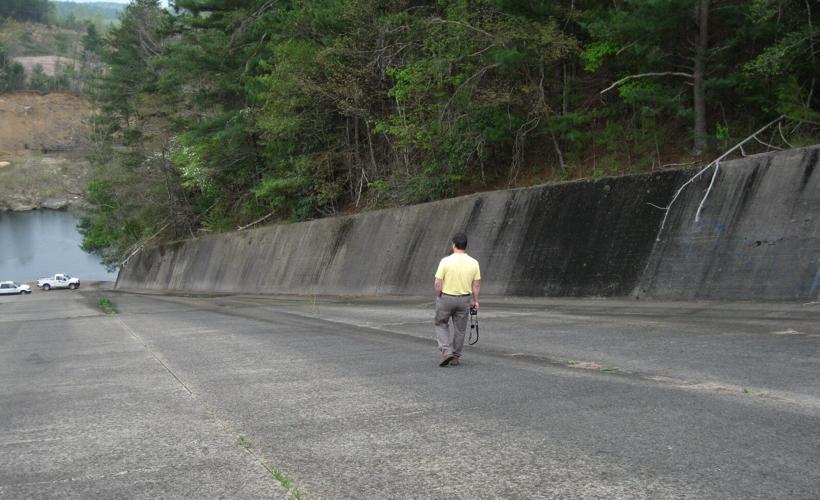
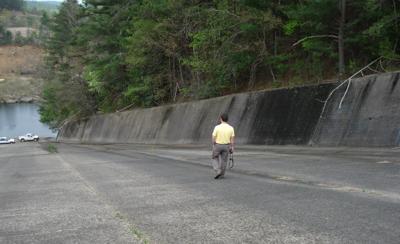
Inspectors from the Federal Energy Regulatory Commission (FERC) inspect the Catawba Dam on Lake James. All three dams that form the impoundment are structurally sound and should be for decades to come, according to FERC and Duke Energy.
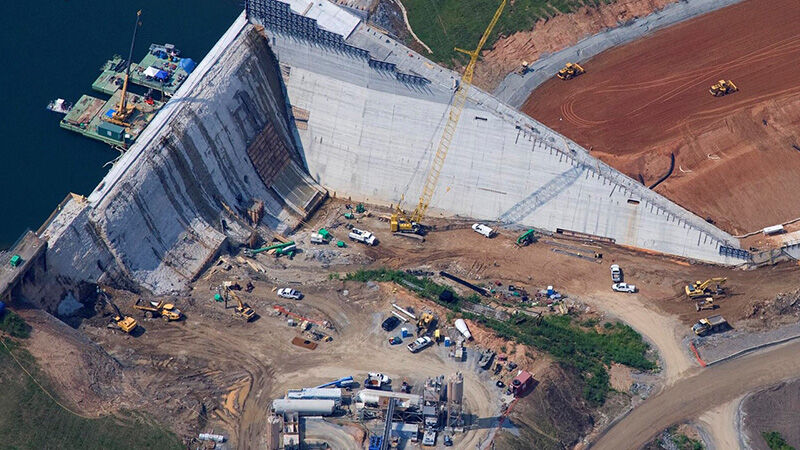
This photo shos some of the massive earth-moving that was part of the improvements to Paddy's Creek Dam at Lake James in 2007. Brayman Construction did the work.
Inspectors from the Federal Energy Regulatory Commission (FERC) inspect the Catawba Dam on Lake James. All three dams that form the impoundment are structurally sound and should be for decades to come, according to FERC and Duke Energy.
Nobody strives to be below average, yet that is exactly where North Carolina lands according…
On the western edge of Burke County, three earthen dams have stood for a hundred years, holding back the cool, clear, waters of 6,810-acre Lake James.
Should one or all of them fail, approximately 144 billion gallons of water, enough to fill 218,000 Olympic-sized pools, would wash away large swaths of western Burke.
It’s the job of Duke Energy’s Hydro Fleet to make sure that never happens.
And though the structures are a century old — as are most of the other large dams in western North Carolina — Duke’s engineers say they’re in good shape.
The dam infrastructure at Lake James is solid.
But how does Duke know that?
Brad Keaton is Chief Dam Safety Engineer for the Duke Energy Hydro Fleet. He’s a veteran engineer with 34 years of experience. “Brad is an expert not just for Duke, but is highly regarded across the entire industry,” Duke spokesman Ben Williamson said.
Keaton explained the inspection process that ensures the company’s dams are safe. But to understand it, you have to know a little about the reservoir’s history.
Inspectors from FERC (Federal Energy Regulatory Commission) inspect the Catawba Dam at Lake James.
DUKE ENERGY / FOR THE PAPER
Lake James, which was constructed between 1916 and 1923, is impounded by dams on three waterways: Catawba River, Linville River, and Paddy’s Creek. It took all three to give the lake its 155 miles of shoreline and provide enough water for Duke to generate up to 31.5 megawatts of power, enough to provide electricity to more than 10,000 homes.
All three are earth embankment dams, meaning they’re primarily composed of soil. Earthen dams are widely used in western North Carolina. Many of them were built in the early 1900s, when the move was on to electrify the South. They’re much cheaper to construct than concrete dams, and they’re durable.
Williamson said as long as they’re maintained, the dams will last indefinitely.
“There is no typical lifespan for dams like these,” Williamson said. “With proper monitoring and maintenance, these century-old structures should be viable beyond another century.”
A FERC inspector takes readings near the powerhouse on Lake James.
DUKE ENERGY / FOR THE PAPER
The dams on Lake James are the first in a string of 11 Duke operates on the Catawba/Wateree chain. All of them are designated ‘high risk,’ not because they’re unsafe, but because of their proximity to population centers.
Duke Energy inspects its dams rigorously and often – every two weeks for earthen dams and at least quarterly for concrete dams.
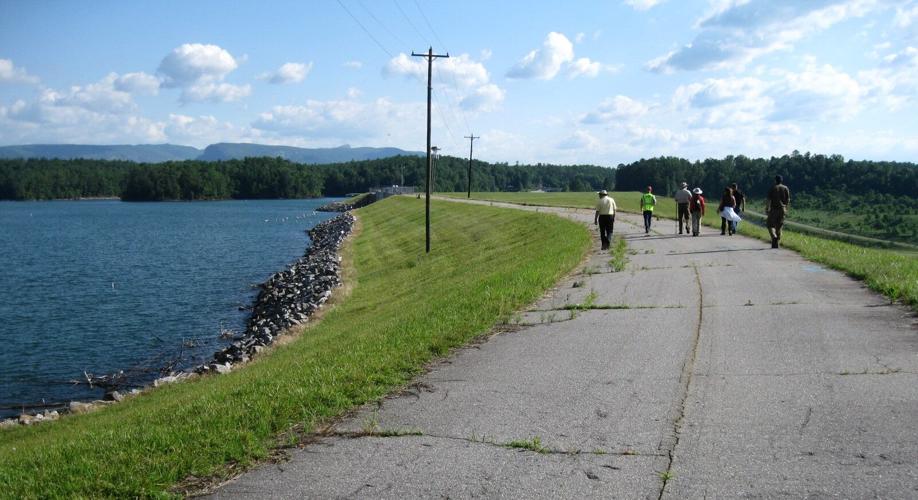
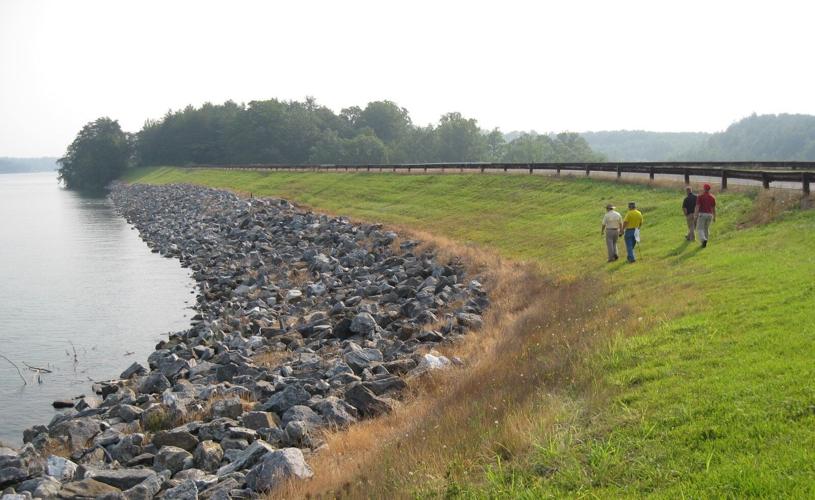
Inspectors take a look at the Linville Dam on Lake James.
DUKE ENERGY / FOR THE PAPER
The company also inspects its dams after every rainfall event exceeding 2 inches, and any time seismic activity is recorded in the area – even if the structures had been inspected the previous day.
In addition to Duke’s monitoring, the Federal Energy Regulatory Commission (FERC) conducts inspections annually. The most recent one was completed and filed with FERC on Oct. 29, and the dams were found to be in compliance with all federal standards.
Details about the inspections are not made public because they’re considered Critical Energy Infrastructure Information (CEII), and as such, are classified for national security reasons.
Regulators require Duke to contract with independent engineering consultants to inspect its dams every five years. Also, every five years, diving contractors check on the condition of underwater structures.
Human inspectors have backups in the form of instruments that monitor things like water and pressure levels inside a dam, seepage rate, and settlement and deformation of a dam.
Engineers analyze the data and look for trends, and the company submits an annual report to FERC based on their findings.
The Hydro Fleet maintains Emergency Action Plans (EAPs), which detail the course of action should an emergency occur. Both Duke personnel and emergency services study the EAP.
“We always learn from events and use historical data to inform decisions in the future,” Williamson said.
SIGNS OF TROUBLE
Keaton said highly trained Duke personnel are looking for several things during their monthly inspections.
Since the dams are composed of dirt, spaces between soil particles can let water seep through. This occurs no matter how tightly the ground is compacted.
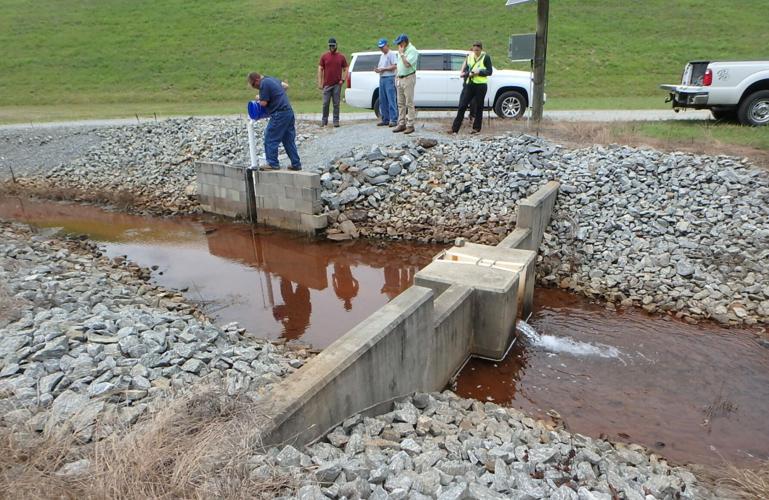
Inspectors check the Paddy Creek Dam seepage monitoring device during an annual FERC inspection.
DUKE ENERGY / FOR THE PAPER
“You could beat (down the soil) as much as you want to, but you cannot get away from there being voids between grains of soil,” Keaton said. “There’s always water migrating through those little voids, and that’s known as seepage.”
Engineers measure the rate of seepage and also judge the clarity of the water – whether it’s clear or muddy. That factor can tip off inspectors to possible problems.
“Clear water coming through is not hurting anything,” Keaton explained. “But if it happens to be muddy, then it can be taking soil with it from inside the dam. That’s known as internal erosion.”
Inspectors also take a measured look at the external portions of the dam using precision equipment like that employed by land surveyors. This way, they can determine if there is any deformation on the surface, which can indicate problems underneath.
RECENT IMPROVEMENTS
Keaton said Duke upgraded all three dams during a 15-year period from 2005 to 2020, bringing all of them up to meet FERC’s updated codes and standards.
In 2007, FERC issued new guidelines directed at dam performance during seismic events.
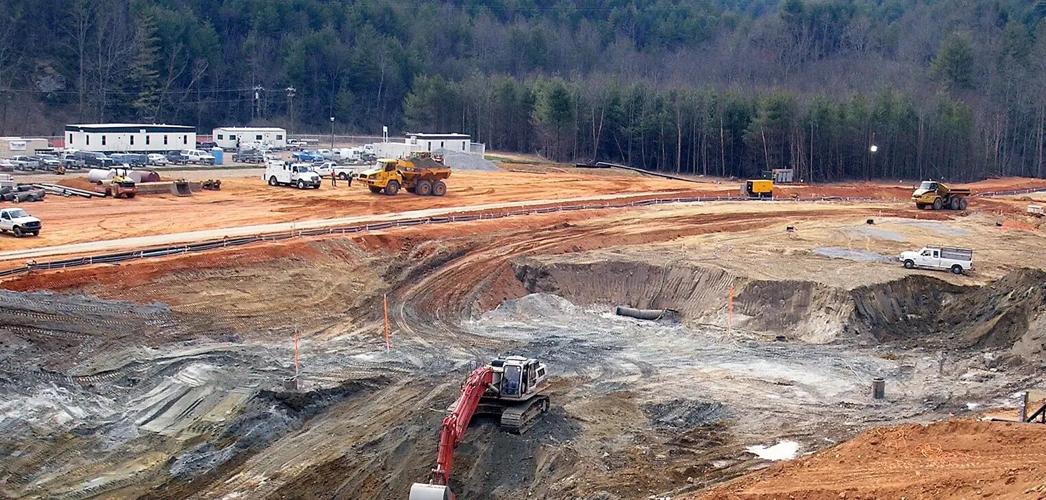
This photo shos some of the massive earth-moving that was part of the improvements to Paddy's Creek Dam at Lake James in 2007. Brayman Construction did the work.
BRAYMAN CONSTRUCTION / FOR THE PAPER
Duke responded with a $16.7 million effort to reinforce the Paddy Creek Dam. The improvements included constructing an earthen buttress 140 feet high and 250 feet wide at the base. In all, 1.3 million cubic yards of earth were added to the structure.
Next, the old powerhouse on the Linville dam was destroyed and replaced with a new one that became operational in 2011. The $60 million project included a massive earthen berm that took 410,000 cubic yards of fill.
The previous powerhouse sat too close to the dam to allow for additional berms to be put in place. The new one was built farther downstream so more fill material could be added.
“FERC required stability improvements to multiple dams along the Catawba Wateree River, including the dams that make up Lake James,” Williamson explained. “As a part of that stabilization work, we had to move and rebuild the Bridgewater Powerhouse. These dams and powerhouses have lasted for decades and with the proper maintenance and a detailed and extensive monitoring system, these assets will last for decades to come.”
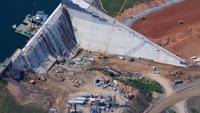
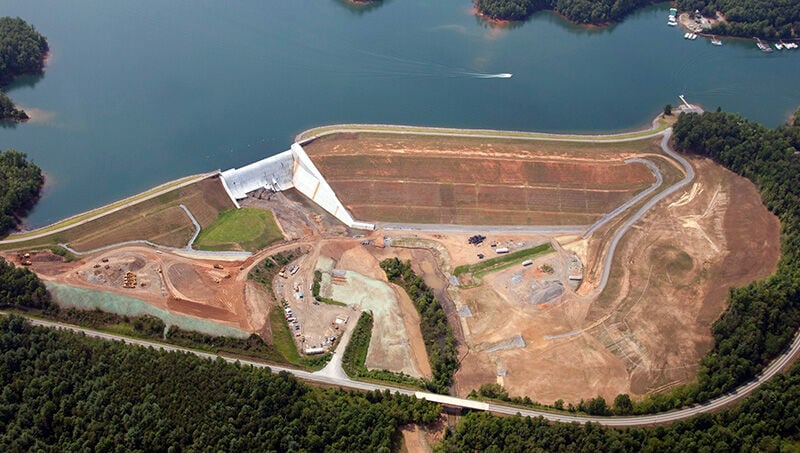
This photo from 2011 shows work being done on the Catawba Dam by Phillips and Jordan, Inc.
PHILLIPS AND JORDAN / FOR THE PAPER
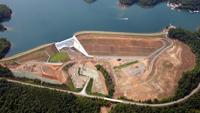
Work on the Catawba Dam took place in a similar timeframe. Approximately 700,000 cubic yards of berm embankment were put in place to reinforce the dam.
“You basically come in behind the dam and basically build a dam behind the dam, so to speak, on the downstream side of it,” Keaton said. “And then that makes it a lot more resistant to any earthquake motions, and just basically fortifies the dam.”
Another shot of the 2011 work on Catawba Dam at Lake James.
PHILLIPS AND JORDAN / FOR THE PAPER
Keaton said those improvements significantly improved the longevity of the dams, and added Duke is committed to keeping folks downstream safe.
“We make electricity with these things, and these dams hold back a lot of energy,” Keaton said. “Our biggest focus is to make sure the dams are safe, and our neighbors and the people that live there are safe.”
TRIAL BY FIRE — WITH WATER
Evidence that Duke’s upgrades worked can be found in the way the dams performed during a once-in-a-lifetime test: Hurricane Helene.
The ferocious storm roared through western North Carolina in late September. Heavy rainfall raised the lake level to 110 feet – the highest level ever recorded.
Flood waters submerged and subsequently damaged the energy-generating turbines inside the powerhouse. The turbines will be out of commission for several months, and the enormous volume of water that roared over top of the spillways caused destruction in the Bridgewater community downstream, washing away several homes.
The dams themselves, though, were never threatened and came through the storm with flying colors – despite what folks might have heard.
Williamson said anytime there’s an event like Helene, rumors the dams are in trouble can spread quickly. But inspectors who checked them immediately after the storm passed found no concerns.
“There was quite a lot of misinformation, some more severe than others,” said Williamson. “But at no point did we have issues with the dams and the spillways, and they performed as they should. That was true for all our spillways across the state.”
“As soon as it was safe to do so, our dam safety engineers began inspections of all our dams along the Catawba-Wateree River,” Williamson added. “This was in addition to the monitoring instrumentation in, on and around our dams that are constantly monitoring the health of the dam. FERC inspections occurred at our dams in October and November.
“FERC confirmed that there was no substantial structural damage to our dams and spillways, and all performed as expected during the storm.”
Keep it Clean. Please avoid obscene, vulgar, lewd,
racist or sexually-oriented language. PLEASE TURN OFF YOUR CAPS LOCK. Don't Threaten. Threats of harming another
person will not be tolerated. Be Truthful. Don't knowingly lie about anyone
or anything. Be Nice. No racism, sexism or any sort of -ism
that is degrading to another person. Be Proactive. Use the 'Report' link on
each comment to let us know of abusive posts. Share with Us. We'd love to hear eyewitness
accounts, the history behind an article.














(0) comments
Welcome to the discussion.
Log In
Keep it Clean. Please avoid obscene, vulgar, lewd, racist or sexually-oriented language.
PLEASE TURN OFF YOUR CAPS LOCK.
Don't Threaten. Threats of harming another person will not be tolerated.
Be Truthful. Don't knowingly lie about anyone or anything.
Be Nice. No racism, sexism or any sort of -ism that is degrading to another person.
Be Proactive. Use the 'Report' link on each comment to let us know of abusive posts.
Share with Us. We'd love to hear eyewitness accounts, the history behind an article.