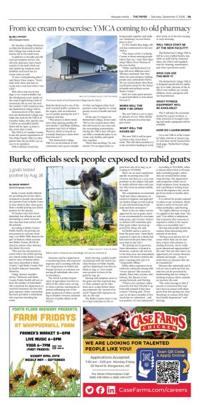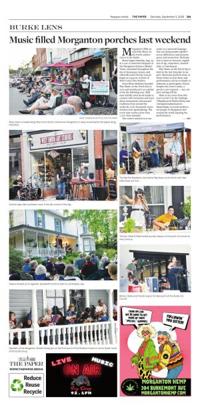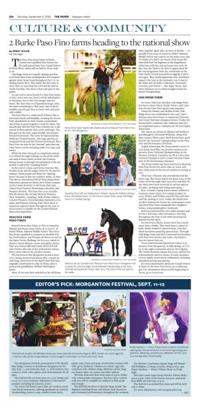

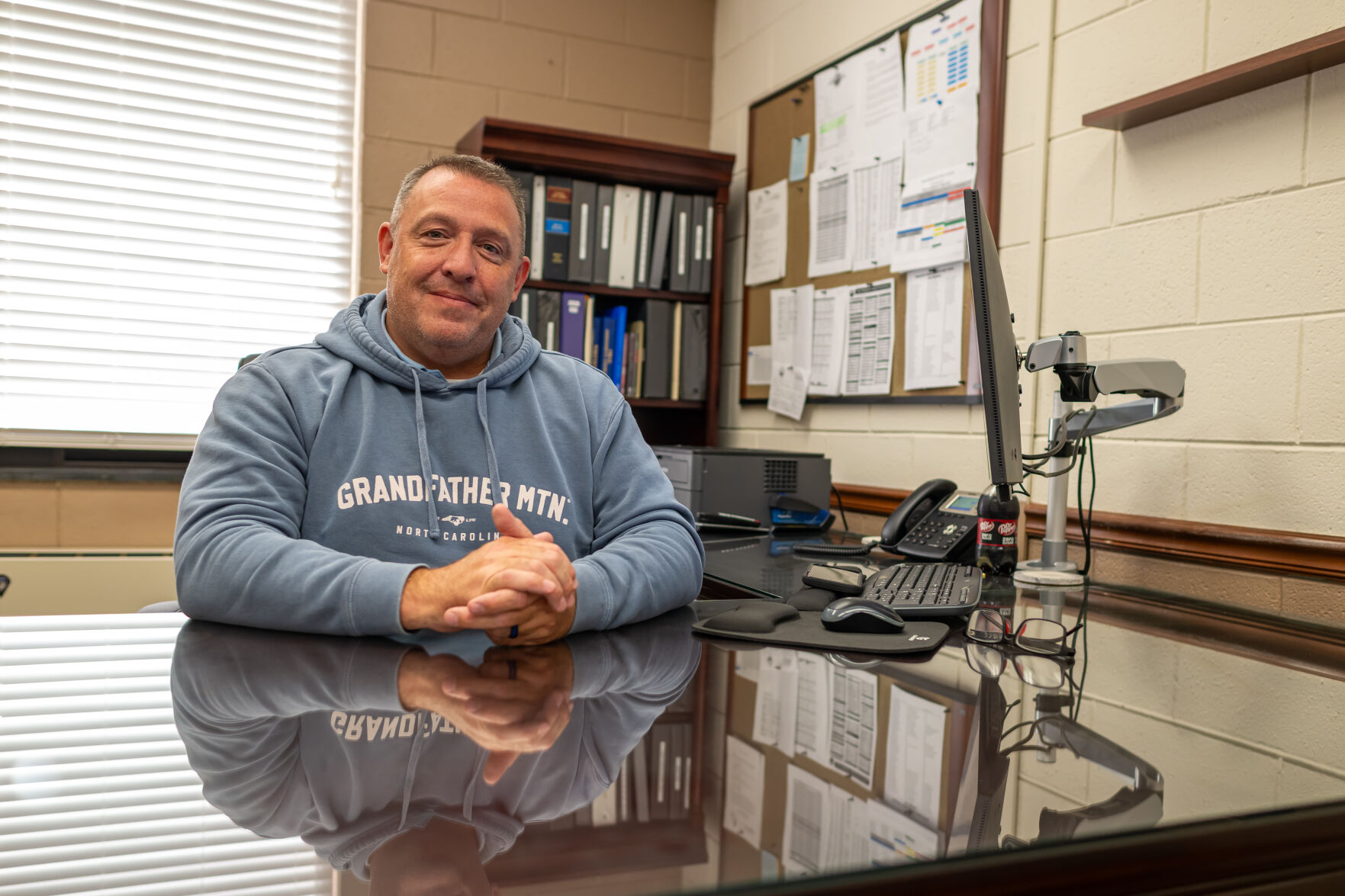
The retiring captain sits comfortably at an empty desk, enjoying his final working day. Brown at desk
Brown at desk
The retiring captain sits comfortably at an empty desk, enjoying his final working day. Brown at desk
Brown at desk
The retiring captain sits comfortably at an empty desk, enjoying his final working day. Brown at desk
Brown at desk
The retiring captain sits comfortably at an empty desk, enjoying his final working day. Brown at desk
Brown at desk
M. Matthews
My signature tag on my emails confuses some people.
If you get an email from me, beneath my sign-off (“peace”), and name, you’ll find my pronouns. I identify as “he, him, his.”
Some are perplexed by this.
I’m not trying to confuse people. Nor do I mean to set them straight in case they think I’m a woman instead of a man. I’m not speaking from a position of gender pride. I’m neither confused about my gender, nor am I defensive about it, nor do I want to be defined solely by it.
But I want every person to know I am approachable about gender issues. The listing of pronouns in some circles — especially among those who are what may be called “questioning” — clearly signifies this openness. I stand with my non-binary friends and their families. As one who cares deeply about individuals and their families, being approachable about this topic is essential.
In a culture that often maligns “the other,” I want people to know that I don’t stand with that crowd. In our brittle, volatile, don’t ask, don’t tell world where people feel targeted and unsafe if they are “different” than the norm gender-wise, I want to offer sanctuary. I want my community to see a door not a wall, a sanctuary not a lions’ den.
When I was in college, I was not aware of degree programs called gender studies. Even women’s studies, which became ubiquitous in decades after my graduation, were not offered when I was in college. Identifying your pronouns back then wasn’t a thing I’d ever heard about. It was my work in race relations as a pastor many years later when I began formally to explore how the dynamics of race, gender, nationality, sexual orientation, and other identifiers subtly and not so subtly affect family systems and wider society.
I’m no expert (and I can prove it).
But I can offer a safe place to discuss such things.
I can listen.
And I want to.
Your grandson is thinking about transitioning, and you want to talk about it, but you don’t know where to begin? You are livid that your insurance rates might increase because your company covers somebody’s gender affirming care? Does using pronouns contrary to your “biological truth” constitute a lie? You want to support your gender-questioning daughter, but you don’t know how? Want to discuss gender-variance, gender-spectrum, gender-expansive, and other terms that might not have existed when you were born? Interested in unpacking the toxic politics that often pollute gender discussions? You feel confused about all this trans and non-binary talk, and you hardly have a clue about what the letters and plus-sign mean in the abbreviation LBGTQIA+?
Let’s talk.
Do I have sage advice for you? Probably not.
Do I understand this topic well? I do not.
Do I know how you feel? No way.
But can I extend hospitality? I can try.
That’s what I want to convey by what some might say is the innocuous posting of my pronouns under my email signature. I am attempting to be a good neighbor. I want people who might not otherwise feel safe to feel safe. I’m willing to sip a cup of tea and listen to you, learn with you, wonder with you.
I’m willing to ask stupid questions and wonder about next steps. Have you told your family who might love you most but be most confused? Have you told your queer son that you love him no matter what? Do you have a mental health therapist, a group, an outlet? Do you feel alone? Do you have friends to talk to? Is your doctor approachable? From where are you getting medical and psychological information, and is that information trustworthy? Do you have a religious family for support, and does your faith tradition speak to your situation? To whom do you confide? Since we can’t make it through this life alone, who is in your corner?
I won’t offer expertise, but welcome.
Not apologetics or politics but a space to breathe.
One moment of peace.
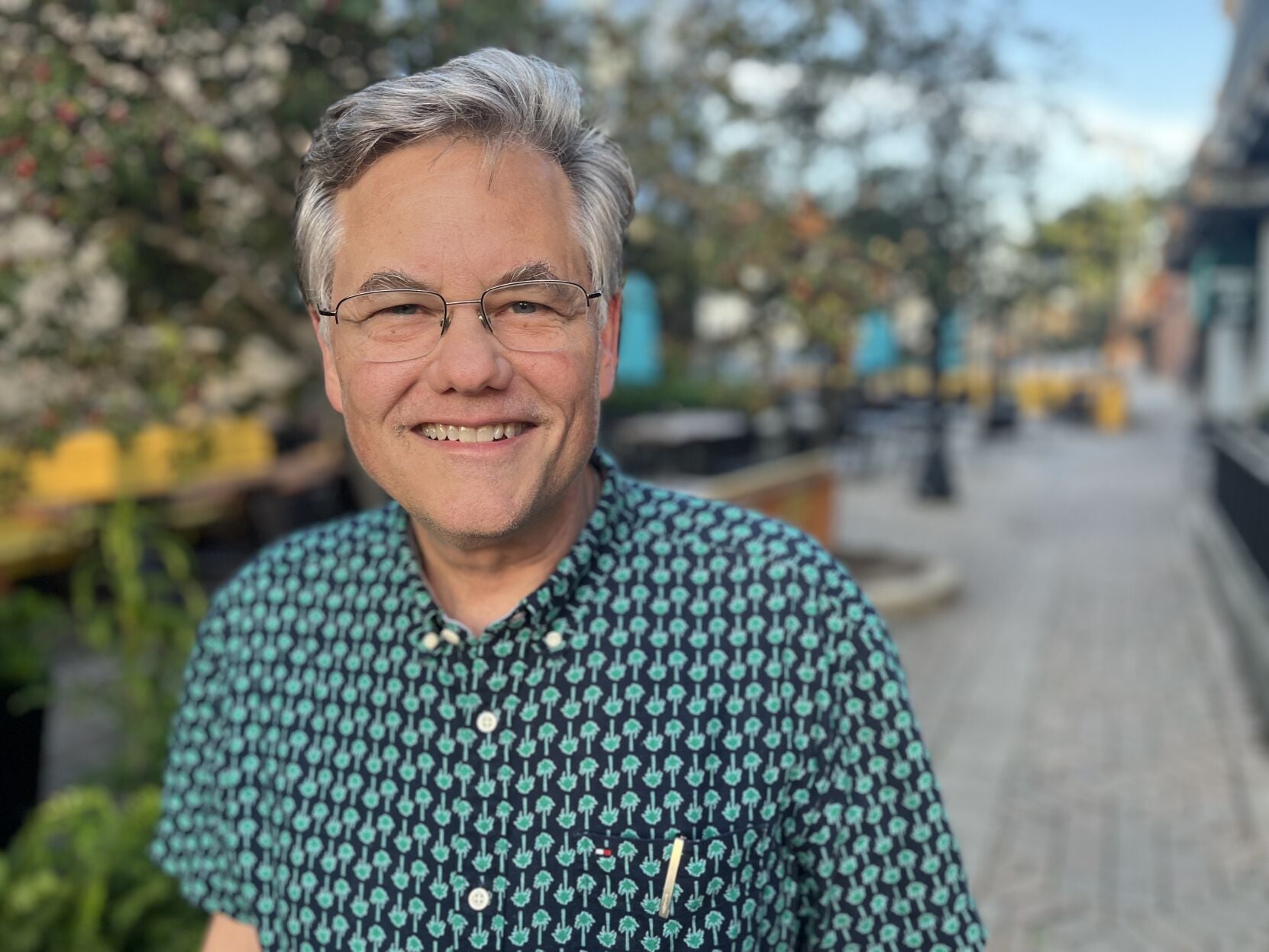
Matt Matthews, he, him, his, is co-pastor with his wife Rachel of the Waldensian Presbyterian Church in Valdese, a cool congregation of the PC(USA). You may reach him at 864.386.9138.
Christopher
As far as home decor, it wasn’t a decision I would make: coffee-colored human bones wrapped into elaborate chandeliers and shoulder blades fixed into hourglasses and wings. Time flies and all that.
I could already sense Wife’s grimace farther down the Bone Chapel in the Capuchin Crypt in Rome — for those wondering what Ikea I was visiting.
It’s designer. It’s European. It’s chic. It’s human.
Knowing Wife, the first symptoms of disgust rippled across her top lip somewhere between the knobby femurs interlocked to form walls and the mummified priests gasping in brown frocks older than most of American civilization.
The stale rooms permeated the nostrils less than expected in a city where air conditioning is a practical joke on American losers like us.
The streets outside stank of sweat and coffee and croissants and the occasional pot of urine and feces — a Morgantonion may feel right at home.
We spent our second morning piling into the Capitoline Museum, where nearly every painting and every statue placed the nudity at eye level, making me feel less like an art aficionado and more like a peeping Tom who’d discovered a glass house.
Wife was not there for the art.
She was there for the vibes, something that 500 different marble versions of the Virgin Mary smiling and doting and breastfeeding just couldn’t provide.
By the time we reached Florence, with its one-car-width cobblestone streets flanked by shoulder-width sidewalks and stuccoed walls, she’d found her element.
Sure, we began our only full day there at another art museum — the Uffizi with Caravaggio, Botticelli, and da Vinci — but we spent the evening in a cooking class, with unlimited reds, whites, and other fancy names for wine.
Never one to let money go to waste, Wife, who isn’t drinking for about the next six months, would switch our glasses like the Indiana Jones of alcohol every time I reached the bottom of a spirit.
By the time I was good and sloshed and considering which glass would be the one that made me peer into the great porcelain abyss, I had tried all manners of stinking cheeses, damn-near raw meats, and moderately decent ravioli made by people who were all quantifiably half as buzzed as I was.
The waiter actually made me sit nearby at the end of the evening to save himself the walk each time I needed refilling.
It only took half the winding roads back to the city for me to quell my somersaulting stomach. The remainder of the journey home had me pondering the nature of my eventual legacy.
Then, I started whining about the heat pressing on my skin like an elephant in a sauna.
If there’s one warning I have for any poor soul considering a trip to Italy in mid-August, just know it’s what I imagine the elevator to Hell feels like and the music isn’t much better.
By the time we floated around to Venice, I had already started considering how difficult it would be to write in Italian and whether they’d hire an American journalist if I convinced Wife to abscond there.
Life felt slower.
People sipped coffees at counters, stink-eyeing tourists as they click-clacked down cobblestone streets with rolling luggage, a cacophony of tourist trash.
To be frank, as soon as it wasn’t me pushing a bag around, I was just as judgey.
The one thing I think I’d miss, though, is the hospitality of home. Nobody smiles at you on the streets or in the cafes.
Even if it’s without teeth, an ear-to-ear grin from a Burke-Caldwellian passing by on the sidewalk can make a day full of deadlines and overprocessed food a bit easier to swallow.
Moore
At our most recent board of directors meeting on Aug. 20, 2026, The Caldwell Chamber leadership prioritized a critical issue threatening the future of our region’s economy and natural resources: the Interbasin Transfer (IBT) request by Charlotte Water.
After thorough discussion, our board of directors and executive leadership stand united in strong opposition to this request, and we fully support the ongoing efforts to protect the Catawba River basin.
Charlotte recently asked the state for permission to withdraw up to 63 million gallons of water per day from the Catawba River basin.
Because this is an interbasin transfer, this precious resource would be permanently removed from our region and dumped into another basin and lost to the communities of origin forever.
The Caldwell Chamber fully endorses the business case against this transfer as outlined by the Protect Our Water, Protect Our Future coalition. The economic and environmental impacts of losing this volume of water would be severe:
It is highly concerning that Charlotte projected this water need over two decades ago in 2002, yet for 25 years chose not to build out its own infrastructure.
Furthermore, when provided with $141 million in federal relief funds that could have been used for water infrastructure, the city chose to allocate those funds elsewhere.
We are not against Charlotte growing; we just don’t want it to be at our expense. The water we send elsewhere doesn’t come back, especially when our families and businesses need it most.
Fortunately, our region has exceptional advocates in Raleigh. The Caldwell Chamber extends its deepest gratitude to the leadership of our state lawmakers: Speaker Destin Hall, Sen. Eddie Settle, Rep. Blair Eddins, Rep. Jay Adams, Rep. Hugh Blackwell, Sen. Warren Daniel, Sen. Ralph Hise, Sen. Mark Hollo, and Rep. Mitchell Setzer.
Thanks to their tireless work, the new state budget includes a critical provision blocking large interbasin transfers like this one through Aug. 1, 2028. We are incredibly thankful for our delegation’s dedication to protecting what matters most to our community.
The Caldwell Chamber will always champion the resources that drive our local economy and strengthen local business. We are proud to stand alongside our legislative leaders, community partners, and local governments to ensure our water remains here, securing the future prosperity of our region.
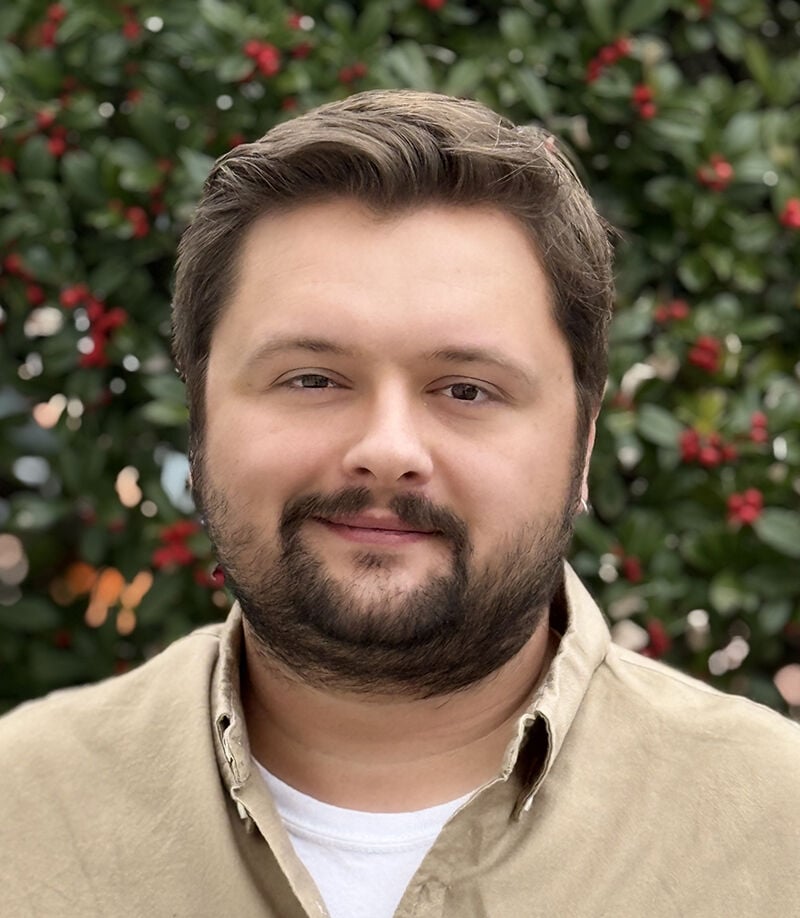
Bryan Moore is the President and CEO of the Caldwell County Chamber of Commerce and is speaking on behalf of the organization’s board of directors and leadership.
Banks
A surviving piece of the antenna which stood atop the North Tower housed in a museum in Washington, D.C.
EDITOR’S NOTE: In lieu of an editorial this week, The Paper commemorates the 25th anniversary of the 9/11 terrorist attacks upon America with this column of remembrance from Valdese and Education Reporter Mica Banks.
Twenty-five years ago, on the morning of Sept. 11, 2001, a confused 9-year-old was told that two planes had hit the Twin Towers in New York City.
As a kid in rural Georgia, I was far removed from it. All my life I was aware it had happened. I knew it was terrifying. I knew a lot of lives were lost that day. I knew it changed a lot of things in our nation.
But it wasn’t until 2019 that I actually came face-to-face with it and saw, with my own eyes, just a fraction of the nightmare that countless people lived through that day.
I saw the 9/11 exhibit at the Newseum in Washington, D.C.
September 11 suddenly went from a concept I had no tangible experience with to a horrifying reality.
Rewinding to 2001, I thought my teacher was just upset because people had died. I didn’t clock the terror in her red-rimmed, teary eyes, nor did I know just how many casualties there had been.
All things considered, Mrs. Croome held it together well. The school day went on.
I didn’t even know exactly what the World Trade Center was at that age, much less did I realize that every adult had to go about their day with such dread hanging over them.
This was the first and only time I ever attended a school during my K-12 years. For three months, I was a student at a private school and being in a classroom was a novel experience for a sheltered homeschooled kid.
So, when my mother picked me and my sister up early that day, I was devastated. I still didn’t understand the severity of the situation. All I knew was that we were going to watch a movie in class that afternoon and I didn’t want to miss it.
I know now why my mother came to get us. We lived in the middle of nowhere, two hours from the state’s only metropolitan area, so it wasn’t likely our school was a target. But Mother didn’t know what was happening or how widespread it was. No one did.
I would have picked up my kids, too.
In the following weeks, I started to understand what had happened. I still didn’t grasp just how scary it was, but I knew that it was very, very bad.
Years later, I was a college student attending a journalism conference in D.C. My group visited the Newseum just months before its permanent closure, but given our conference schedule, we only had about an hour to explore.
As a lover of both museums and journalism, I was instantly overwhelmed.
A museum worker must have noticed. He told me exactly what to do: First, I should go to the lowest level. See the Berlin Wall exhibit. Next, I should go to the top floor and look down. Then, I needed to go down a couple floors to the 9/11 exhibit.
I didn’t understand why I was going from the bottom floor to the top just to go back down, but I did as he instructed.
Immediately out of the elevator on the top floor was a catwalk, if memory serves. I could already see something massive below, but I didn’t know what it was.
I walked out and looked down.
I think my heart stopped for a second.
Below me was an enormous structure, twisted and warped out of shape.
It was a piece of the North Tower’s antenna.
The fragment stood at least two-and-a-half stories tall in the center of the exhibit. Behind it, a three-story wall was covered with rows upon rows of newspapers from one side to the other, floor-to-ceiling. All of them had front page stories about 9/11.
I’m not sure how long I stood staring at the crumpled steel below, but I can tell you it was one of the most chilling moments of my life.
It’s hard to describe what I felt, but I think it was profound sorrow accompanied by grief and even fear — not for my safety, no. It was almost like an echo from the past as grim reality gripped me.
Finally, I tore my eyes away and went down a couple floors to see the exhibit up close. A timeline of that morning was arranged in a ring around the antenna. I think there were a lot of photos on the walls that weren’t covered in newspapers.
Behind a glass case sat three cameras that once belonged to Bill Braggart, the only photojournalist killed documenting 9/11. Each camera was broken in different ways, and all were covered in debris. Braggart’s ruined glasses and singed identification — likely his press pass — were also on display alongside a busted roll of film.
It was the closest I had ever been to 9/11. It remains scored in my memory.
And if that was how I felt seeing an exhibit, I cannot fathom the fear, pain, and grief of those who were there. My heart will always go out to them.