
Trumpnomics and the return of the Robber Barons

First, let’s digress a bit and go back to the late 19th century when the USA was dramatically changing from an agricultural society into an industrialized nation.
Tens of thousands left farms for cities where cash paying jobs arose in oil, steel, textiles, railroads, and shipping.
By the beginning of the 20th century our “Captains of Industry” had turned an infant Capitalist economy into personal ownership of factories, machinery, natural resources, banks, real estate, etc. etc.
Lacking federal limitations, this is known as “lassie faire” Capitalism. That’s French for “leave it alone” — no government restrictions or oversight for any reason (e.g. job safety).
While several nations followed our example, others allowed a Socialist economy with national regulations on its major industries (e.g. job safety) — or a Communist economy where a “peoples” government owned and controlled all major industries and resources.
There was no “middle class” in the USA back then, mostly the rich and the working poor, a capitalist “Gilded Age” as ambitious businessmen accumulated ostentatious riches and political influence. (e.g. Vanderbilt, Rockefeller, Morgan, DuPont, Woolworth, Sears, etc. etc.)
When viewed as a social-economic dilemma, American critics and scholars used the term “Robber Barons” to describe their hoarding of wealth and exploitation of workers by unethical practices.
In return, these Barons dubbed their critics to be “muckrakers,” those who spread “scandalous lies” about America’s Captains of Industry.
That conundrum, dear reader, presented a challenge as our young republic attempted to create a democracy for “We the People.”
One result included the rise of labor unions, most specifically the Knights of Labor in the 1880s with demands for fair wages; equal pay for women; an 8-hour workday; an end to child labor; and laws requiring owners to arbitrate these concerns. Of some historical significance, these same concerns are often included and promoted by “Socialist” governments.
Strikes became the union’s major strength, but even then, America’s worker class would not realize relief until Congress passed the Sherman Anti-Trust Act and Interstate Commerce Act.
Better yet a majority of states approved the 16th Constitutional Amendment (1913) that allowed a federal income tax for all — and no longer apportioned among the states.
Washington now had cash to spend on people projects.
But two more decades would pass before unions received legal standing under the National Labor Relations Act. Since then, Democrats and Socialists tend to support unions while Republicans tend to favor a modified leave-it-alone Capitalism.
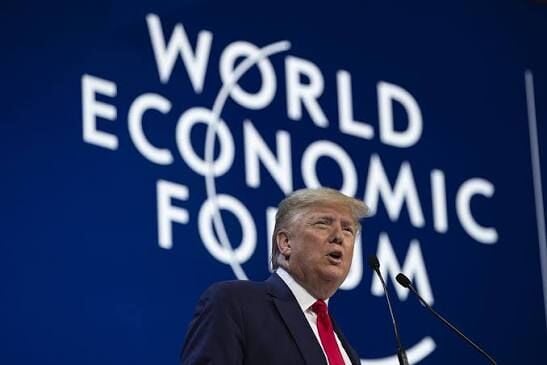
Today, “Reaganomics” and “Trumpnomics” promote free markets, reduced business taxes, increased defense budgets (think $$$ contracts), and restrictions or elimination of certain federal citizen-aid programs.
With some exceptions, America’s convoluted social-economic history resulted in our federal government supporting several “socialist-type” programs. (Not “Communism” as alluded to with Trumpnomics.) For example: Social Security, Health Insurance, Unemployment Insurance, Public Housing, Federal Emergency Management Agency, Food Stamps (SNAP), and Head Start are federal “citizen focused agencies” that benefit We the People.
The first truly citizen-centered agency was the Postal Department (1775), created by our Second Congress with Benjamin Franklin as postmaster general. Free city delivery did not begin until 1863. Air mail in 1918. A United States Postal Service (USPS) department arrived in 1971.
Perhaps the grandest federal public project occurred some 90 years ago with the Tennessee Valley Authority hydroelectric systems that encouraged rural expansion of community-owned Electric Co-Operatives throughout the nation.
Side note: Modern Republicans have at times promoted the privatization of Electric Co Operatives and, more recently, the U.S. Postal Service.
A few states sold their Electric Co-Ops to private companies; ergo, Trumpnomics has also proposed private ownership for some of the aforementioned “socialist-type” federal and state agencies.
As reported by NBC News, these ideas are “the biggest-ever rollback of federal programs for the needy while extending tax breaks disproportionately benefiting the rich.”
Translated into dollars, each dollar cut from low-income family programs will provide the wealthiest a dollar return in tax breaks.
With these actions some scholars suggest Trumpnomics will produce modern day Robber Barons who first and foremost seek political control over state and national budgets — at times contrary to existing state laws and our Constitution.
Unlike past presidents, Trump did not divest his assets or place them in a blind trust before taking office.
His increasing wealth is now managed by sons Don Jr. and Eric, including buying and selling shares in various federally funded companies, (e.g. for-profit ICE prisons and military contracts).
Son-in-law Jared Kushner has a venture-capital investment firm, Affinity Partners, reported to have more than $6 billion in assets — almost entirely connected to Saudi Arabia, the United Arab Emirates, and Qatar.
President Trump’s “Make America Great Again (MAGA) announces future lassie faire social-economic changes involving billions and trillions of U.S. tax dollars that favor selected states and produce copies of Elon Musk.
On the humanitarian side, the White House recently let a nationwide contract expire for a group of immigration lawyers representing children BUT continued the program with a sole-source $150 million contact with Burke Law Group (Texas) — where only two of its 25 lawyers claim relevant experience in immigration law.
And strange does not stop there as our federal debt doubles at $40 trillion!!
However, on a personal note, our current president earned over $635 million last year from a cryptocurrency licensing agreement specializing in “meme coins” (don’t ask me) which raised his total crypto holdings past $1 billion.
Charles Schwab explains cryptocurrency “is for internet-based electronic payments,” therefore crypto has no intrinsic value.
But my economics professor said, “If people believe a sheet of toilet paper has cash value — it has value.” Of course, the rest of us know of only one use.
Larry Clark is a Burke County educator, writer, and historian. He may be reached at larry2880@icloud.com.