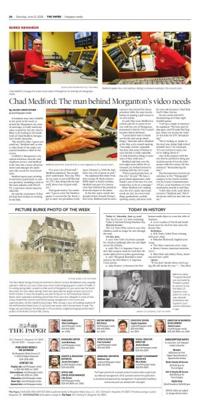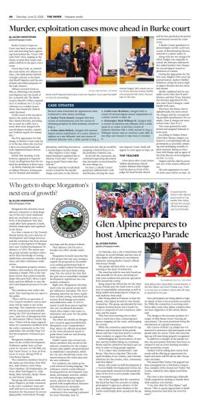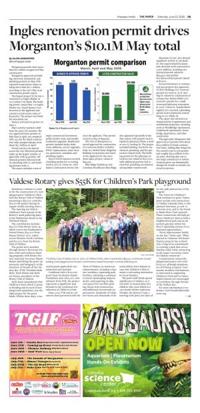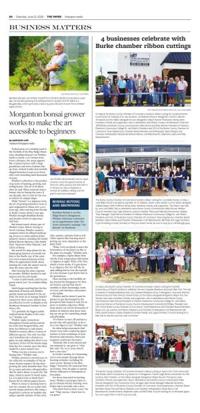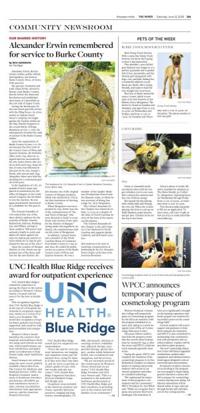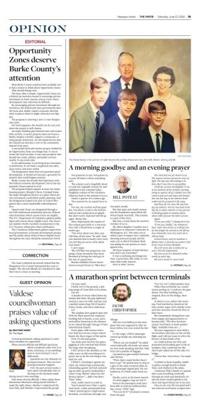




(From left) Austin Golding, Melissa McClure, and Emily Hendrix sat down to discuss their year during the week following the start of summer vacation for students.
A year after Burke County schools began reducing screen time in classrooms, teachers say students are reading more, collaborating more easily, and are more focused.
The Burke County Board of Education unanimously passed a “back-to-basics” balanced instruction resolution in June 2025, encouraging educators across the district to reduce screen use and implement more traditional learning methods.
The initiative garnered attention across the nation, with previous reports citing interest as far away as Nevada.
“I think there’s a time and a place for technology, because we do have to produce technology-literate students, because that is their world,” said Melissa McClure, former Burke County Teacher of the Year and current Drexel Elementary School Title I math and reading teacher.
“We have to prepare them for their world, not for ours,” she continued. “It really depends on the task and if the task can be enhanced by using technology. It shouldn’t just be an equal trade.”
According to McClure, students are able to stay on task longer than she’s seen in recent years.
“Coming back from COVID, we had a lot of students who just really struggled to interact with each other,” McClure said. “It was tough, but now that there’s more time when space has been intentionally made for that, we’re seeing a lot more (of the) ability to problem-solve or work with others collaboratively.”
Dr. Kristin Edwards, the director of technology at Burke County Public Schools, explained that the one-to-one student device initiative that began in 2014 was meant to enhance and expand classroom capabilities.
“During the (COVID-19) pandemic, we pivoted quickly to online learning in order to provide all students with timely instruction,” Edwards said. “The pandemic created a pendulum shift for classroom instruction, and the Balanced Instruction Resolution is a step in the right direction for getting us back to using technology intentionally to support and enhance instruction and not as an instructional delivery method.”
In February, Edwards presented districtwide teacher feedback to the board, reporting a 17% reduction in screen time for kindergarten through fifth-grade students.
Some teachers reported struggling without clear guidelines and asked for technology time limits and professional development to support a balanced learning environment.
Austin Golding, a fourth-grade reading teacher at Drexel Elementary, said that increased autonomy gave teachers flexibility in instructional planning and improved classroom management.
“When there’s 30 kids in a room, you’re not all going to get along,” Golding said. “I think it naturally creates a better environment where you’re not gonna just be a jerk. When you’re a part of this community and not hiding behind a screen, it kind of limits those behaviors.”
Data from February seemed to back this up, with Edwards reporting a 26.2% drop in office referrals for the misuse of technology from the previous school year.
As for student takeaways, Hillcrest Elementary School fifth-grade teacher Emily Hendrix pointed to easier grading and feedback, saying students “had to actually think for themselves.”
“In math, actually having to show their work on paper instead of just saying, ‘I did it in my head,’” Hendrix said. “‘If you did it in your head, and that’s not the right answer, let’s try it on paper and see if you get it.’ And they get it.”
Hendrix said many of the fifth graders she taught this year were kindergartners during the pandemic and aren’t used to being pushed by adults to move away from the computers and tablets they’re accustomed to.
Golding said some parents were less open to change, uncertain of how to adapt to new learning methods. McClure laughed at her troubles: assignments getting lost in backpacks and literally shredded by dogs.
Among the positive outcomes, McClure said one of the most encouraging has been students finding “more joy in actual books.”
“I’ve noticed a lot more kids spending time at my actual bookshelf, looking, and picking up the book, and reading the back of the book,” she said. “I’m like, ‘Yes! Please! That’s what I want!’”