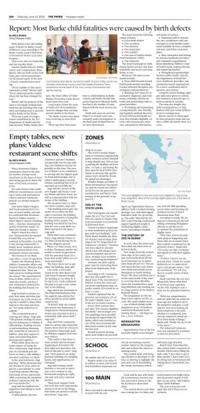


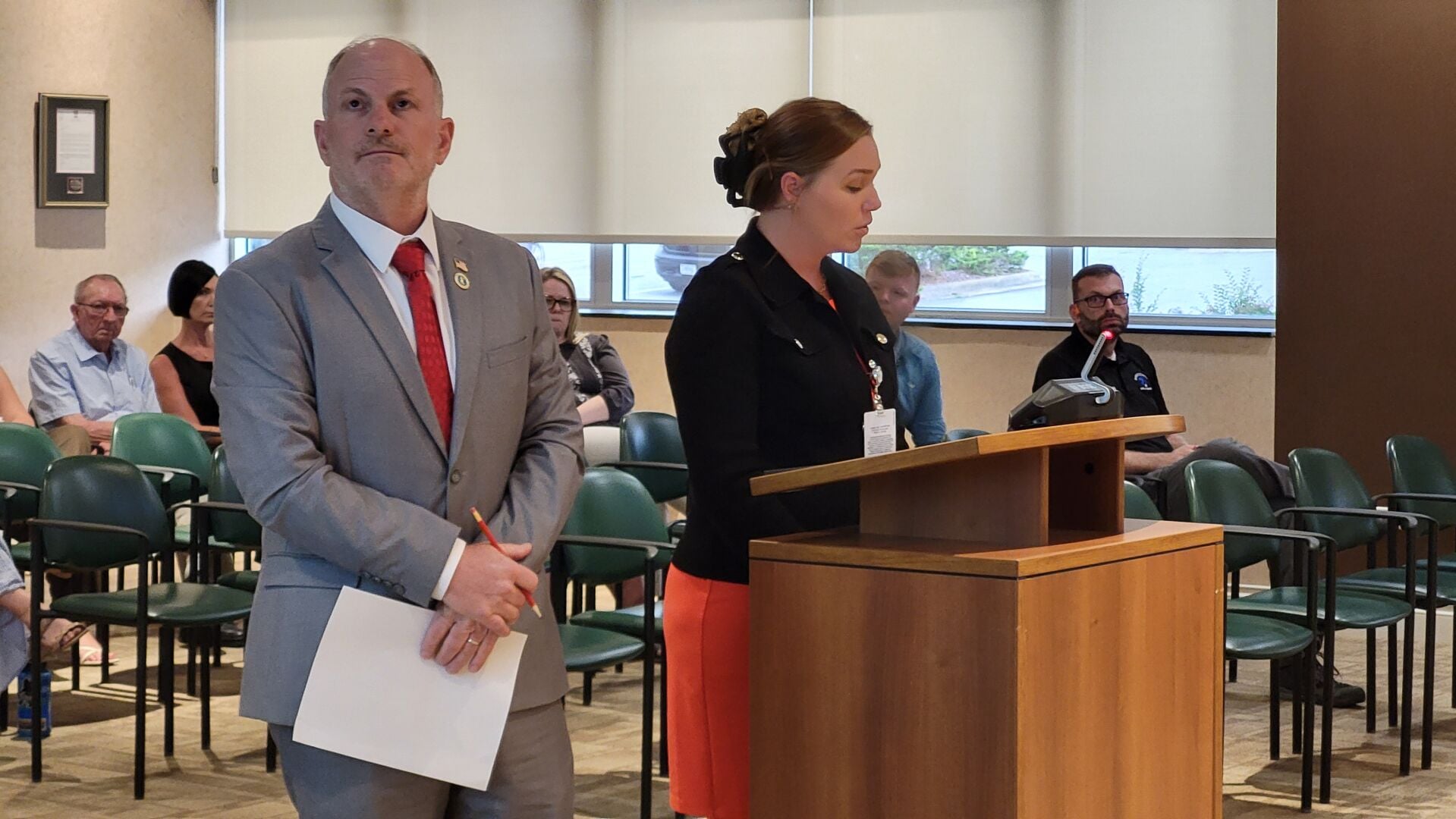
Commissioner Brian Barrier and Interim Health Director Ashley Jarrett, two members of the Burke County Local Child Fatality Prevention Team, presented an annual report at the June 1 county commissioners pre-agenda meeting.
Birth defects were the leading cause of death for Burke County children in 2024, according to the Burke County Local Child Fatality Prevention Team’s 2025 annual report.
There were also two homicides and two suicides listed.
Interim Health Director Ashley Jarrett and Commissioner Brian Barrier, who are both on the local team, gave a brief presentation on the annual report at the June 1 County commissioners meeting.
“Every number in this report represents a child,” Barrier said. “Every child represents a family whose life has been changed forever.”
Barrier said the purpose of the team is not simply looking backward but also learning from tragedies and finding ways to prevent similar deaths in the future.
The team is part of a larger system established by the N.C. Department of Health and Human Services’ Public Health Division. The State Office of Child Fatality Prevention sends data to local teams every year.
Local teams review the cases to build a list of recommendations for changes that can help prevent deaths in the future.
The Burke County team spent 2025 reviewing 19 cases from 2024.
There may have been more than 19 child fatalities in Burke County, said Public Health Education Supervisor Miranda Smith, but that is the number of cases shared with the local team by the state.
Smith said cases are sent late when it is an open court case, currently under investigation, or the final cause of death has not yet been determined.
The team found the following causes of death:
- Seven birth defects
- Four accidents
- Two illnesses
- Two homicides
- Two suicides
- One case of Sudden Infant Death Syndrome (SIDS)
- One unknown
The team found gaps in child mental health services that limit availability and access and cause delays in care.
Resources the team recommends include:
- More child-focused mental health professionals including trauma-informed therapists, psychologists, and psychiatrists.
- Reducing wait times for assessments, diagnoses, and treatments, including referral networks and partnerships with regional providers.
- Developing and maintaining a comprehensive, user-friendly, and regularly-updated directory of local child mental health services that includes eligibility criteria, referral processes, insurance and payment information, and points of contact.
- Dedicated staff or systems like care coordinators and case managers to help families understand available services, complete referrals, and follow treatment plans.
- More outreaches and training for schools, healthcare providers, and community organizations about identifying children’ s mental health needs, making referrals, and supporting families.
- Strengthened partnerships between public health, schools, the Department of Social Services, healthcare providers, and community-based organizations for a more coordinated and responsive care system.
Using the team’s funding, eight gun safes were given to community members to prevent gun-related accidents or suicides.
The team also bought four child tracking devices to help families with non-verbal children prone to running away.
Barrier said he is encouraged by these proactive steps that can save a child’s life before there is a crisis.