
Keep taxes reasonable, build more housing, better deal from data centers



Burke County is entering a period when its biggest decisions will not be about whether growth is coming, but about what kind of growth it will accept.
County commissioners, with advice of the county manager, have kept the property tax rate restrained, with the fiscal year 2025-26 budget setting the rate at 55.5 cents per $100 of valuation while relying on modest tax-base growth.
That matters to us because our household incomes still lag the pressures created by inflation and rising home prices.
It also helps explain why Valdese’s decision to reduce its municipal tax rate by 10 cents was not a strategic or particularly wise move: dramatic rate cuts may sound good politically, but they can weaken local capacity at the very moment communities need flexibility to respond to revaluation, infrastructure demands, and rising service costs.
Low taxes by themselves are not a development strategy. If Burke County wants a stronger future, it must connect tax policy to two realities already in front of it: a serious housing shortage and the growing interest in large industrial users such as data centers.
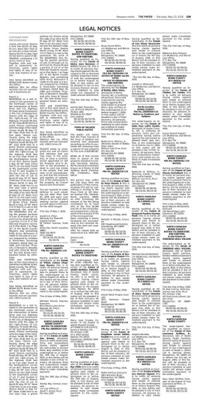
The housing side of the equation is the most urgent. Local officials in Morganton and Burke County have already acknowledged that the county is short thousands of housing units, with a 2023 housing needs assessment cited by the city estimating a total gap of 4,822 units.
In Burke County, “affordable housing” should not be treated as a vague slogan or as housing reserved only for the extremely poor. It means homes and apartments that local workers and families can pay for without spending more than about 30 percent of their income on housing costs, whether that cost comes through rent, a mortgage, insurance, taxes, or utilities.
In practical terms that means housing that fits the budgets of teachers, sheriff’s deputies, nursing assistants, retail workers, line workers, and young families who make the county run every day.
Market data also shows why many residents feel squeezed: recent countywide measures put median home values around the mid-$180,000s, while listing and sales data in 2025 and 2026 show prices climbing well beyond that level in many parts of the market.
Even if Burke County remains more affordable than the state’s hottest metros, that is cold comfort to working families whose wages have not kept pace. A county cannot honestly celebrate growth if those residents cannot afford to live near their jobs.
That is why property tax debates in Burke County should become more sophisticated than the usual argument between cutting rates and funding services. The better question is whether the county is using growth to protect residents from larger costs elsewhere.
A half-cent tax reduction may be welcome, but it does little if anything if scarce housing pushes purchase prices, rents, and utility costs upward at the same time. In practical terms, the most taxpayer-friendly policy may not always be another small rate cut.
It may be faster permitting well-planned housing, infrastructure that opens new residential sites, and incentives that increase supply without lowering standards.
One county commissioner in particular thinks the county’s “all about advancing” motto no longer fits and that Burke County should slow down. That is not caution; it is a dangerous failure of judgment.
When a county refuses to expand housing, it does not stop growth. It simply drives up the cost of living and forces working families to pay the price through the market instead of through a responsibly managed tax bill.
Burke County has already taken an important step in that direction by creating a citizen-led Revaluation Task Force for the 2027 countywide property revaluation process.
The seven-member body was established to review methodology, promote transparency, gather public concerns, and make recommendations to county leaders as new values are developed.
That should not be treated as a bureaucratic side note. In a county where many residents hear the word “revaluation” and expect a tax shock, public trust is a fiscal asset.
If the task force does its job well, it can help citizens understand a basic but often ignored truth: revaluation is supposed to make taxation fairer, not automatically higher.
The committee’s value, then, will depend on whether it becomes a real forum for scrutiny and public education rather than a symbolic gesture after the major decisions have already been made.
Our county should also be paying close attention to Raleigh. The North Carolina General Assembly is now exploring a constitutional amendment that would require lawmakers to limit how much counties and municipalities can increase their property tax levy, with the details to be worked out later in statute.
Supporters describe that as taxpayer protection, but Burke County residents should understand the larger implication: local decisions about schools, public safety, public health, and growth could be constrained by state politicians who do not have to balance Burke County’s books.
That should concern anybody that believes in local control just as much as it concerns residents who worry about service cuts. A county cannot prepare honestly for revaluation, housing demand, and infrastructure needs if Raleigh reserves the power to impose a one-size-fits-all cap after the fact.
Predictability matters, but so does self-government, and Burke County should be wary of any reform that promises relief while shifting real authority farther away from the people who live with the consequences.
Unfortunately, our local representatives have been quiet on this matter.
Data centers sharpen this dilemma. On paper, they can look like a fiscal prize: large capital investment, a potentially valuable tax base, and the kind of modern industrial profile that signals Burke County is open for business.
In a county budget where property taxes still provide the single largest revenue stream, commissioners would be right to consider projects that strengthen the tax base and reduce pressure on homeowners.
But data centers are not ordinary employers. They can consume enormous amounts of power and water while creating fewer permanent jobs than traditional manufacturing or business expansion.
If Burke County or Hildebran welcomes them, it should do so with open eyes and hard conditions, not with vague promises about innovation.
The county should insist that any major data-center proposal answer three questions before it receives enthusiastic political support.
First, what is the net benefit to local taxpayers after infrastructure demands, utility impacts, and any incentives are counted?
Second, how much of the new value will translate into durable local revenue for schools, public safety, and long-term capital needs?
Third, what does the project do for the county’s housing challenge?
If a data center increases land pressure, strains utilities, or absorbs public attention without helping Burke County house its workforce, then residents are being asked to subsidize growth that does not really belong to them.
The right deal is not simply one that adds valuation to the books; it is one that strengthens the community around it.
Burke County’s best path forward is a balanced growth strategy: protect residents from unnecessary tax increases, but stop pretending that tax restraint alone will secure prosperity; accelerate housing production at multiple price points, because affordability is now an economic-development issue, not just a social one; and negotiate firmly with data-center developers so that high-tech investment serves local needs instead of bypassing them.
This is the moment for county commissioners, municipal leaders, business leaders, and citizens to reject false choices. Burke County does not have to choose between growth and character, or between fiscal discipline and community investment.
But it does have to choose whether it will shape the next decade intentionally or let the market shape it by default.
The future of Burke County will be decided less by slogans than by terms. On taxes, keep faith with residents. On housing, build with urgency. On data centers, bargain from strength.
If county commissioners can do all three at once, Burke County can emerge as a place that grows without pricing out its people. If not, it risks becoming another county that welcomed investment but failed to secure a livable future for the people already here.
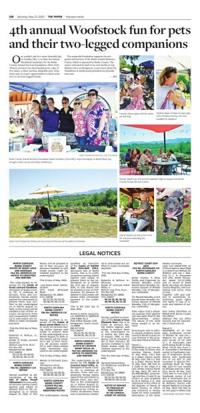
Johnnie Carswell is a former Burke County commissioner and is a past president of the N.C. Association of County Commissioners. He is currently a member of the N.C. Rural Infrastructure Authority.