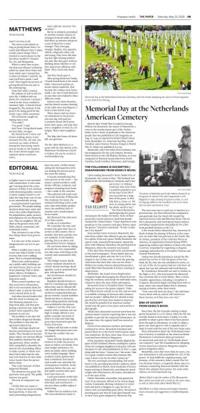

Memorial Day at the Netherlands American Cemetery

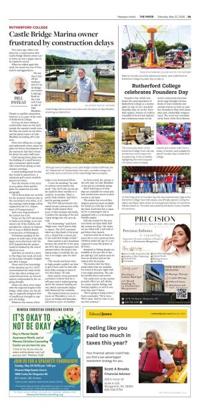
Memorial Day at the Netherlands American Cemetery, with the wreath displaying the names of those engraved on the Wall of the Missing.

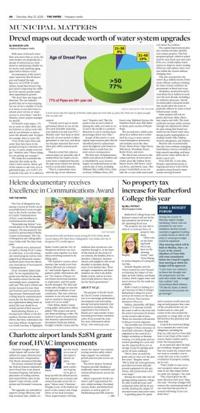
The photo of Mathilda and Emilie-Helene Kessenich at the grave of Warren Feil, which appeared in Life Magazine in 1946, shows his grave number, 111, and his dog tag nailed to the wooden cross as his name had not been stenciled on it yet.
Elliott
Shortly after World War II ended in Europe, Willem van Kessenich, the mayor of Maastricht, a town in the southernmost part of the Netherlands, wrote a letter of gratitude to the American people that was published in Life magazine on Aug. 27, 1945, as reported in Robert Edsel’s latest book, Remember Us: American Sacrifice, Dutch Freedom, and a Forever Promise Forged in World War II, which was published in 2025.
Maastricht, only a few miles from Germany, was the headquarters for the 30th Infantry Division, better known as the Old Hickory Division, as it was composed of National Guard units from North Carolina, South Carolina, Tennessee, and Georgia.
The following is excerpted / paraphrased from Edsel’s book:
Upon reading Kessenich’s letter, Mabel Feil, of Demopolis, Ala., wrote to him. “My husband was killed on his 18th birthday in Germany and is buried in the U.S. Military Cemetery near your town. I would be grateful to you all the days of my life if you can send me a snapshot of his grave, in Plot HH, Row 5, Grave 111. We were so young and he was the whole world to me.”
The Dutch themselves had helped dig the graves and prepare the bodies for burial. News of their generosity toward America’s dead had already reached the United States. “I have heard how your people go to the cemetery and place flowers upon the graves,” the letter continued. “If only I could see it for myself.”
Soon another letter arrived in Maastricht, this time from a father who offered to pay any expense for a photo of his son’s grave. Emilie Kessenich, the mayor’s wife, (henceforth Kessenich) shared the letter with Johannes Heuschen, the parish priest in Margraten, where the cemetery was located.
A few days later, Kessenich wrote anonymously in the local newspapers, “Every family that can, should adopt a grave and care for it as if it belonged to one of their own, to show the grieving Americans that their dear ones are not alone.” Within two weeks, Heusen showed Kessenich a trunk filled with thousands of letters, wanting to adopt graves.
Meanwhile, the 603rd Graves Registration Company began discouraging the Dutch from visiting the cemetery, and except for individual cases, refused to share the next-of-kin information.
Kessenich wrote to President Harry Truman, asking for access to the graves registry. “Only your fallen heroes remain in our soil, and we want to establish a lasting tie between their relatives and our people,” adding that if it should so happen that her own boys were buried in America, she would be grateful if an American mother would visit the grave in her place and send her a photograph.
Weeks later, Kessenich received word from the Quartermaster General, regretting that it was not possible to provide the requested information. At the same time, the registry itself was moved to Belgium.
Letters from American mothers and widows continued to arrive. Kessenich translated and passed them on to the newly-formed grave adoption committee. By then, more than 18,000 Americans had been buried in Margraten.
In the meantime, Kessenich’s family adopted the grave of Feil’s husband, Warren, sending her a photo of her two youngest daughters at his grave. Feil sent the photo to Life, which published it on Feb. 11, 1946, along with her letter. “I assure you,” she wrote, “that it is a great comfort to know that someone who cares is there to do for me what I cannot do.”
The two continued corresponding. Feil wrote back to Life, providing Kessenich’s address, which was published in March. Soon hundreds of letters began arriving in Maastricht, providing the much-sought-after information, the names and addresses of the next of kin.
Father Heuschen, meanwhile, had gained the trust of an American official in the Graves Registration Command, allowing volunteers to travel back and forth to Belgium to copy the list of names and corresponding grave plots. Heuschen’s pressing goal, one that he took upon himself, was to have every grave adopted by Memorial Day.
The next step was to reach out to America in a personal way, one that reflected the compassion and gratitude that the Dutch felt toward the American heroes who had liberated them. The lot fell to Kessenich, with KLM Royal Dutch Airlines providing transportation and publicity for a five-week goodwill mission to the U.S.
A few weeks before Memorial Day, American officials forbade the placing of flowers at the cemetery, an order that was grievous to the Dutch. Marie Jordan, president of the Gold Star Wives of America, an organization formed during WWII supporting widows and children of those who died in service, responded by organizing a telegram campaign aimed directly at President Truman and General Eisenhower.
Jordan was already planning to attend the Memorial Day service to visit the grave of her husband. By the time she was scheduled to arrive, every one of the 18,000 graves had not only been adopted, but was also adorned with fresh flowers.
By coincidence, Kessenich sat next to Jordan on the flight to N.Y., who had missed the Memorial Day ceremony due to travel delays. After a series of public appearances, including a reception at Congress, Kessenich began traveling from state to state, where she visited Mabel Feil in Alabama, staying in homes rather than hotels.
“Your sons will never be alone,” she told them. “Leave them with us, and we will watch over them, forever, as if they were our own.”
End of excerpt from Edsel’s book
Since then, the list of people waiting to adopt graves has grown to 1,000 names, when the list was recently closed to newcomers. Usually, it is only possible to adopt a grave when it has been passed down through an inheritance. In order to adopt a grave, one must agree to visit it regularly and remain in touch with the next of kin over many years.
More information about the Netherlands American Cemetery is available at the American Battle Monuments Commission abmc.gov/cemeteries-memorials and click on “Netherlands American Cemetery” and The Foundation for Adopting Graves American Cemetery Margraten adoptiegraven-margraten.nd/en.
Meanwhile, even after more than 80 years, contact information is still unavailable for 75% of the graves. To help fulfill the original premise, and promise, of the cemetery, Edsel created The Forever Promise Project, a nonprofit whose aim is to continue connecting American families with the Dutch who adopted their graves. For more information, see foreverpromise.org.
(Robert Edsel is also the author of The Monuments Men, which was made into a movie by the same name, as well as other books about World War II.)
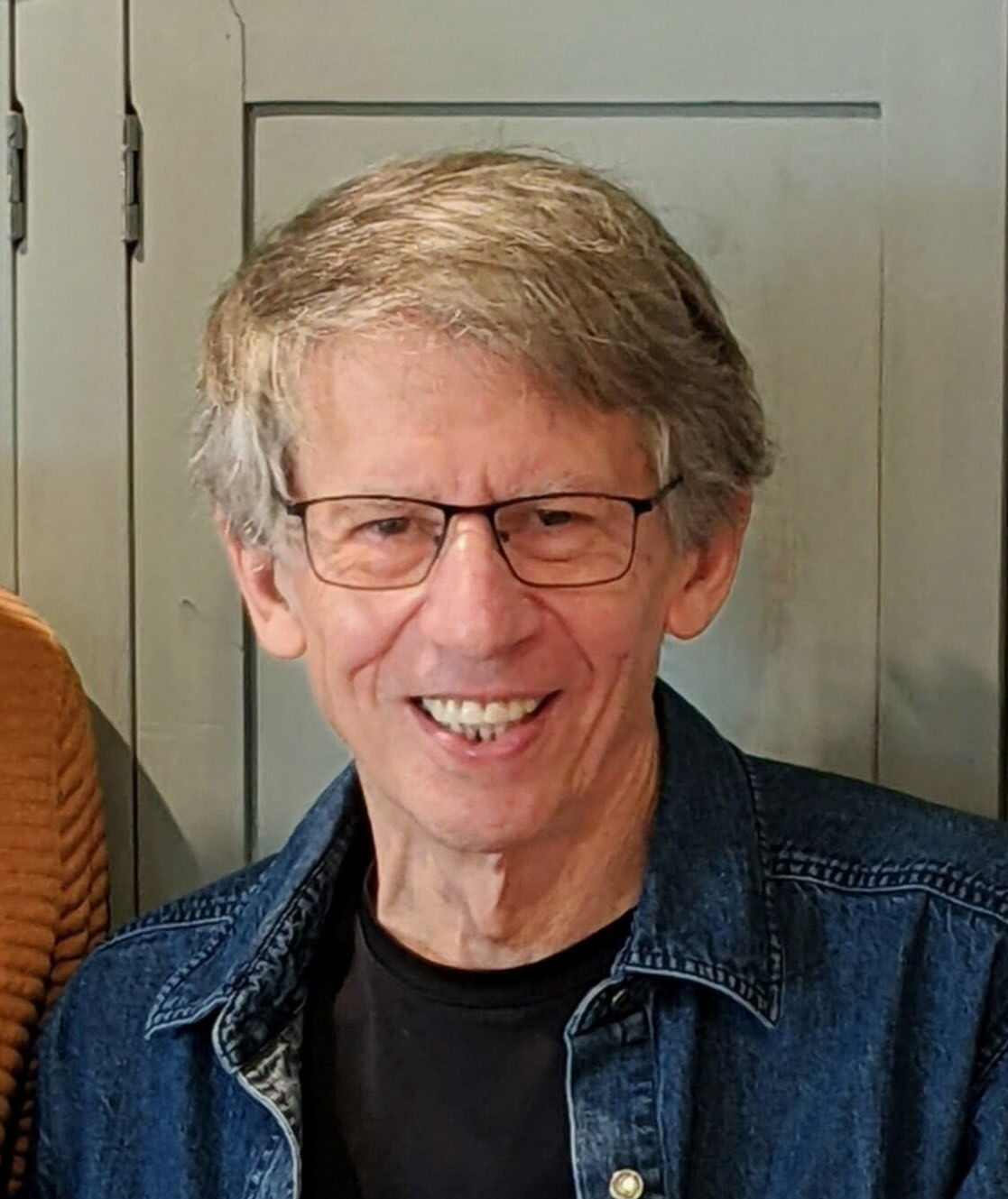
Tad Elliott is a Navy veteran and hospice volunteer. Send comments and suggestions to tadelliott@gmail.com.