
Dan Hoyle helps shape Drexel's future through service

Drexel community member Dan Hoyle has spent the most recent years of his retirement volunteering through Grow With Drexel, a nonprofit that focuses on community and improving the town for generations to come.
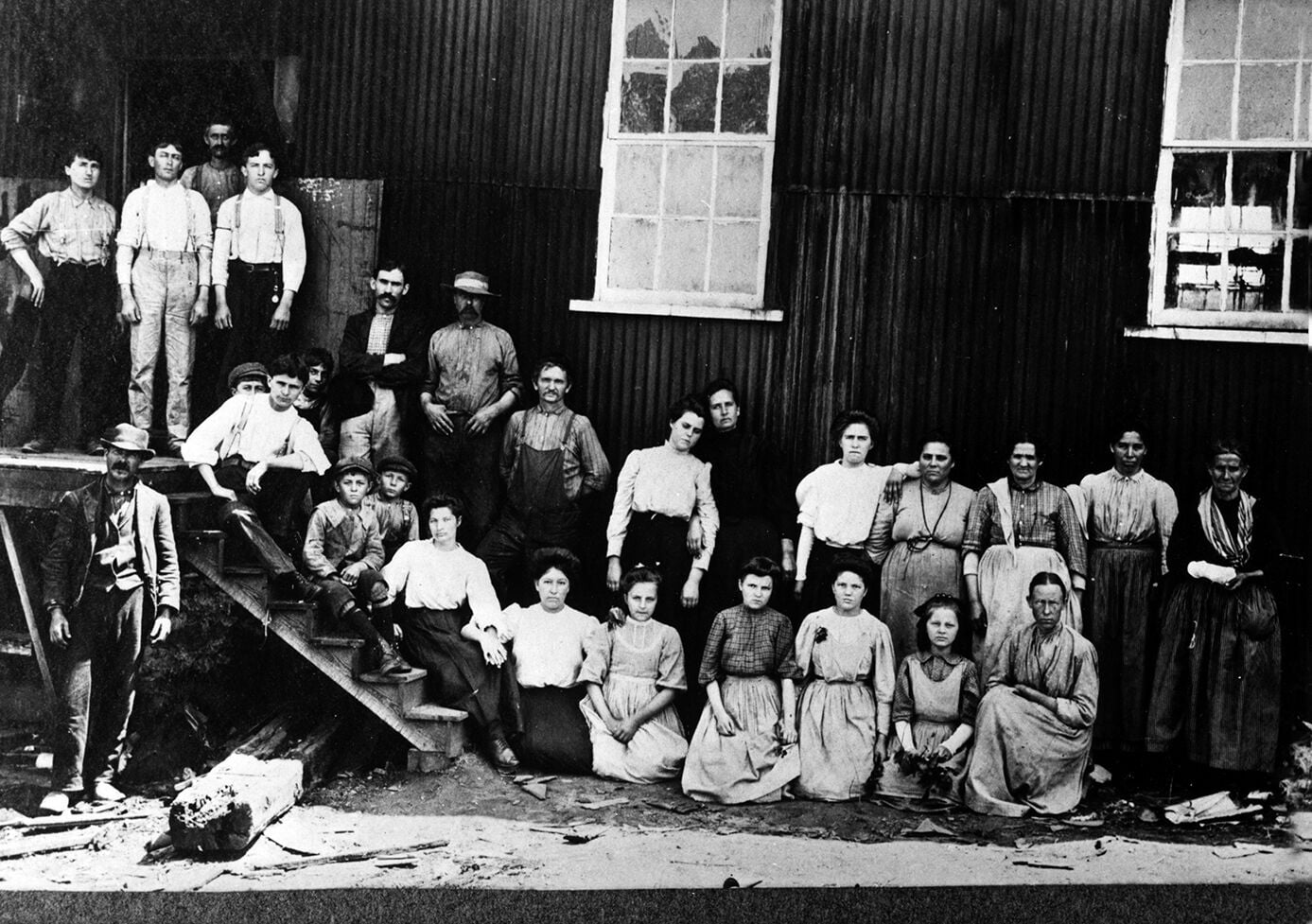
Dan Hoyle remembers growing up in Drexel during a time when the town was home to a global leader in furniture manufacturing, children spent much of their time at the community center, and everybody looked out for each other.
Today, those memories are the reason Hoyle remains heavily involved in the Drexel community. As president of Grow With Drexel, a nonprofit that focuses on improving the town for generations to come, Hoyle has spent much of his time volunteering, whether it’s finding talent for downtown concerts or his most recent creation of “A Community of Hands.”
The seven-panel stained glass art project will be in the downtown Drexel park and pays tribute to the hardworking people of Drexel. Hoyle and his project partners will hold a groundbreaking for the installation on Wednesday, Sept. 2, at 11:30 a.m.
Hoyle is not only an artist and nonprofit leader, but a retired educator, a husband to Sarah Hoyle, a father of six, and a grandfather to six. He reflected on how being a Drexel native has shaped his work today.
What was it like growing up in Drexel?
I grew up in Drexel and moved back to the area after living in Virginia, and taught, and was a school administrator in the Drexel area. For so many people my age, we grew up in a time when you could just walk to the community center, walk downtown. It was just the perfect way to grow up, small-town living at its best.
Everybody knew each other. The village helped raise you. Everybody looked out for everybody.
What inspires your work with Grow With Drexel, and what are some recent projects?
We all get to an age that we want to look back and help as we can. We held a couple of alumni reunions, and we realized that there were a lot of people who had those same memories of growing up in Drexel with all of those stores and businesses and the community center, and they wanted more. They wanted the town to come back.
The town had taken a hit over the years with the loss of the furniture company and the school system. I would say there’s probably anywhere from 30 to 50 people that are more than happy to help with ideas and projects. We wanted people to be proud of their hometown, even today, and to get the young people back, start seeing them come back to town to live and raise their kids.
We’ve been at it now for probably two and a half to three years, and we are starting to see a little progress, but it’s slow.
We continue to base everything on our philosophy that while we’re not elected officials and we can’t do everything, but that we can help however we can to make Drexel a better place to live and work.
We are getting ready to start a farmer and craft market this Sunday on the front lawn of the R.O. Huffman Center. We’re really pushing it to be a community event for four Sundays in a row. For this first Sunday, there’s somewhere between 10 and 15 vendors.
How did you become a stained-glass artist?
I took a class at Western Piedmont with a lady named Georgia Armstrong in 1981. I’d been looking for an art outlet. A lot of my family members were in the arts, and I didn’t have any particular skill at anything, so I decided to take a stained-glass class, and immediately got excited about it.
I’ve never taken it to a commercial basis. It’s been a hobby, but it’s been a great stress reliever and a great way to spend some time. I’ve taught classes in it and I’ve tried to pass the art down to other groups of people over the years. I teach some at the Burke Arts Council and I also teach some at Mayland Community College in Newland.
What do you hope people take away from your most recent, ‘A Community of Hands’ stained-glass project?
I want it to be much more than just seven tributes to the working people in Drexel. I want it to be a place where people can come with their children, reflect, think about the folks that came before them in our community, think about the future of the community, sit out there on a blanket and read a good book, a place of serenity.
I do hope that people will come from nearby and from far away and see something that we’re really proud of in Drexel.
Looking ahead, what do you hope for Drexel’s future?
I’m excited that we’re starting to see a core group of younger people starting to get involved in Grow With Drexel. They do it a different way, but it’s very positive for me to have younger people who step up and say, ‘this is my hometown, too.’
Quite honestly, their focus is not the past, but what we can do moving forward for their children. They are willing to put a significant amount of time into it.
Some of my goals are hard to measure, but I want to see more people moving back to Drexel, a sense of pride in working in Drexel, seeing storefronts get filled up, seeing people walking around town, and feeling safe in their community.