
Where history lives: Hart Square Village carries Appalachian traditions into the future

Hart Square Village, the nation’s largest collection of historic log cabins, is located in the Catawba County portion of Vale, a small farming community.
In the middle of a small farming community in Catawba County, a gravel road leads to the nation’s largest log cabin museum, a place where history isn’t displayed behind glass but preserved through immersion and celebration of Appalachian heritage.
The Hart Square Foundation brings the region’s history to life through the protection and restoration of historic cabins and structures, teaching traditional crafts like pottery, basket weaving, and open-hearth cooking, and hosting festivals and classes that tell the stories of the people and trades that shaped the Appalachian region.
In 1967, when Dr. Bob and Mrs. Becky Hart purchased 200 acres in Vale, their intention was to create a nature preserve. But after one of Dr. Hart’s patients told him one of their cabins needed saving, its move to a nearby pond at the preserve sparked what Development Director Lorissa Vines described as “cabin fever.”
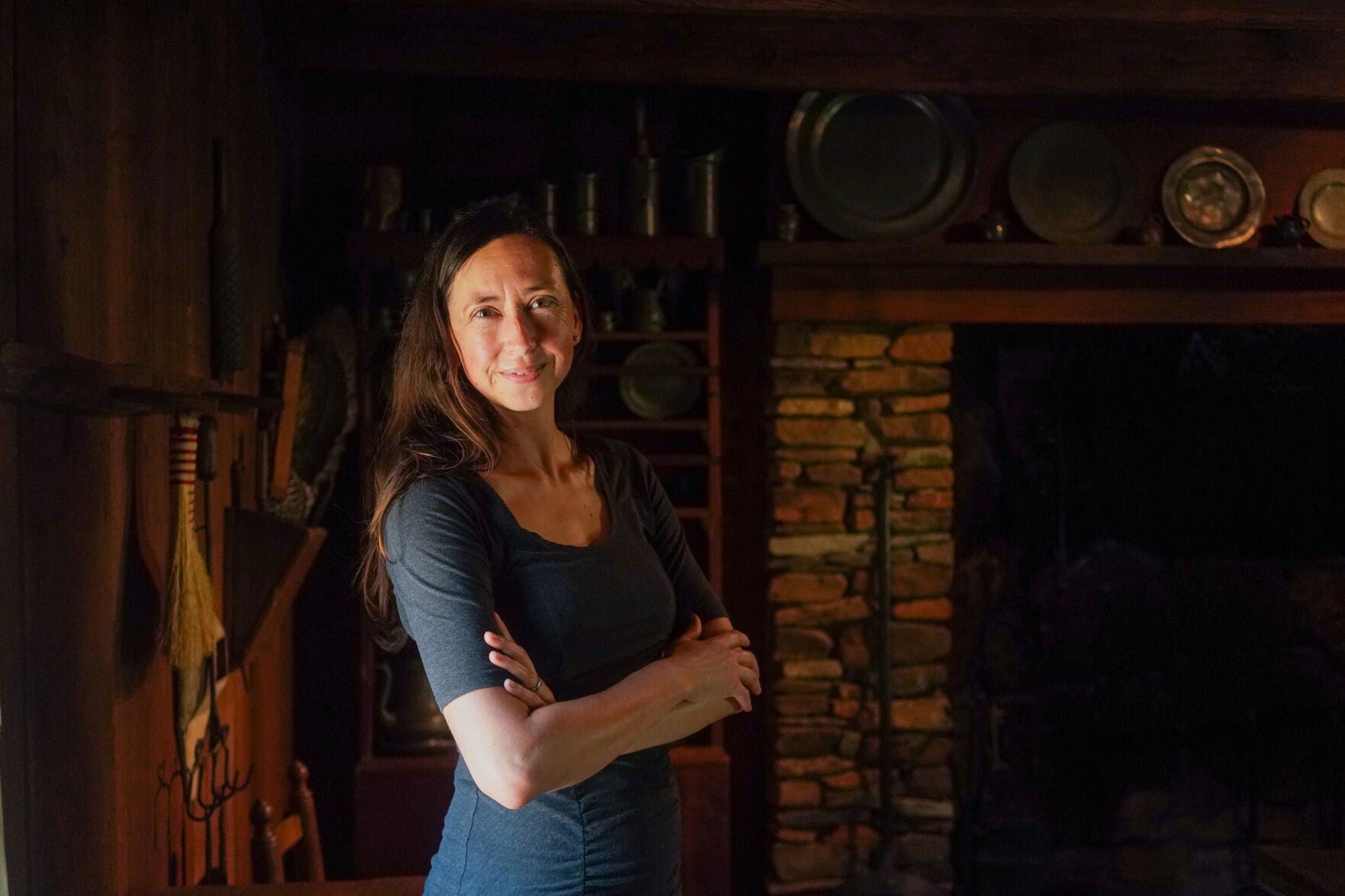
Lorissa Vines is Hart Square Foundation’s development director. Her first project was raising funds for the restoration of the village’s groundhog kiln, which is dedicated to firing Catawba Valley-style pottery.
That first cabin, relocated in 1973, is one of 103 historic structures in the collection now known as Hart Square Village. The collection includes cabins, barns, outbuildings, corncribs, and other structures from counties across the Appalachian region, with the oldest structure being from Burke County.
“It really just became his passion to preserve North Carolina heritage,” Vines said.
As the Harts got older, they established the Hart Square Foundation, now led by their granddaughter, Executive Director Rebecca Hart. In 2017, the couple donated the approximately 50 acres that the village occupies, along with artifacts housed inside the buildings.
Visitors can explore historic buildings like the Chapel of Peace, which was once a functioning Episcopal church dating back to the 1800s, according to Vines. By the time the Hart family acquired it, the building had been converted to an apartment, but they restored it to its original purpose. Today, it hosts small weddings and serves as a centerpiece during Christmas in the Village, complete with a lit fireplace, candelabras, and live organ music.
“The set-back-in-time events we do, we try to make them very immersive to experience,” Vines said. “One thing that I find so unique about this place is how they are all just period correct and they have everything in the space, whereas a lot of museums, it’s either behind glass or it’s roped off, you can’t get to it.”
The Harts spent about 50 years traveling down the East Coast to different flea markets and primitive antique shows to collect the artifacts that now fill the buildings. Though Hart Square Village has cabins that date back to the 1700s and 1800s, most of the artifacts reflect everyday life in the mid-1800s, Vines said.
The village’s oldest structure is a still-functioning gristmill that dates to about 1760. It was relocated from south of Icard in Burke County. During the Fall Heritage Festival, visitors can watch corn being ground into grits and cornmeal. Vines noted that the mill predates the founding of the United States.
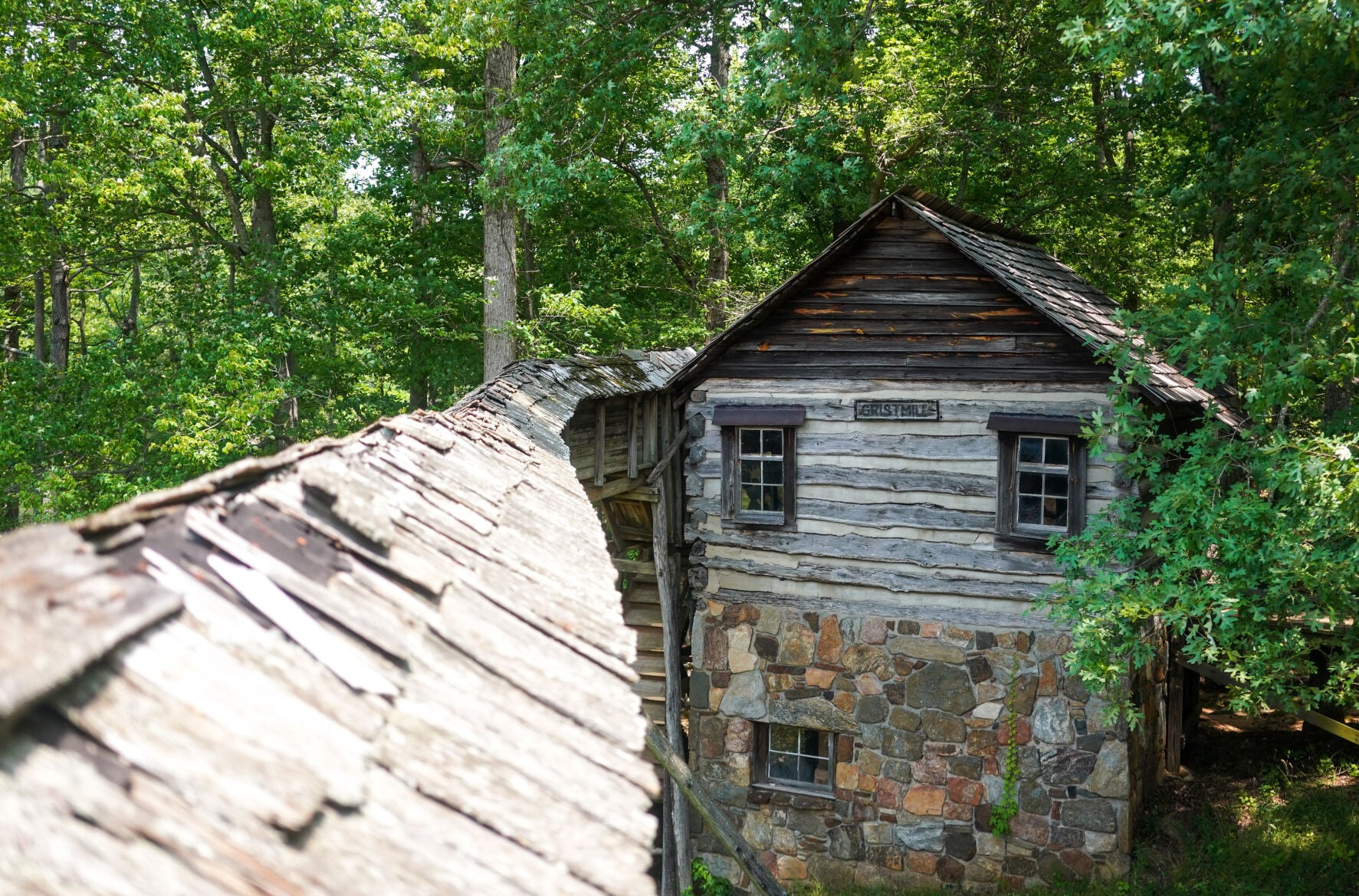
Hart Square Village’s oldest structure is an old gristmill from Burke County, which dates back to 1760. The mill is still functional and is used to demonstrate how corn is ground into grits and cornmeal.
Beyond preserving structures, the Hart Square Foundation also focuses on keeping traditional crafts and trades from the region’s past alive.
The village’s three annual festivals, the Spring Heritage Festival, Fall Heritage Festival, and Christmas in the Village, bring artisans together to demonstrate historic crafts and trades for visitors of all ages. When Hart Square was privately owned, the village was open to the public only once a year during the Fall Heritage Festival.
Today, visitors interested in learning those skills can take year-round Folkways classes in hand-built pottery, basket weaving, barn quilt painting, chair caning, bobbin lace making, open-hearth cooking, herbal infusions, and more.
“Bobbin lace making was always very popular, and that is a very intricate and very endangered craft, so we’re always glad to see that one fill up,” Vines said, adding that staff only knew of one woman who could teach the craft. She now has two young apprentices learning it.
“Just like we’re trying to preserve the cabins, it’s an effort to preserve the trades and find people that are wanting to carry those forward,” Vines said.
One of Vines’ favorite structures is the village’s groundhog kiln, used to fire Catawba Valley-style pottery. Potters feed pine slabs into the underground firebox during a firing process that takes about 12 hours.
The kiln is dedicated to the region’s pottery tradition, which uses locally dug clay, handmade wood ash alkaline glaze, and wood firing. Vines said restoring the kiln became her first fundraising project after joining the foundation.
Local Vale potter Kim Ellington built the kiln, and ceramic artist Preston Tolbert of Statesville restored it by hand, making bricks stamped with the Hart Square logo.
Preservation work continues year-round throughout the village, Vines said. Because several structures sit on slopes near ponds on the property, water has damaged some of the foundation logs over time.
When repairs are needed, staff use pieces from a historic wood supply or timber harvested from the property and replace damaged sections using traditional methods. Staff began replacing modern cement chinking that fills the gaps between logs with a historic mixture of clay, sand, straw, and water.
Unlike concrete, which can trap water between logs and cause rot, the clay mixture method draws water in and then releases it. With help from a clay building expert, staff have been able to use the right recipe for the local clay composition.
Hart Square is also currently partnering with students at Appalachian State University, who are conducting a dendrochronology study (tree-ring dating) on the cabins’ wood by taking samples of the logs. They will then be able to link the samples to the season the trees were felled to construct the buildings, bringing more historical knowledge to the village.
The village also hosts several field trips for area schools, introducing students to history through hands-on activities, and events like weddings at the Sigmon Family Education Center, providing a scenic spot for couples to say, “I do.”
Although the foundation is no longer adding structures to the collection, preserving what already exists remains a constant effort.
“We really feel like building it was Dr. Hart’s legacy, and then it’s our job to preserve it and share it with future generations,” Vines said.