
The School of Science and Math has opened doors for thousands of students. North Carolina needs math education modeled on its successes.

Murphy
As a former teacher, I am drawn to the North Carolina School of Science and Mathematics motto, “I accept the greater challenge,” which calls students to pursue excellence and opportunities for growth.
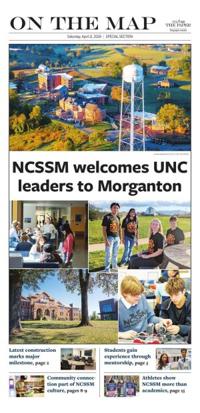
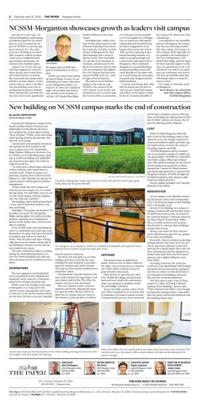
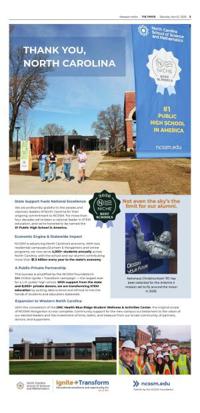
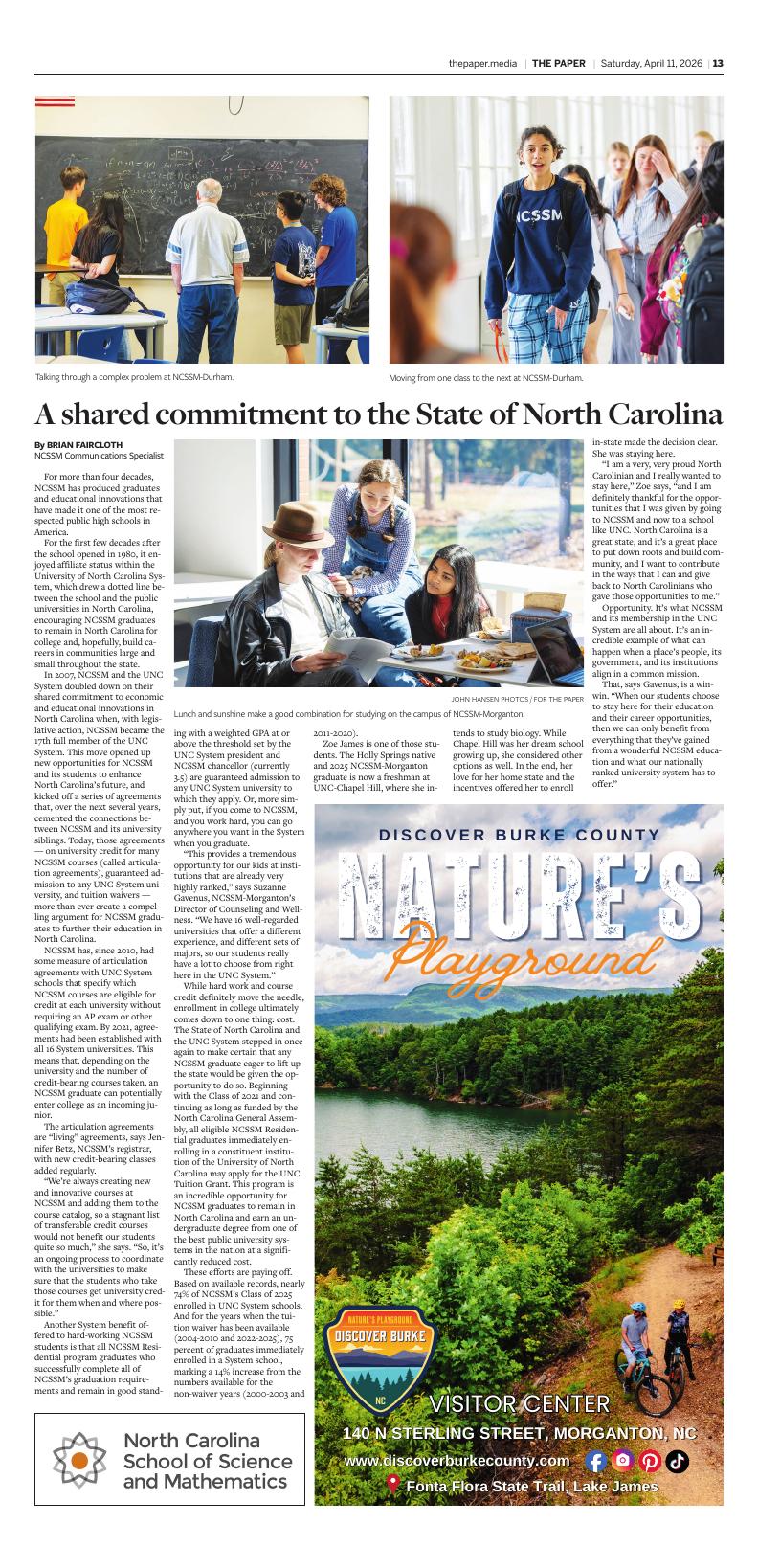
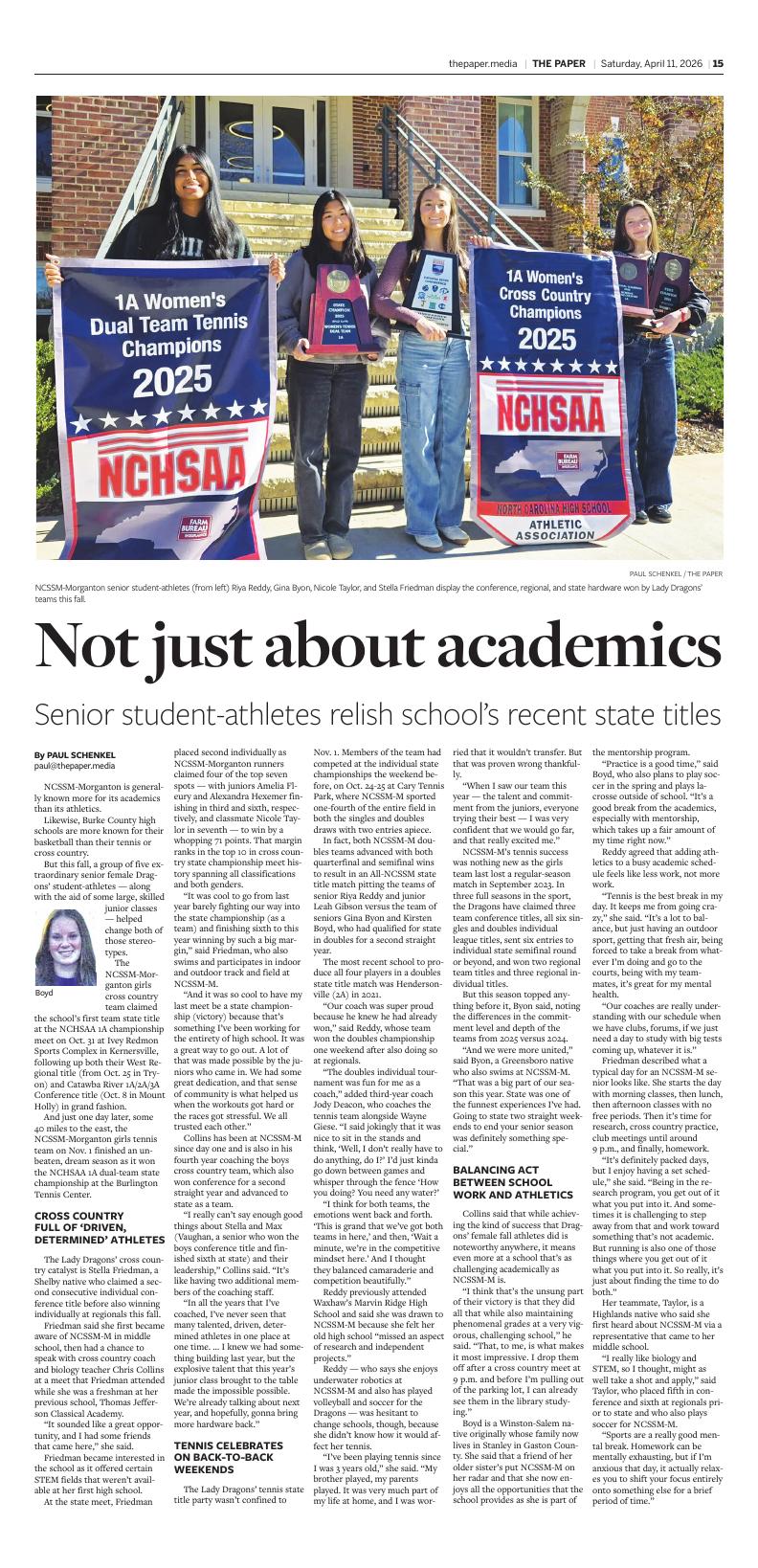
Since it opened doors in Durham in 1980, and then in Morganton in 2022, NCSSM has instilled this spirit in thousands of young people. Today, it is the top high school in the nation. And it is known as a place that encourages students to be curious, to persevere, and to build resilience that will serve them long after graduation.
No one does education, and in particular, math education, better than NCSSM. The model the school has built should serve as an inspiration for the state.
And as the UNC System prepares future teachers to instruct K-12 students, we face our own call to excellence.
Any teacher carries enormous responsibility into the classroom and should be ready to shape minds and instill a passion for learning in the hearts of our children. Education tools and methods matter. And if teachers who graduate from our universities are not equipped to build a child’s foundational understanding of reading, writing, and arithmetic, then we have fallen short in our work.
Over the past several years, scores from the National Assessment for Educational Progress, the nation’s report card, have shown that students in North Carolina are behind their pre-pandemic achievement levels in math, with wide gaps between higher and lower performing students. Reading skills, too, have suffered. And while scores show some improvement in recent years, there is work still to do.
That is why the System has developed a literacy framework for its education schools, all of which now teach science-based reading methods to future teachers. This spring, the UNC System is completing a similar effort to provide clear standards for math instruction across our universities’ teaching programs. It’s taken a great deal of collaboration, and I am excited to see the results.
This work is important for several reasons. First, excellent math education will prepare every North Carolina child for success, no matter their goals. Whether a student is drawn to entrepreneurship, community work, or education past high school, they will depend on addition, subtraction, division, and multiplication to make informed decisions every day.
Second, a solid understanding of math builds confidence and encourages students to keep growing. We have seen this in the education outcomes of NCSSM students. A 2020 survey showed that 98% of NCSSM’s graduates went on to earn bachelor’s degrees, and 65% earned a STEM degree.
Third, North Carolinians deserve every opportunity to join the state’s growing labor force in science and technology fields. For years, the state has seen a steady inflow of businesses and people. That means more jobs. It means more investment.
But with that growth comes an expectation that more North Carolinians will be prepared to work in these sectors. And that preparation begins early, with foundational math, science, and reading.
And here is where NCSSM shines as an example of how to identify, develop, and retain talent for our state, before students reach college. Many of these high-performing students stay in North Carolina, land high-paying jobs, and contribute to their communities through meaningful service. That’s a win for our economy and our society, and it should be celebrated.
But the state needs more. And while the School of Science and Math is a competitive, one-of-a-kind institution, it stands as a leader in public education, showing us what is possible when we focus our energy where it matters most.
I believe that success starts with stronger, clearer instruction in kindergarten and middle grades. It starts by getting our teachers back to the basics. Back to foundational learning methods that build critical thinking skills in young minds. That’s the kind of success that can lead students somewhere great. Somewhere like the School of Science and Math.
For the UNC System, and the state of North Carolina, that is the greater challenge. And we are rising to it.