I imagine that quite a few people living in Morganton or the general area have heard, or even visited, the “Captain Charles McDowell Jr. House at Quaker Meadows.” There are multiple events held there each year to celebrate Morganton’s contribution to Revolutionary War history.
Both the 1812-built house and the family cemetery are listed on the National Register of Historic Places. The “Council Oak,” located at the intersection of Highway 181 and Bost Road, is also recognized for the important role it played in our country’s fight for independence.
My personal journey into McDowell family history began several years ago with a visit to the Kings Mountain National Battlefield, where, after innocently looking up at the bronze plaque on the monument, I saw two names I could not ignore, Charles & Joseph McDowell. I was aware that my mother’s family name was “McDowell.” From that day on, I became aware that my family roots would lead me to the beautiful Western North Carolina town of Morganton.
Just what was it that your “1780 Neighbors,” Charles and Joseph McDowell, did to earn the title of American Patriots? I’m happy to provide you with that information. Simply stated, in late 1780, the McDowells hosted here at Quaker Meadows around 1,400 American frontier militia from west of the Blue Ridge Mountains (modern Tennessee, Virginia, and North Carolina). It was here that the McDowell brothers met with several other very famous American Patriots, including Colonels Isaac Shelby, John Sevier, William Campbell, and Benjamin Cleveland, and Major Joseph Winston, to strategize their next step toward eliminating the British stronghold on the South.
The primary “planner” for this meeting was Charles McDowell, who first traveled over the mountains to encourage the gathering at Quaker Meadows. Charles could, at age 37, best be described as an “expert logistician,” a “thinker,” but only a “successful” combat leader. Unfortunately, those with less positive opinions about Charles’ leadership abilities would, just two days after their journey south began, put into place actions that would prevent him from assuming the role as the mission’s commanding officer.
In my book, “Ghosts of the Revolutionary War,” I pinpoint just how this “coup,” or disruption of the chain of command, was carried out by several of his other contemporaries.
Maj. Joseph McDowell was the younger of the two brothers, at the time age 24. Historical documents note that Joseph was at his best in conducting quick raids and reconnaissance missions while in charge of mounted troops called “light horse.” Often the recipient of praise, he was called “a born leader of men, a man both loved respected by his soldiers,” while others characterized him as “wonderfully magnetic, outspoken, universally popular and of more than ordinary ability.” Just how he used his leadership talents in battle will be described in columns to follow.
Although their skill sets were quite different, both Charles and Joseph McDowell possessed personal talents that were required for a successful fight against tyrannical British rule in the American colonies. If you concur with Thomas Jefferson’s assessment of the Battle of Kings Mountain as “The Turn of the Tide of Success in the American Revolution” you will recognize just how important these two McDowell brothers were to the cause for American freedom.
But wait, you might ask, were Charles and Joseph the only “Quaker Meadows McDowells” that helped secure our country’s independence? The answer is a flat “No!” for two other family members, Graze Grizell Bowman McDowell (married to Charles in 1783) and Margaret O’Neill McDowell (Charles’ and Joseph’s mother) were also prominent revolutionists. Grace’s impact on Revolutionary War history includes her two-day, 40-mile mid-1780s ride on horseback, with infant in tow, to find her first husband, Capt. John Bowman, who lay, wounded, on the battlefield at Ramsour’s Mill, near current-day Lincolnton. The poem she wrote about her loss is amazingly touching (it’s in my book).
Margaret O’Neill McDowell, the matriarch of the McDowell family, also lived on the Quaker Meadows property. At 57, she was the epitome of what you’d expect in a woman of nobility, the daughter of an Irish laird (an aristocrat, with money). On several different occasions, British officers attempted to intimidate her, them quickly backing off when they recognized she was not a woman to play the fool to their aggressive behavior. Both Grace and Margaret were women of high character and common sense, true frontier women.
These were your McDowell neighbors at Quaker Meadows in 1780.
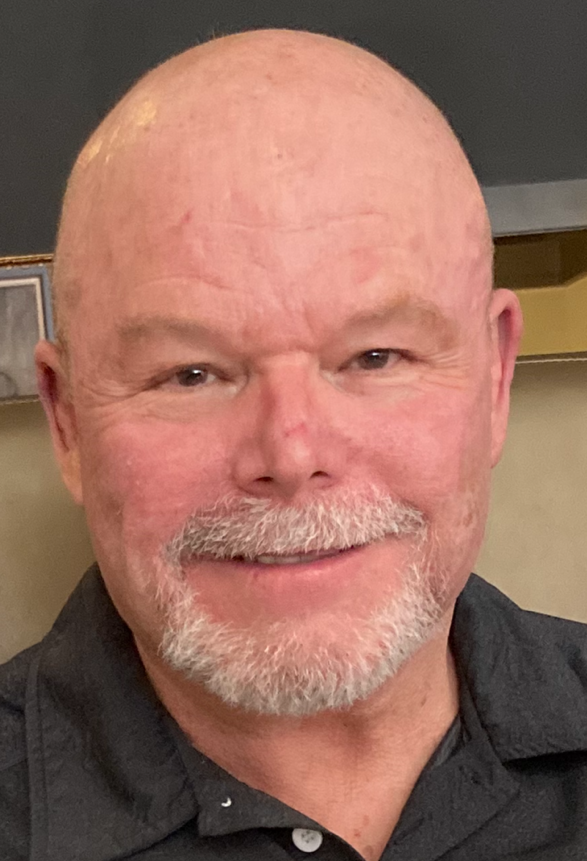
Maj. (Dr.) John von Rohr is an academician and former military officer. He is a member of the Col. Alexander Erwin Chapter of the Sons of the American Revolution.