
Robert Pruett: From Korean War gunner to public servant

Elliott

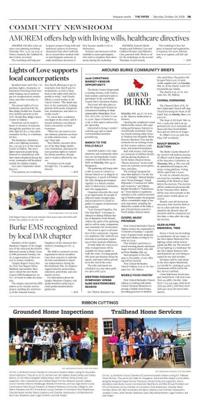
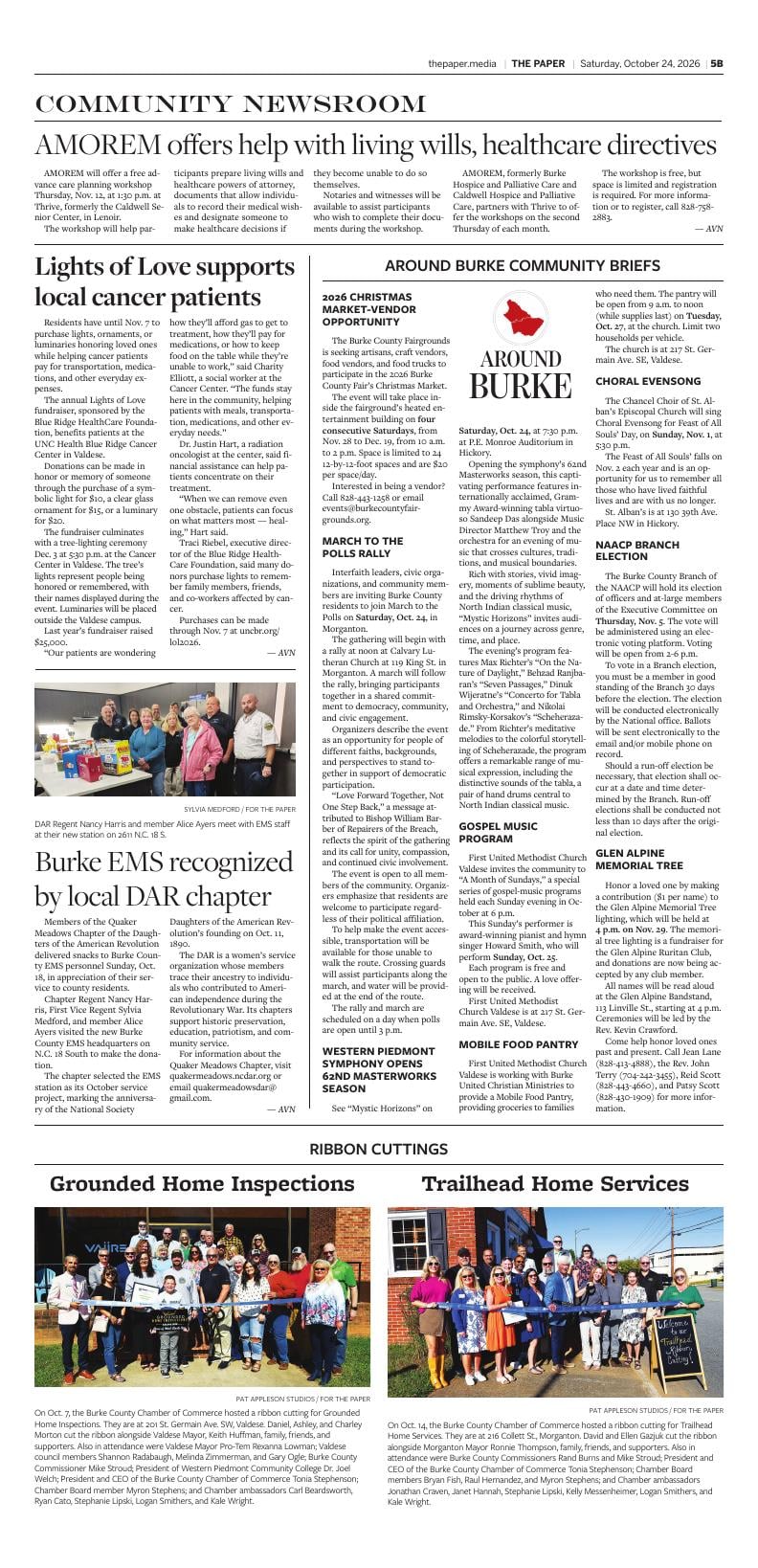
Robert Pruett with a photo of a B-26 Intruder bomber.

Robert Pruett climbs out of the B-26 bomber following his last mission over North Korea on June 15, 1953. This photo also appeared in The News Herald, alerting Pruett’s mother to the fact that he had been on combat duty.

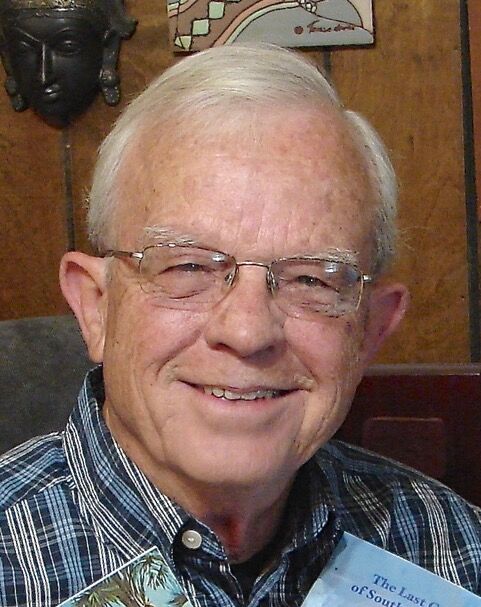
A photo of Robert and Jackie Pruett taken a few years ago.
A car traveling west on old Hwy. 74 near Kings Mountain struck the back of a mule wagon in November 1941, throwing a man and his youngest sons onto the pavement.
A few days later, nine-year-old Robert Pruett was taken out of school and brought to the hospital. His father handed him his pocket watch, saying to take care of it until he got home.
The father died shortly afterwards and was buried in Casar, the family’s hometown.
In 1950, Pruett was in the first graduating class of Salem High School, which was also the year the Korean War began. His mother reminded him that three of her sons had been in World War II, two Navy and one Army, and she did not want him going to Korea.
When the draft ramped up in 1951, Pruett enlisted in the Air Force and went to aerial gunner school for training on the B-26 Intruder bomber.
Shortly after arriving in Korea, he went to Japan for surgery, where he spent 28 days in the hospital. While there, he informed his mother that he had been taken off flight status.
After leaving the hospital, Pruett was assigned to the Tiger Squadron, officially known as the 37th Squadron, 17th Bomb Wing, in reference to the moniker, “they hunted at night like tigers.”
He operated the rear-facing gun mount inside a submarine-like compartment. “I had two periscopes,” Pruett said. “One was pointed above and the other below. Whatever I looked at was where the guns were aimed.”
Painted matte black, the B-26 was used to disrupt supply routes and destroy targets traveling in mountainous terrain.
“Our role was interdiction,” Pruett said. “We flew hunter-killer missions in total darkness at around 250 feet in altitude. We saved the front lines from a lot of troop and weapons reinforcements.”
On June 15, 1953 Pruett flew his 25th and final mission, granting him 30 days of leave. Upon arriving in San Francisco, he called his mother.
“She said she had seen a picture of me in The News Herald and was angry because I told her I had been taken off flight status. I told her it was the truth, that I didn’t want to worry her.”
Pruett then went to the 668th Aircraft and Control Warning Squadron in California. Discharged in 1955, he joined the N.C. Highway Patrol and was assigned to Yancey County. When he later went to see his mother in the hospital in Morganton, she immediately hit the call button.
“Miss Dorn, I would like for you to meet my son, Robert,” she told the nurse. A couple of weeks later, Pruett called Dorn. “Why don’t we get a sandwich when I get off at 11:30 tonight,” she said. They were married in 1957 and had two sons, Richard and Scott.
A few years later, Pruett transferred to the License and Theft Bureau. In 1975, he was sworn in as assistant director and was also appointed as a hearing officer. In 1981, he was promoted to Director of Registration and placed in charge of checking salvage yards.
During a routine inspection in 1986, an informant told Pruett that a man was flying to Detroit and Newark on one-way tickets with nothing but a CB radio, antenna and a dealer license plate. He also learned that the owner of Silk Hope Motors in Siler City, N.C., was flying back and forth to Texas frequently.
Pruett called the Michigan and New Jersey state police for help in staking out the airports. By getting a subpoena for the airline tickets, he learned that the man was using his dead uncle’s identity and had a permanently revoked license.
In what became known as one of the largest and most sophisticated multi-state auto salvage switch operations in U.S. history, Pruett began putting the pieces together.
The owner of Silk Hope was purchasing high-value vehicles at salvage yards in Texas, in order to obtain their titles and VIN (vehicle identification number) tags. The car of choice was top-line Cadillacs.
Meanwhile, Island Auto in Staten Island, N.Y., was operating as a front for “steal-to-order” cars in the New York metro area that matched the exact make, model and color of the salvage vehicles purchased in Texas.
Once the stolen cars were driven to Siler City, the VIN numbers were replaced with those from the salvage cars. At the time, states lacked a national registry for salvage vehicles.
Silk Hope ran hundreds of cars through their operation, transferring salvage titles onto stolen vehicles through the N.C. DMV.
While waiting outside the Newark airport, Pruett and N.J. State Police watched as a late-model Cadillac drove up. The driver got out, leaving the motor running, and got into an SUV that was trailing it.
The man with the CB radio stepped out of the airport, looked Pruett in the eye, then got in the Cadillac and drove off. Pruett had difficulty convincing the N.J. troopers to let him go. The trap was set.
When the car crossed the state line near Henderson, N.C., the driver was arrested and taken to the Highway Patrol office. He denied that he had been in Newark, until Pruett walked in and they again looked each other in the eye.
The trap sprang shut on an operation that had laundered the title on more than 400 stolen vehicles.
Pruett was elected President of the South East Regional Chapter of the International Association of Auto Theft Investigators and then served as a board member and delegate on several national and international agencies.
Prior to retiring in 1997, Pruett moved to Morganton. In 2002, he joined Claude Sitton in the effort to launch a history museum in Burke County. They began looking for a suitable property, with the result that Pruett served as the Chairman of the Properties and Facilities Committee.
In 2020, Pruett was awarded the Order of the Long Leaf Pine, the state’s highest civilian honor, by Governor Roy Cooper, for his outstanding accomplishments. “I always wondered how you got one of these,” Pruett said.
Robert and Jackie Pruett were married for 66 years until her death in 2024. They tried to live by Emerson’s quote: “Write it on your heart that every day is the best day of the year.”
Tad Elliott is a Navy veteran and hospice volunteer who contributes columns to The Paper.