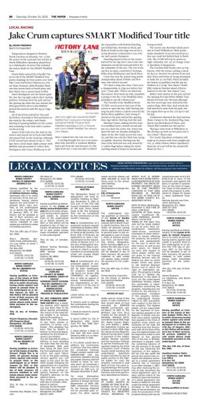



Caldwell Board of Commissioners Chairman Randy Church (standing) walked the group through the recent changes in county decisions, and reiterated the county’s support for the school district alongside Commissioner Patrick Starnes (right) and County Manager Shane Fox.
Declining student enrollment, mounting school budget pressures, and new opportunities for workforce training dominated discussions Tuesday as Caldwell County’s commissioners, school board, and community college trustees gathered for their annual joint meeting Oct. 20.
The three boards met at the J.E. Broyhill Center for their yearly gathering to share updates and discuss issues facing their respective institutions.
Caldwell Community College & Technical Institute (CCC&TI) led this year’s discussions, highlighting progress on campus construction and reviewing the first year of the Regional Initiative for Skilled Employment (RISE), a work-based learning program connecting students with employers across Caldwell and Watauga counties.
Healthcare is by far the largest draw, with 54.2% of the 120 students who have entered RISE across the spring, summer, and fall semesters in 2026, opting for employers like UNC Health Appalachian and the Appalachian Health Department.
More than 60 employers in industries such as healthcare, skilled trades, hospitality, government, business, and IT services are participating in the program.
Across the CCC&TI campuses, more than 270 RISE applications have poured in since the college started accepting them in October last year.
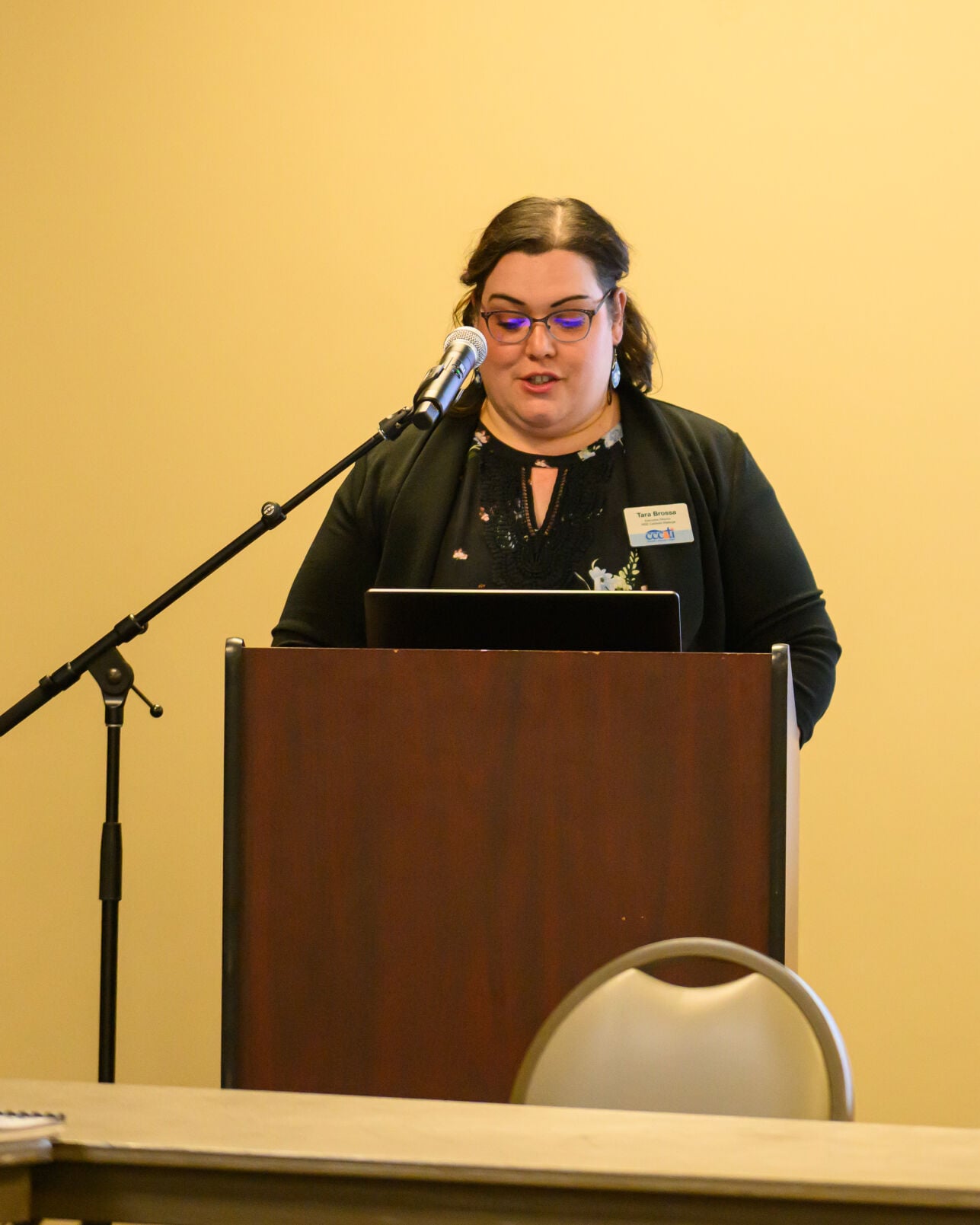
Tara Brossa, executive director of RISE Caldwell-Watauga, recounted the successes of the first year of the program across both counties.
“Our broader goal and action is to help students see that they can build a meaningful future right here at home,” said Tara Brossa, executive director of RISE Caldwell-Watauga. “Over time this can become a local leadership pipeline where students from our counties are the very first pick for opportunities in our local businesses.”
RISE offers two pathways:
- Pre-apprenticeships and internships, where students can try out a field, getting experience and developing workplace skills as they decide which route to take their career.
- Apprenticeships, where students receive paid, on-the-job training toward specific, recognized goals. This avenue opens the door for more permanent employment.
Students receive a $150 monthly stipend for transportation and a $150 monthly performance bonus based on employer feedback. Over 70% of RISE students are paid hourly by their employer or at the 120-hour mark.
According to Brossa, employer demand is beginning to outpace student availability.
CCC&TI BUILDINGS AND STUDENT ENROLLMENT
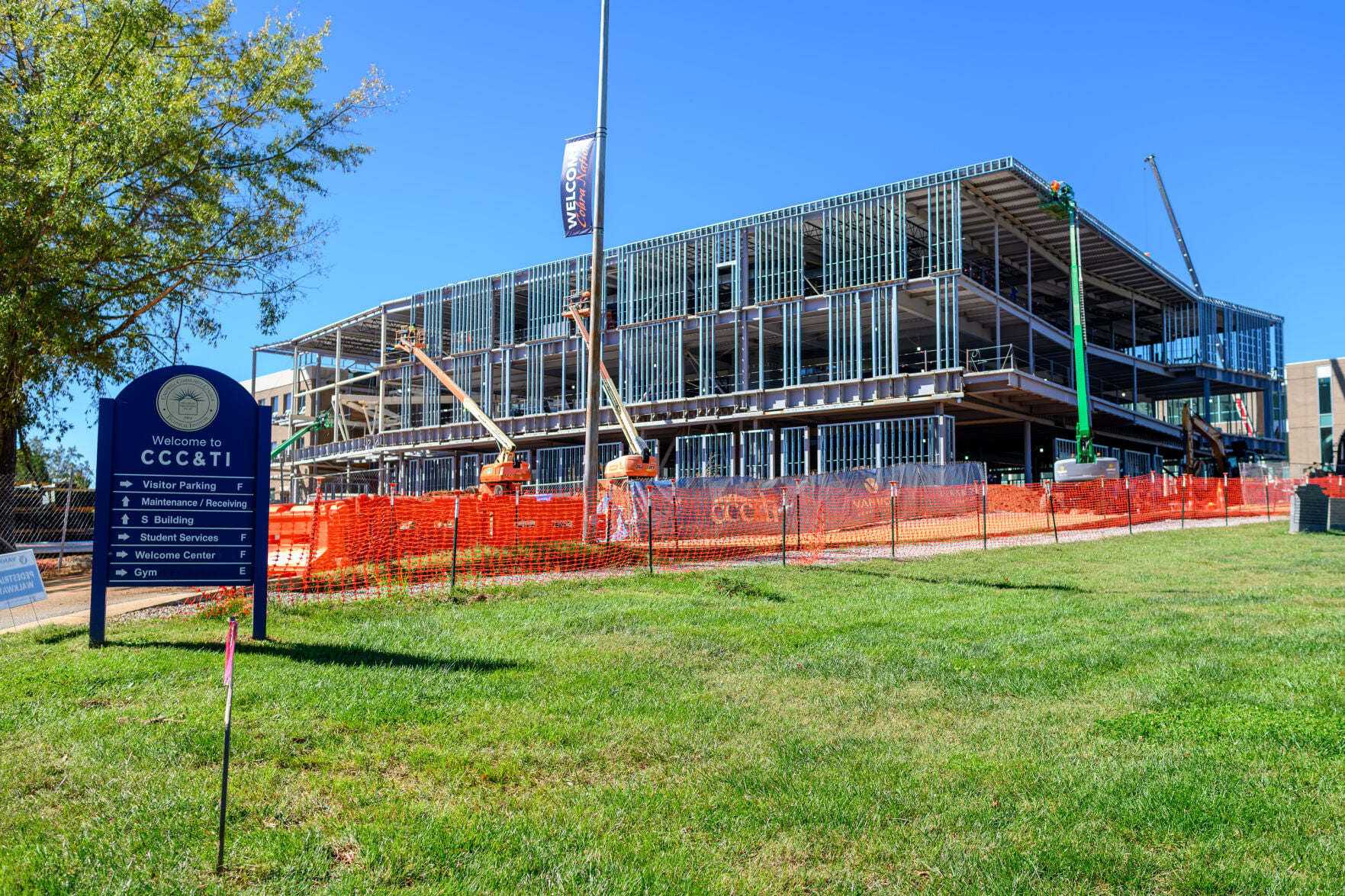
The health sciences building at CCC&TI is well underway, and will serve as the eye-catching corner of the campus.
CCC&TI President Dr. Mark Poarch reported that the new health sciences facility — the largest building project in the history of the college and which is currently under construction — is coming along well.
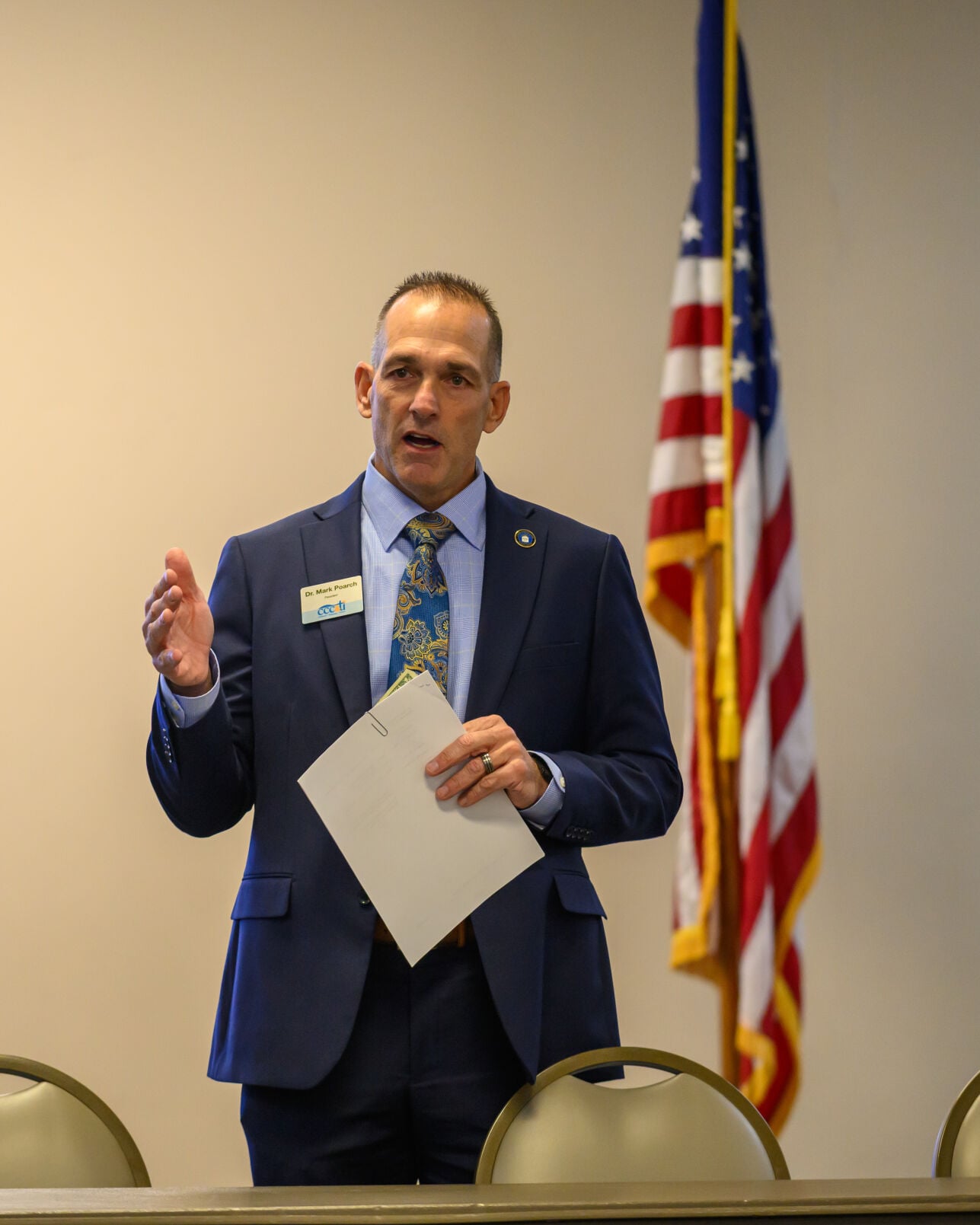
CCC&TI President Dr. Mark Poarch highlighted the construction on campus and declines in enrollment.
Enrollment is at 3,725 students, down by about 3% this fall compared to the same time last year. About 38% of those 3,725 are in the Career and College Promise (CCP) program, which allows high school students to earn college credits by attending classes on-campus tuition-free. Of those, 928 are from Caldwell County Schools (CCS), down by 54 compared to last year.
CCP students earned 204 credentials and 20,383 credit hours in the last year. More than 1,700 students took at least one college course, saving parents almost $1.55 million in tuition compared to normal enrollment costs, according to Poarch.
SCHOOL DISTRICT

Caldwell County School Board Chairman Darrell Pennell said average daily membership (ADM) dropped by 360 students compared to last year.
Caldwell County Schools echoed a similar struggle with enrollment.
Board Chair Darrell Pennell said that out of the 115 school districts across North Carolina, 109 reported losing school populations.
As of Tuesday, which was the cutoff for average daily membership (ADM) tracking, the school district had 360 fewer students than last year. ADM is used in determining the funding received from the state for the county.
“That will affect us next year,” Pennell said. “What we had last year is what’s affecting us now. 360 is going to be a hard mountain to climb, but we can do it.”
Superintendent Dr. Thomas Howell explained that he is already working on budget plans for the 2027-28 school year. He said the current 2026-27 budget is around $146 million, and about 85% of it is in personnel.
“There’s not a lot of money left over after that piece,” Howell said. “The 360 students that we’re losing is a negative drop of about $2.5-2.7 million that we have to find.”
In the meantime, Howell said, he and the staff are focusing on small victories wherever they can find them.
COMMISSIONERS
The Caldwell County Commissioners touched base on their decisions in recent months to assume control of the Department of Social Services and the Board of Health, highlighting the decision they made at the September commissioners meeting to cut several vacant positions from Child Protective Services (CPS) and use the funds to instead provide raises to current CPS employees.
Chairman Randy Church also expressed support for the school district, referencing the recent discussions around potentially closing Kings Creek School due to declining enrollment.
“With everything, we’re all having to narrow down,” Church said. “I wish people would come here and have more babies, so it’d all pick up, right? … I want you to know that we’re with you and we want you to be able to be successful.”
Commissioner Patrick Starnes spoke after Church, saying that the commissioners had been criticized for decisions that he felt were the right decisions, but that the school district had strong leadership in Howell.
“What’s going to have to take place is gonna hurt,” Starnes said. “You serve on that board for a reason, and it ain’t to please people. It’s to do what’s right for Caldwell County and our students.”