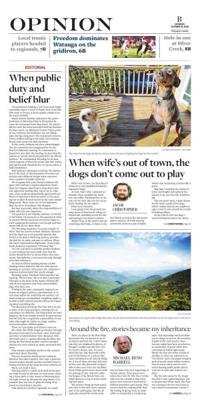
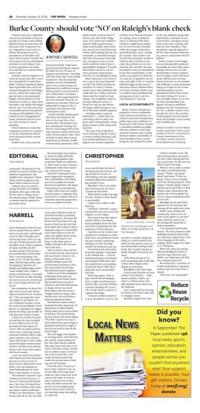
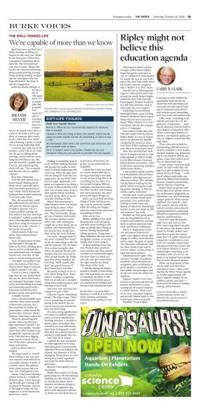
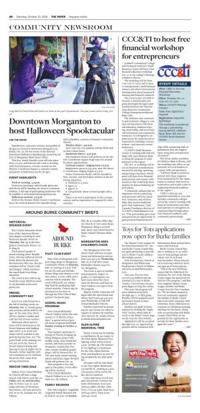
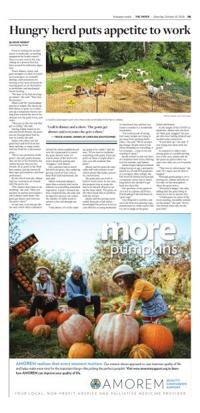
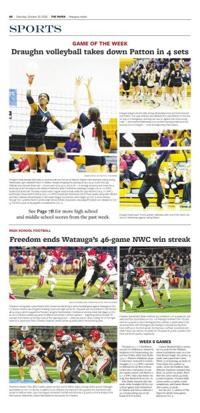
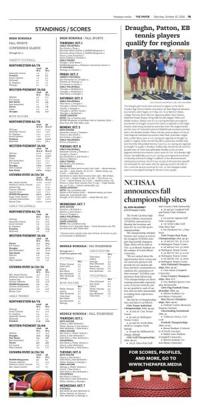
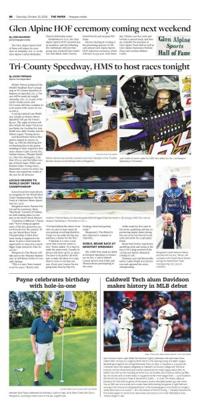
For generations of Hildebran residents, the old auditorium was a place for school performances, music, and memories. Now, 67 years after it was built, the historic Hildebran Municipal Auditorium has received a series of improvements designed to make it a more comfortable, accessible, and versatile gathering place.
The project, supported by $915,588 in grant funding, includes new seating, improved accessibility, backstage facilities, and interior and exterior renovations.
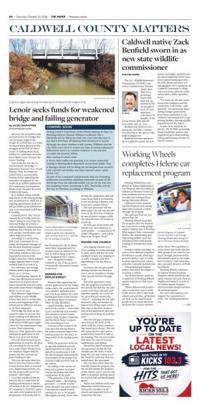
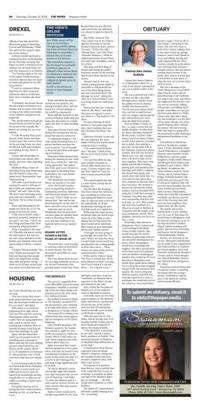
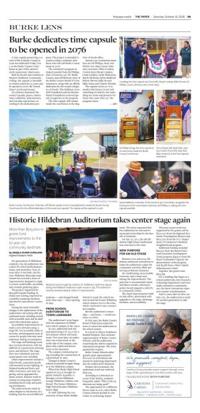
Among the most noticeable changes is the replacement of the auditorium’s old seating with 382 cushioned seats, including several ADA-accessible seats and six dedicated ADA-wheelchair spaces.
Accessibility improvements include a new entrance ramp, a stage lift, two accessible lobby restrooms, and designated areas of rescue for people who may need assistance during an emergency.
The stage and backstage areas also received attention, with the addition of a greenroom, dressing areas, and showers. The stage floor was refinished, and new sound panels were installed.
Other improvements include a ticket booth, concession booth, wall-mounted sconce lighting, refinished hardwood floors and lobby restrooms, new aisle carpeting, and an upgraded fire alarm system. Exterior work included covering large windows, installing fascia wrap, and painting downspouts.
The improvements mark another chapter in the history of a building that has served different purposes — and changed hands more than once — since opening in 1959.
FROM SCHOOL AUDITORIUM TO TOWN LANDMARK
The auditorium’s story began with the expansion of Hildebran’s school campus in the 1950s.
In 1957, additional land was purchased along U.S. 64-70 for a new primary school and lunchroom. Two years later, an auditorium was constructed on the north side of the campus, complete with a band and chorus room in the basement.
The campus continued growing, including the construction of a gymnasium in 1965.
Changes in Burke County’s schools eventually brought changes to the Hildebran campus.
When East Burke High School opened in 1973, it brought together students in grades 10 through 12 from Hildebran, George Hildebran, Valdese, and Drexel. The former Hildebran High School became Hildebran Junior High.
In 1988, following the construction of East Burke Middle School in Icard, the school system turned the former Hildebran school campus over to the town, which converted it into a municipal complex.
But the auditorium’s ownership — and future — would continue to evolve.
In July 1992, the Burke County Board of Education asked the town to return the auditorium to the school system.
In a letter to Mayor Parkhurst, Randall Brackett, then assistant superintendent of Burke County Schools, said the auditorium would help the district expand its educational programs. The town granted the request.
Burke County Schools subsequently spent approximately $100,000 on renovations and moved its technology department into the auditorium’s basement.
Despite the investment, the auditorium itself saw relatively little use.
According to a historical account of the facility, residents frequently asked, “Why is the auditorium not being used?”
The opportunity for a different future came in 2010, when Burke County Schools decided to centralize its technology department. The town requested that the auditorium be returned to municipal ownership for the benefit of residents.
On Jan. 20, 2011, the old Hildebran High School Auditorium was returned to the town.
NEW PURPOSE FOR AN OLD STAGE
Between 2012 and 2014, Hildebran undertook renovations to make the auditorium a place for community activities while preserving its historic character.
Air conditioning, an accessible restroom, and a ramp were among the improvements. The goal was to accommodate music and dance recitals, school programs, beauty pageants, and other community events.
The latest improvements build on that effort, particularly with upgrades to the stage, backstage facilities, and accessibility.
The most recent work was supported by five grants, led by $500,000 from the Regional Economic Development Reserve and $300,000 from the N.C. Department of Commerce’s Resilient Neighborhoods program.
Additional funding included $62,500 from the Rural Downtown Economic Development Grant program, $49,500 from the Rural Community Capacity Implementation Grant program, and $3,588 from a State Capital Infrastructure Grant.
Together, the grants total $915,588.
For a building that began as a school auditorium, later housed a technology department and eventually returned to community use, the latest renovations represent another transformation.
And 67 years after its first curtain rose, the auditorium is ready for another generation to take the stage.