On Tuesday evening, the Burke County Board of Education invited the public to bring forward questions about the controversial potential move of Hallyburton Academy to an isolated wing of Draughn High School, drawing questions from parents and community members and prompting responses from the district’s principals and directors.
Many of the same faces from previous meetings on the topic circulated through the crowd, and several who had questions were repeat speakers from the public comment period at the BOE’s March 30 meeting.
After Burke County Public Schools (BCPS) Superintendent Dr. Mike Swan gave a brief background on the discussion, he reiterated the facts about the relocation before jumping into questions submitted online in advance.
“As we know, word spreads quickly, and so does misinformation,” Swan said. “Before I had a chance to bring the proposal to the full board … for y’all to hear the facts at the same time, there (were) a lot of rumblings and misinformation floating around the community.”
The district believes the relocation could save nearly $400,000, which equals about 9.8 teaching positions that wouldn’t have to be absorbed through attrition at the end of the school year.
Swan attributed this cost-saving estimate to the fact that it takes approximately $9,000 to educate the traditional student in Burke County, as compared to about $37,600 per Hallyburton student.
These amounts break down according to the small number of students compared to traditional schools. In a building with so much extra space, the cost of paying teachers and maintaining the facility pushes per-student spending to more than four times the district average.
To the district, the relocation also makes the most geographical sense. Of the four high schools, Draughn has the most available capacity and is in a commuter sweet spot, resulting in no net increase in travel costs, according to Swan.
CAPACITY
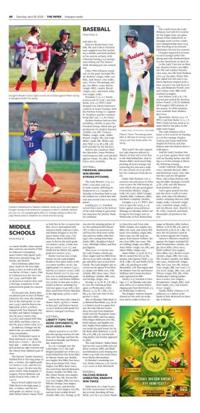
Swan deferred capacity questions to Vern McKissick, a third-party consultant that performed the district’s capacity audit in 2023.
![]()
Vern McKissick explains the capacities of Draughn High School
and Hallyburton Academy.
JACOB CHRISTOPHER / THE PAPER
McKissick stated that his team looked at the North Carolina Department of Public Instruction’s (NCDPI) calculation and capacities as well as “practical capacity,” which is based on BCPS’ class-size standards.
According to NCDPI capacity calculations, in 2023, Draughn used 68.9% of its capacity, with 683 students filling the seats out of a potential 992.
Using county standards, where larger class sizes were allowed, McKissick said the capacity fell closer to 55.8%, with 682 students of a potential 1,224.
“Basically, that’s saying you have some space in that particular building,” McKissick said.
Hallyburton utilized less than 10% of the current building’s capacity.
CHALLENGES
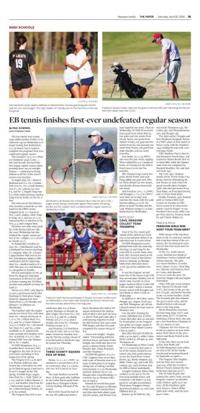
Among the speakers with questions was Valdese council member Shannon Radabaugh, who challenged the district leaders, asking if any of the students had been asked how they felt about the move.
“As candidly as possible … there’s no angst,” Swan said. “It’s a change.”
The district reiterated that the relocation is not expected to change student behavior, nor will the expected addition of about 140 homes in Valdese affect the capacity at Draughn enough to cause issues in the future.
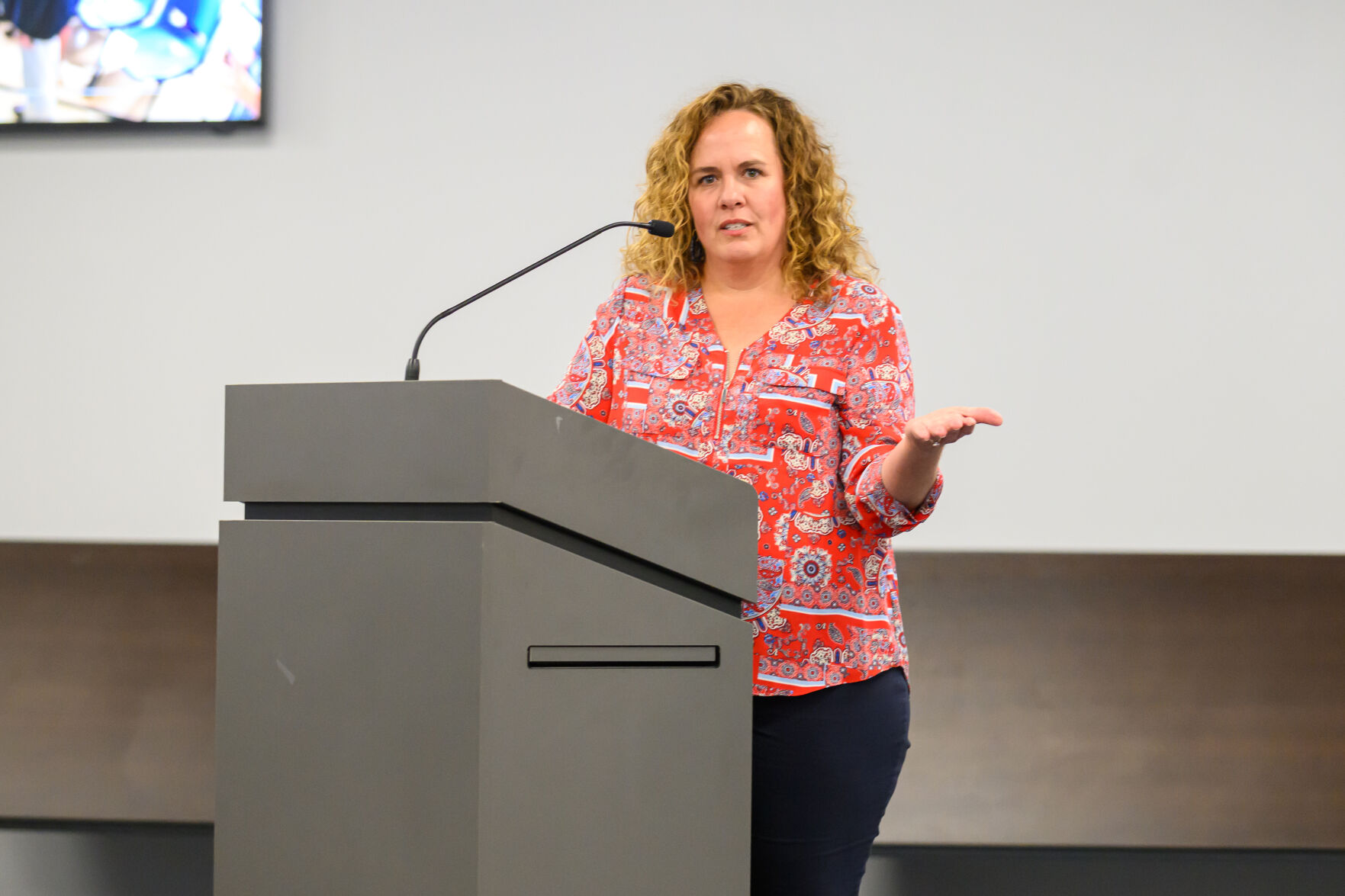
“I was actually able to obtain the police records for approximately the last two years for Drexel, the phone calls going to Hallyburton, and there’s about 200,” Radabaugh said. “I was just curious how that’s going to affect Draughn High School and how the (school resource officer) feels, and if you’ve talked to Valdese police?”
![]()
Valdese council member Shannon Radabaugh challenges district
leaders on relocating Hallyburton students to Draughn High
School.
JACOB CHRISTOPHER / THE PAPER
Although Swan said he hasn’t specifically discussed it with Valdese Police Chief Marc Sharpe, board member Sonya Rockett explained that she had also seen that report, and many of the calls were for traffic stops and other non-school-related concerns.
Dillon Sain, the director of student and family services, confirmed that the actual number of responses was much closer to that of the other high schools.
The ratio of calls to student population are higher at Hallyburton.
THE DISCUSSION OVERALL
One of the other speakers, Becca Stephens, asked why other options weren’t being explored, such as students going back to their district-specific schools in a special program instead of moving to another location.
The answer funneled back to cost-savings. Swan said that they would then have to hire core education teachers exclusively for a program at each school instead of centralizing the educational impact.
Core education includes courses such as math, English, and science — subjects for which Hallyburton students will remain separate. Only select Hallyburton students will be allowed to attend career and technical education classes, with Draughn students receiving priority in space constraints.
“What we say in the field, ‘Is the juice worth the squeeze?’” Swan said. “When we’re looking at what we can provide to our students by doing this, I definitely feel the juice is going to be so worth it.”