
Three wars, one family: The Hurleys answer the call

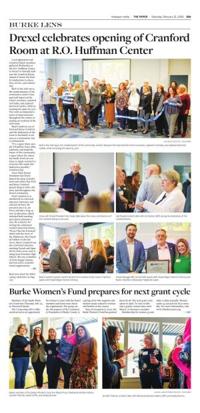
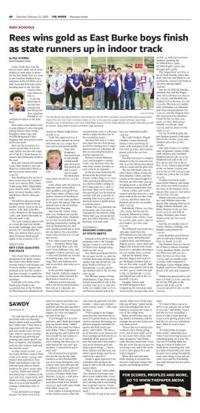
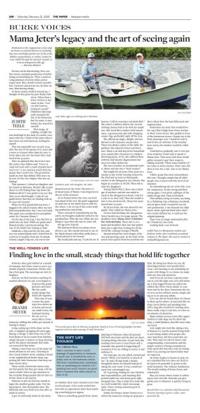
Korean War veteran Gene Hurley.
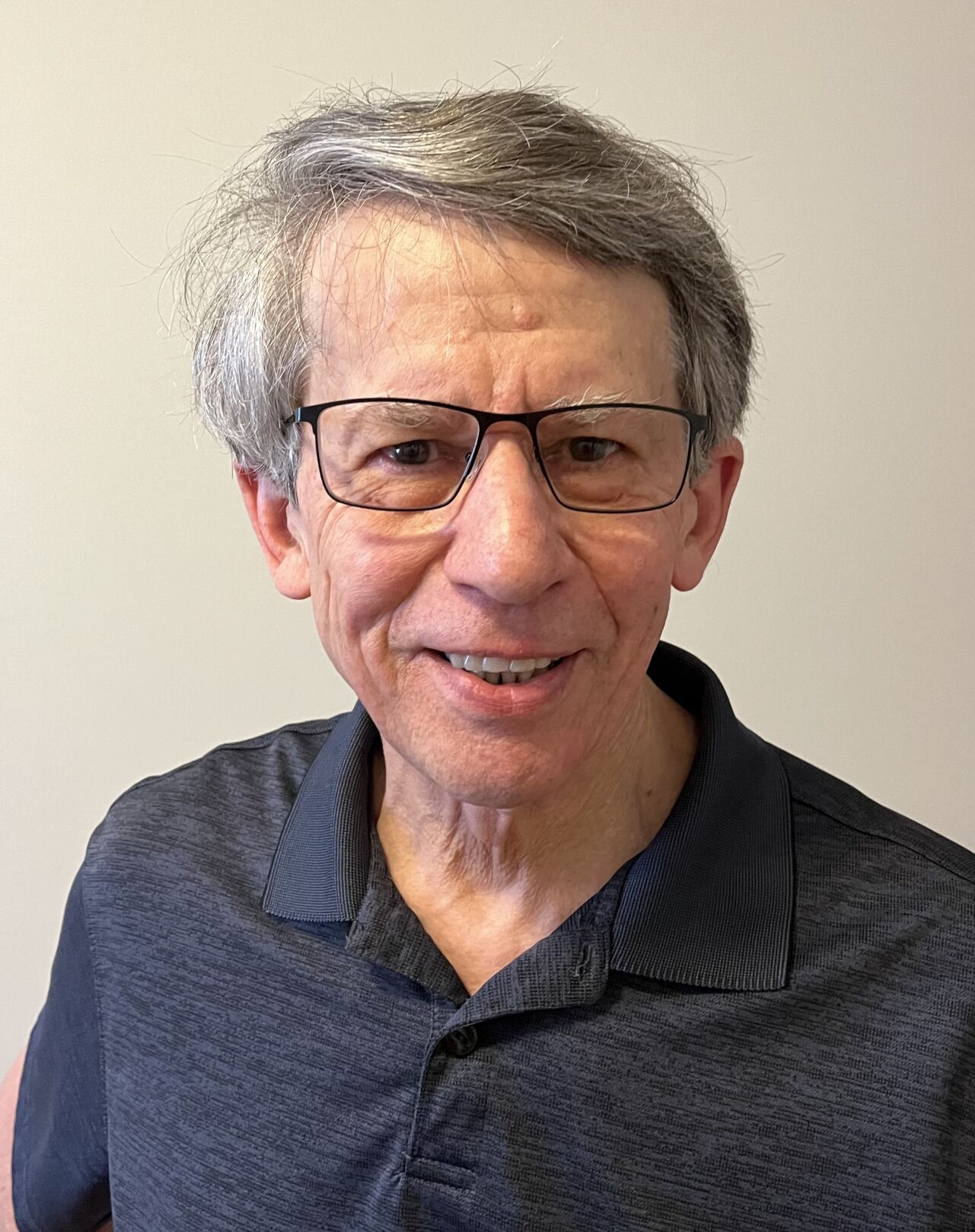
Tad Elliott
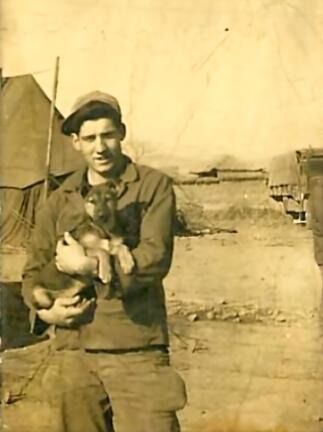
Gene Hurley in South Korea with a dog he adopted while serving there.
What if your grandfather had grown up in the 1850s and had, according to family history, served in the Union Army during the Civil War, and after the war, had met a local girl in Burke County, whom he married? Fact or fiction?
For Gene Hurley, what is known is that his grandfather, John Michael Hurley, was born in 1850 and lived in New York City. At war’s end, he would have been 14 or 15 years old.
Did he serve in one of the New York Regiments? It is entirely plausible, as even boys as young as 10 on both sides were allowed to enlist, with the Union Army alone accounting for an estimated 100,000 child soldiers younger than 16.
Also born in 1850 was Gene Hurley’s grandmother, Sarah Chapman, who grew up in Enola. She and John Michael Hurley were married in Burke County in 1868.
They lived in the Upper Fork Township along the Henry Fork near present-day South Mountains State Park. Within a few years, they left and went to Brooklyn, Hurley’s hometown, with their two young boys.
Following a divorce, mother and sons returned to Burke County, to the place they had previously lived. One of the boys, William Leonard Hurley, was Gene Hurley’s father. He served in the Army in the Galveston area before World War I, likely garrisoned at one of the nearby forts in the Coast Artillery Corps.
As the youngest of three brothers, Gene Hurley (henceforth Hurley) watched as his older brothers grew up and became Marines, serving in the Pacific in World War II.
At the end of the 10th grade, Hurley enlisted in the Army in 1949. Having lived on a mountainside homestead all his life with cows, chickens, hogs and mules, in addition to planting, harvesting and canning everything that they ate, he found basic training at Fort Jackson, S.C., to be easy. “It was a snap,” Hurley said. “You had a good bed and three good meals a day.”
Beginning in the first grade, Hurley walked three miles to Bethlehem School, a one-room, one-teacher school for grades one through four, with nothing but a wood stove for comfort.
Snow days had not been invented yet, and even the teacher walked several miles from Enola.
From Fort Jackson, Hurley went to Fort Lewis, Wash., to the Army’s engineering school. A week after his 18th birthday on June 20, 1950, he boarded a troop ship, along with 3,500 others, bound for the war over control of South Korea, arriving shortly after the Battle of Inchon.
Hurley was assigned to the 91st Engineer Water Supply Company, 2nd Platoon, which operated portable water supply points behind the front lines. As the lines were being pushed back and forth, the 91st Engineers had to quickly break camp and set up all over again, resulting in frequent 18-hour workdays, often in darkness and sub-freezing conditions.
“Our main objective was to supply hospitals, aid stations and mess halls,” Hurley said. “We filled everything from canteens to 1,500-gallon tankers.”
The water from rivers and lakes was filtered and pumped into large, collapsible tanks, resembling above-ground swimming pools, and then treated with alum (aluminum sulfate) and soda ash (sodium carbonate) to induce flocculation, causing suspended solids to coagulate and settle to the bottom, resulting in a layer of sediment several inches deep.
Before the water was pumped into tanker trucks, it was purified with chlorine.
After 15 months in the field, Hurley supervised the training of a replacement crew, then sailed to Japan and on to San Francisco, where he took a train to Fort Jackson, then a Greyhound bus to Morganton, where he ended up walking the last 10 miles home.
After 30 days of leave, Hurley was assigned to Camp Cooke, Calif. He flew to the West Coast on commercial aircraft, a journey that took 24 hours, with refueling stops along the way that included landing and taking off from a dirt runway in the Southwest.
“I was in Baltimore visiting my sister,” Hurley said. “The airline ran an ad for a waiting list for a flight to San Francisco. When they filled up the plane, they ran another ad and announced the departure date and time.”
At Camp Cooke, Hurley trained new water point crews in the Illinois National Guard that were headed for Korea. He was discharged in 1952 after three years of active duty.
Before going home, Hurley took a bus to Cedar City, Utah to look up a sergeant friend, arriving at 3 a.m. on the Sunday of Labor Day weekend. Unable to find his friend or cash travelers checks, he caught a ride with an active-duty serviceman and his wife to St. Louis, sleeping in their car at night. From there, he rode the bus to Morganton, again walking the last 10 miles home.
Hurley got a job as a finisher at Morganton Furniture and then studied engineering at Tri-State College, whose mascot name was the Engineers, in Angola, Ind.
While working at U.S. Steel in Gary, Ind., his supervisor encouraged him to go back to school, threatening to fire him if he didn’t. Hurley enrolled at Lenoir-Rhyne College, living in a boarding house and working part-time at a service station making $2.50 a week. He graduated from Lenoir-Rhyne in 1957 with a B.A. degree in History and a minor in Education.
During the summers, Hurley sold pots and pans door-to-door for a hope chest, which is how he met Frances Bolick of Morganton, whom he married in 1958. At Grays Chapel, near Asheboro, he taught all subjects in the seventh grade for three years.
They adopted two infant boys, Alex and Mike, and then had a son, Bill, 10 years later. By this time, Hurley was working for G.E. in Asheboro as an inventory control supervisor.
After his wife’s passing in 2018, Hurley moved back to his original home in Burke County in 2021.
While in Asheboro, Hurley joined the Randolph County Honor Guard, vowing to present military honors at the burial of at least two veterans a week, and more if needed.
Over a period of 11 years, he took part in more than 1,200 graveside services in North Carolina, in addition to participating in dozens of school programs.
“I never missed an opportunity to talk about my military experience and to encourage students to do their best. I tried to be a role model for them. This was one of my greatest achievements.”
Tad Elliott is a Navy veteran and hospice volunteer who contributes to The Paper.