

From segregation to service, James Johnson's life was shaped by resilience
Veterans Making a Difference
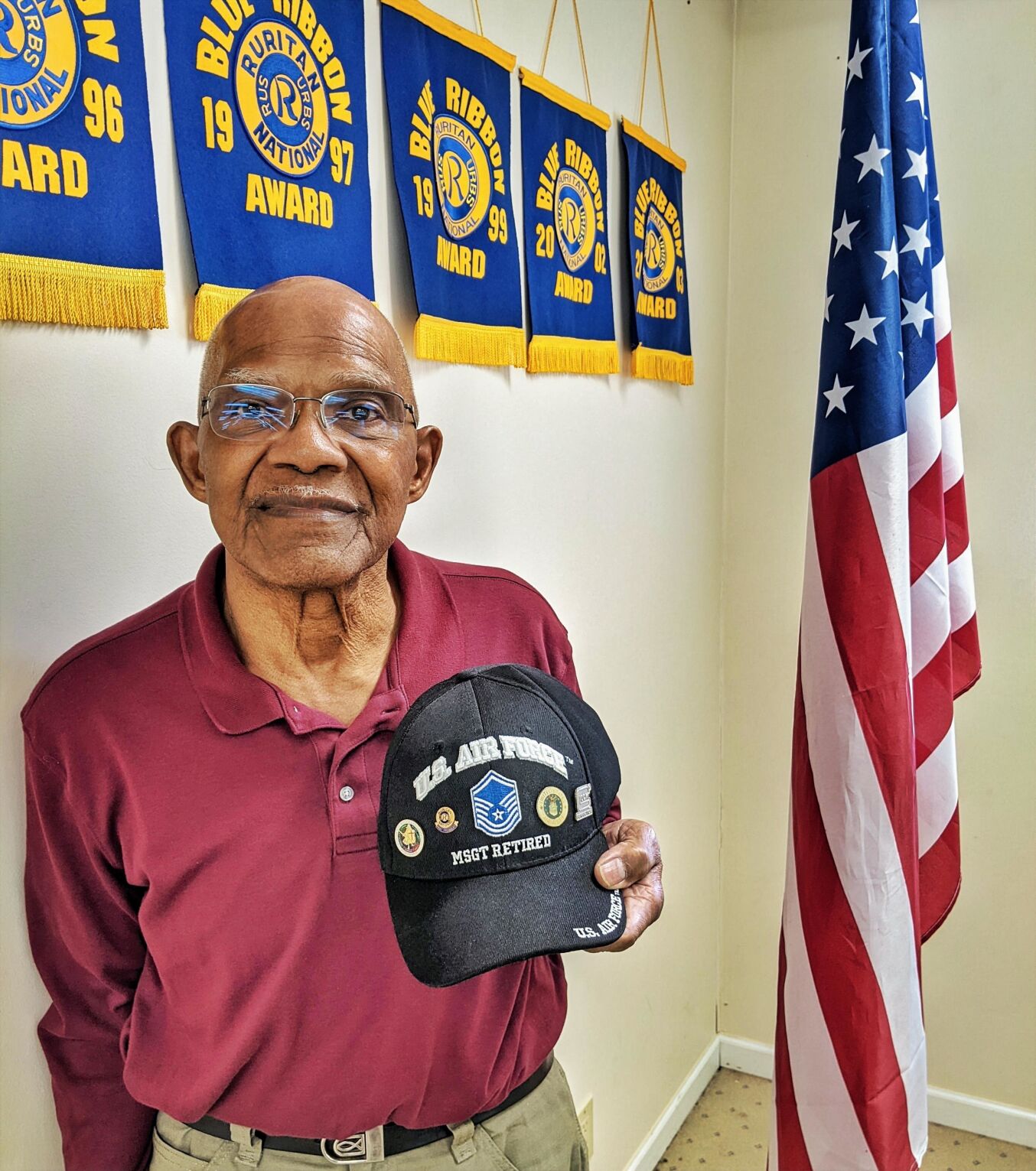
James Johnson has been chaplain of the Chesterfield Ruritan Club since 1997. The Burke County native retired after 23 years of combined military service and 28 years with the State of North Carolina, working at J. Iverson Riddle Developmental Center.
Old Corpening School, for grades one through eight, was a four-classroom elementary school on a dirt road in the Hartland-Chesterfield community in Burke County.
It had three to four teachers and a principal, who taught the upper grades and drove the bus to the outlying areas. For James Johnson and his 10 brothers and sisters, they lived too close to ride the bus and walked more than a mile up Piney Road to school. White children went to different schools.
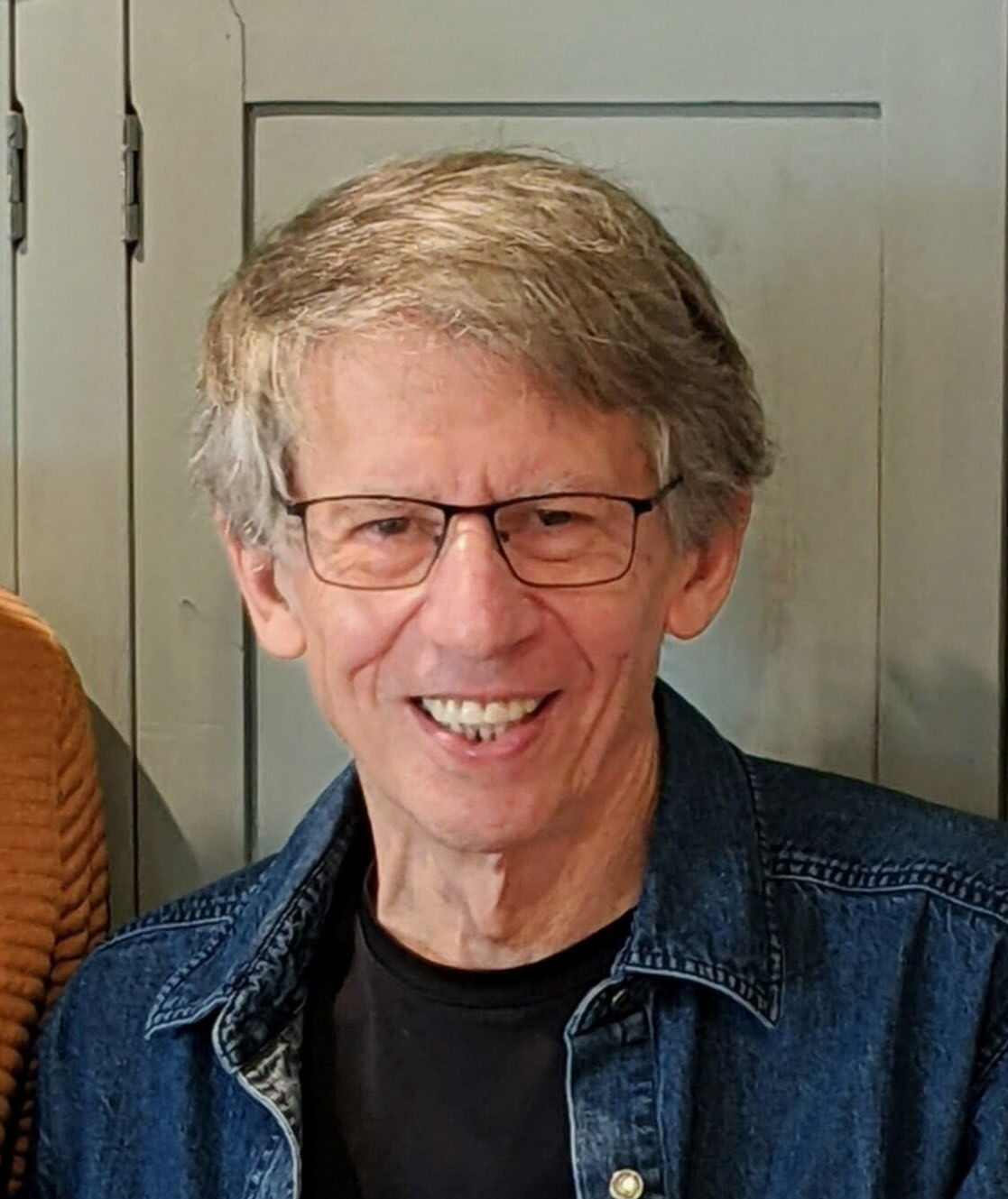
Tad Elliott
When he was 11 years old, Johnson wanted to drink from a water fountain in Morganton, but was pulled away by his mother, who told him that only White people could drink water in public, and that if he didn’t behave appropriately, he would suffer the consequences.
“People ask me,” Johnson said, “‘How did you survive in the ‘50s and ‘60s?’ And I tell them, when you went to the movies at the Mimosa Theater, there was only one ticket window. We learned from our grandparents how to conduct ourselves so that we avoided any kind of a confrontation.
“When a White person came up, you learned to step back. You gave them plenty of room and waited until they got out of the way before you bought your ticket. Then you went around to the side of the building, went in the side door and climbed the stairs up to the balcony, because that was where we had to sit.”
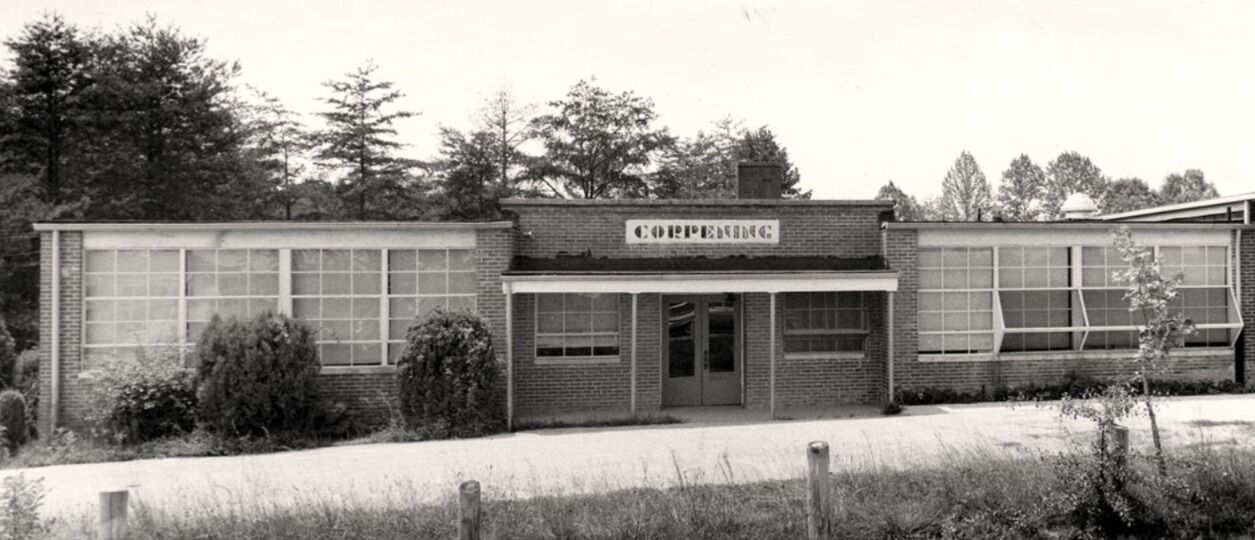
As a young student, James Johnson attended Corpening School in the Chesterfield community for Black studnets. He went on to graduate from Morganton’s all-Black Olive Hill High School.
Johnson was the first and only one in his family to finish school, graduating from the all-Black Olive Hill High School in Morganton in 1963. Concerned that the draft was going to get him due to the increasing U.S. involvement in South Vietnam under the Kennedy administration, Johnson discussed his options with an Army recruiter.
Prior to enlisting, he had never been out of Burke and Catawba counties. After basic training at Fort Jackson, S.C., Johnson went to the Army’s civil engineering school at Fort Leonard Wood, Mo. Awakened at 1 a.m. one day, he was told to pack up, that they were shipping out immediately, destination undisclosed.
The extreme prejudice in the military was unexpected and unbelievable. The Army said everyone was equal, but people treated him as if he was nobody.
“No one would talk to me or show me what I needed to know to do my job. I had to teach myself everything,” he said.
Johnson flew to a holding company at Fort Dix, N.J., where after several days he boarded a troop ship, arriving in Bremerhaven, Germany, after a nine-day crossing of the turbulent North Atlantic.
From there, he took a train to Darmstadt, Germany, where he joined the 547th Combat Engineers as a Heavy Equipment Specialist. The 547th was the Army’s bridge-building construction battalion in Europe, specializing in rapidly deployed pontoon bridges across the Rhine River.
Johnson excavated holes for the anchor point at each end of the bridges. Thus, he was always the first one to cross the river, driving the heavy, crawler-type TD-18 tractor used as a dozer to the other side.
Despite being ignored, Johnson applied himself to his work, placing first in the sergeant review board for the entire battalion.
With his promotion, Johnson bought a new car, traveling openly for the first time in his life. Back home, Blacks were routinely stopped and searched with deliberate lack of justification.
Johnson traveled widely in Germany, utterly amazed that he could go into any restaurant without fear of being thrown out. He had never been allowed to sit down in a restaurant in the U.S., until after he got home in 1967.
“The Germans treated me better than the Americans did,” Johnson said. “You won’t meet hardly anyone who has been through what I’ve been through. Me and Martin Luther King, we are telling you nothing but the truth, because it is the truth.”
After months in the field during his three years at Darmstadt, Johnson returned home for the first time in May 1967, following his discharge in New York.
Meanwhile, a high school classmate, Joyce Corpening, had moved to New York, where she was living with relatives. When she heard that Johnson was back, she came home for a visit. They were married in July, and had three children, Cynthia, James T., and Tina.
Johnson then joined the Army National Guard for one year and took up his former job at Drexel Furniture. Three years later, he went to work at Western Carolina Center (now the J. Iverson Riddle Developmental Center). Due to his calm demeanor, he was selected to go to NC School for the Deaf for training to work with deaf and deafblind residents.
In the early 1970s, Johnson completed a degree in behavioral psychology at Western Piedmont Community College. As he continued to progress in his studies, he noticed a quiet transformation taking place in his role of caring for people and learning how to nurture them.
It was at this time that Johnson began studying to be a minister.
One of the best things that ever happened to him, he says, was taking care of the needs of the youth at JIRDC, where he worked for 28 years.
In 1978, a coworker told him about the Air Force National Guard civil engineering unit in Charlotte, to which he belonged, warning him that it had C-130 aircraft that liked to travel.
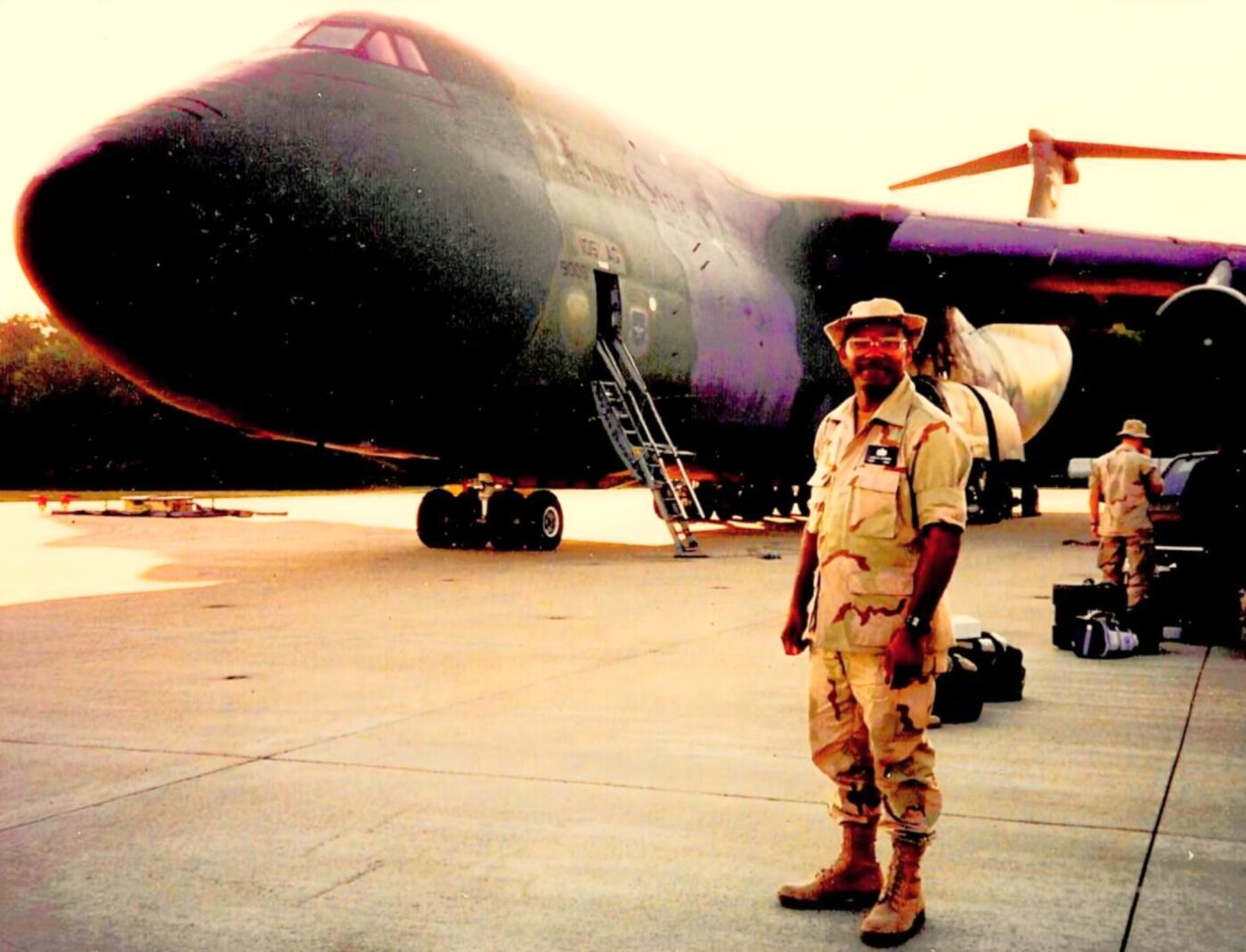
James Johnson prior to takeoff on a C-5 Galaxy enroute to Germany in the early 1990s.
His imagination awakened, Johnson paid a visit to the N.C. Air National Guard 145th Airlift Wing at the Charlotte airport, which welcomed him based on his Army experience. Over the next 20 years, he kept a duffel packed and was deployed many times, often several times per year, as the skills and resources of the N.C. 145th civil engineers were in high demand, both in the U.S. and abroad.
In addition to returning to Germany twice, Johnson spent several weeks in Israel, working on classified projects at air bases, which required that the U.S., in deference to the Israeli military command, do everything their way. While there, he was given an insider’s tour of the Holy Land, as well as an excursion to the Dead Sea, where he went swimming.
Retiring after 23 years of combined military service as a master sergeant, Johnson also retired from the State of North Carolina with 28 years of service.

A C-130 attached to the NC Air National Guard 145th Airlift Wing in Charlotte.
He has been in leadership in the N.C. General Assembly of the Church of God for 45 years, with an emphasis on youth, and has pastored churches in Asheville and Monroe.
Since 1997, Johnson has been the chaplain of the Chesterfield Ruritan Club, a national service organization with a focus on local activities promoting fellowship, goodwill and community service. He has also been the chaplain of the Burke County American Legion Post 21 in Morganton for three years.
“I’ve had a good life,” Johnson said recently. “I would do it all over again. My life has been wonderful.”