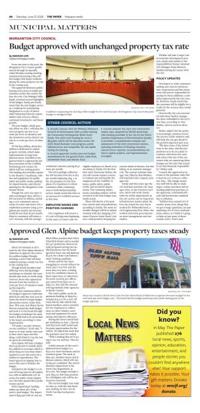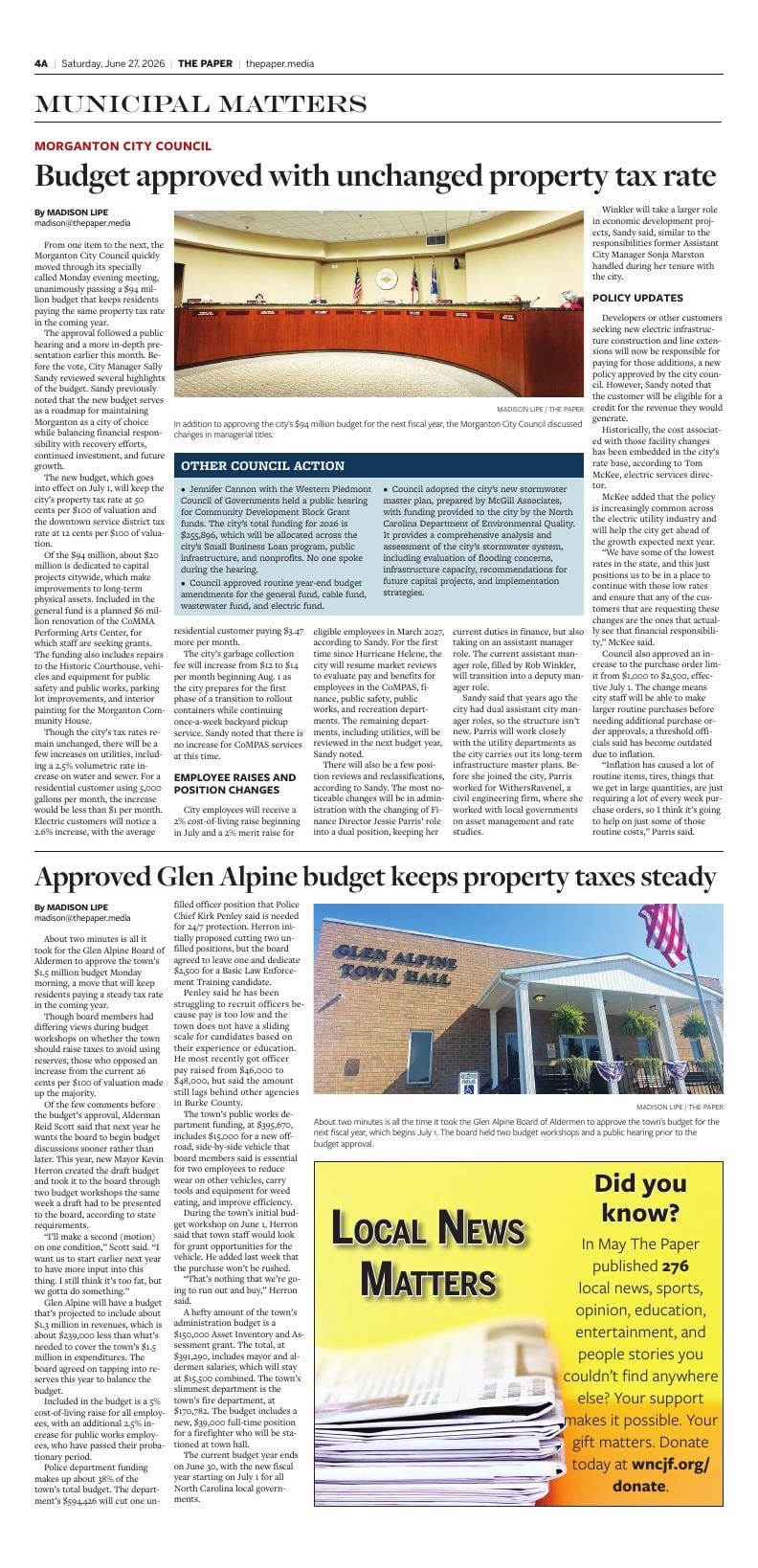

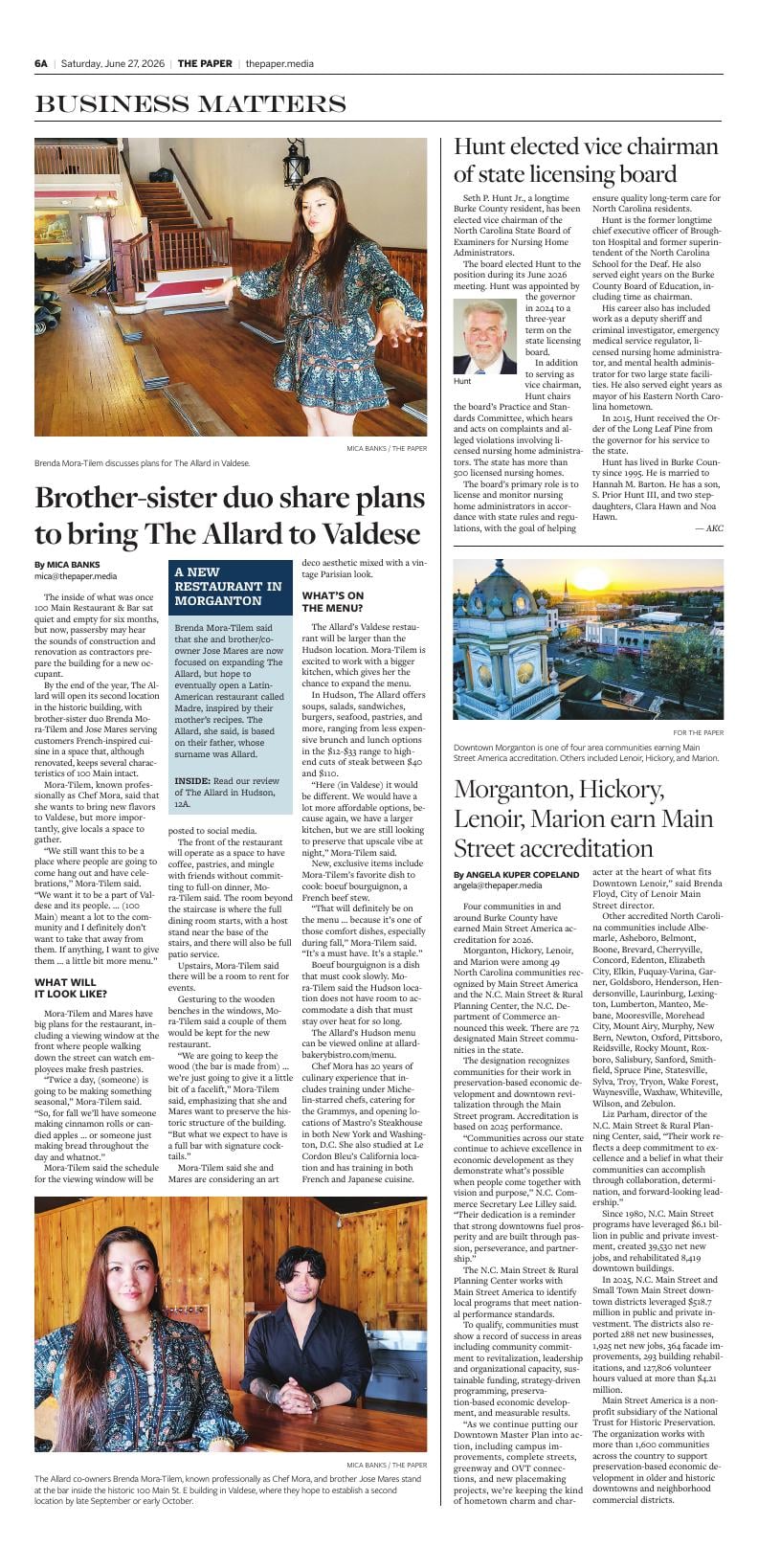

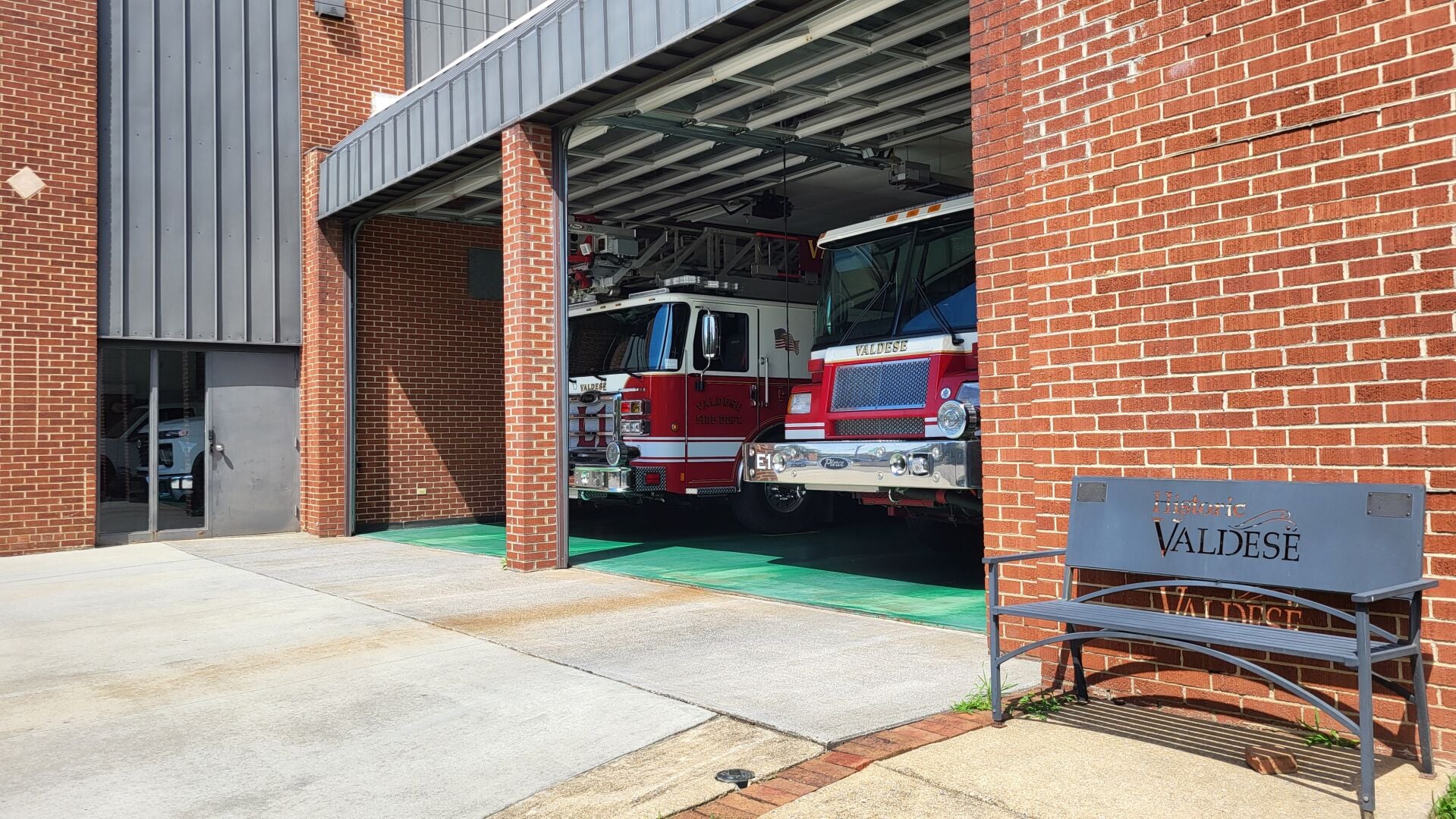
Two firetrucks sit inside the Valdese Fire Department’s bay doors in the partially condemned building at 121 Faet St.
Mid-June has come and gone, and the Town of Valdese still has no Guaranteed Maximum Price (GMP) for its public safety facility project — but officials do have a Financial Feasibility Pricing estimate suggesting the project will cost about $10.9 million.
The final GMP, now expected to be received from contractor D. R. Reynolds by July 16, will likely be lower, said Town Manager Todd Herms in an email to staff and council members.
There will be $700,000 set aside as contingency funds.
“I believe it is shortsighted, and frankly dangerous, not to include an appropriate contingency in any construction project,” Herms said in a follow-up conversation with The Paper. “That doesn’t mean any of it will be used. Ask someone with any real construction experience and they will tell you: No matter how well a project is planned, unforeseen conditions can arise.”
Herms said the pool cover project is a prime example.
“An unexpected soil issue was discovered, and because there was essentially no contingency built into the budget, staff’s hands were tied. That resulted in delays and a project that took much longer to complete than it should have.
“Having a reasonable contingency isn’t about expecting problems; it’s about being prepared to address them quickly and responsibly when they occur,” Herms said.
In the email, Herms said he and staff would continue looking for ways to lower the cost. He added that, in several areas — including cameras, signage, and alert systems — he believes cost can be substantially reduced.
Herms said the town expects to have slightly more than $1 million remaining in the project fund after existing commitments and expected revenues have been encumbered and allocated.
He also said “a couple of local industry leaders” have pledged to raise $1 million for the project.
“As a result, I anticipate that the actual amount borrowed, once the project is complete and the loan is converted from a construction loan to a conventional loan, will be less than the approved $10.8 million,” Herms wrote.
The next major test is expected July 16, when the final GMP is scheduled to be completed. Council action is scheduled for Aug. 3, followed by possible state Local Government Commission approval Aug. 4. That commission operates under the N.C. Department of State Treasurer to ensure local municipalities remain financially stable.
EIGHT YEARS IN THE MAKING
The public safety facility project has been in the works since 2018, when a structural engineer completed a study of the original building that housed the police and fire departments.
By 2024, the building — at 121 Faet St. SW — had deteriorated badly enough that the police and fire departments were relocated.
The police department now operates out of Town Hall. The fire department is split between a portion of the Faet Street building that is not condemned and a portable office trailer behind the building.
A number of council members and town managers have come and gone since 2018, all grappling with a combination of indecisiveness and setbacks that have dragged the project out for eight years.
The town council had several options before them last year to renovate existing buildings or construct a new one. D. R. Reynolds conducted a feasibility study and determined the only viable option was building a combination police and fire station on 200 Massel Ave. SW, next door to Town Hall.
Other options included renovating part of the Faet Street building or all of a building on 215 Main St. Bob Reynolds, Senior Project Developer with D. R. Reynolds, told the council at its Dec. 8 meeting that the company did not recommend pursuing those options because renovating either building would come at an enormous cost.
Valdese leaders announced at the town’s annual budget retreat on April 14 that building a new police/fire station could cost up to $10 million. A month later, that estimate jumped to between $10.8 and $11.2 million. Chief Financial Officer Bo Weichel said the sudden spike was due to rapidly rising fuel and material costs.