
Same instrument, different styles: Morganton, Hickory musicians describe classical violin vs. fiddling

What are the differences between violin and fiddle?
Turns out, not much and yet everything.
A classical violinist might be found performing classical compositions or orchestral arrangements. Their gaze will be trained on the sheet music, scrutinizing every notation with a scholarly eye, playing their piece of the music with impeccable precision honed by study and a sharp attention to detail.
Fiddlers might choose to never play one song the same way twice. They may know multiple variations of the same tune by heart and they’ll play the version that works best for any given performance. Their eyes are not tethered to a page, but may meet the gazes of fellow musicians or audience members as they create a new improvisation on the spot.
Classical violinists will likely use vibrato. Fiddlers will probably add percussion with chops. Their techniques and the genres they play will make the two sound dissimilar and almost certainly evoke different emotions from listeners.
But at the end of the day, it’s the same instrument. Each may be set up differently, but fundamentally, they are the same. Many of the foundational skills and techniques are the same, too, and one can sound just as complex as the other.
And both, of course, take dedication to learn.
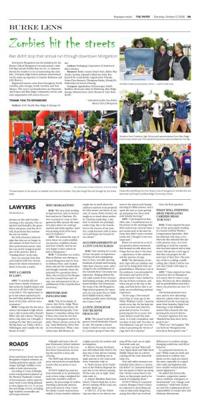
Maria Grosso and Jade Throneberry, two local musicians experienced in classical violin and fiddling, discussed their instruments and styles to shed light on how the same instrument is used differently depending on the genre.
SHEET MUSIC VS. IMPROVISATION
Grosso is from Italy and spent about a decade at a music conservatory to earn an advanced degree in classical violin.
The day after her degree arrived in the mail, Grosso began researching different styles of violin music she could learn, such as bluegrass and Irish folk.
As she picked up her violin and began to learn fiddling, there were immediate learning curves.
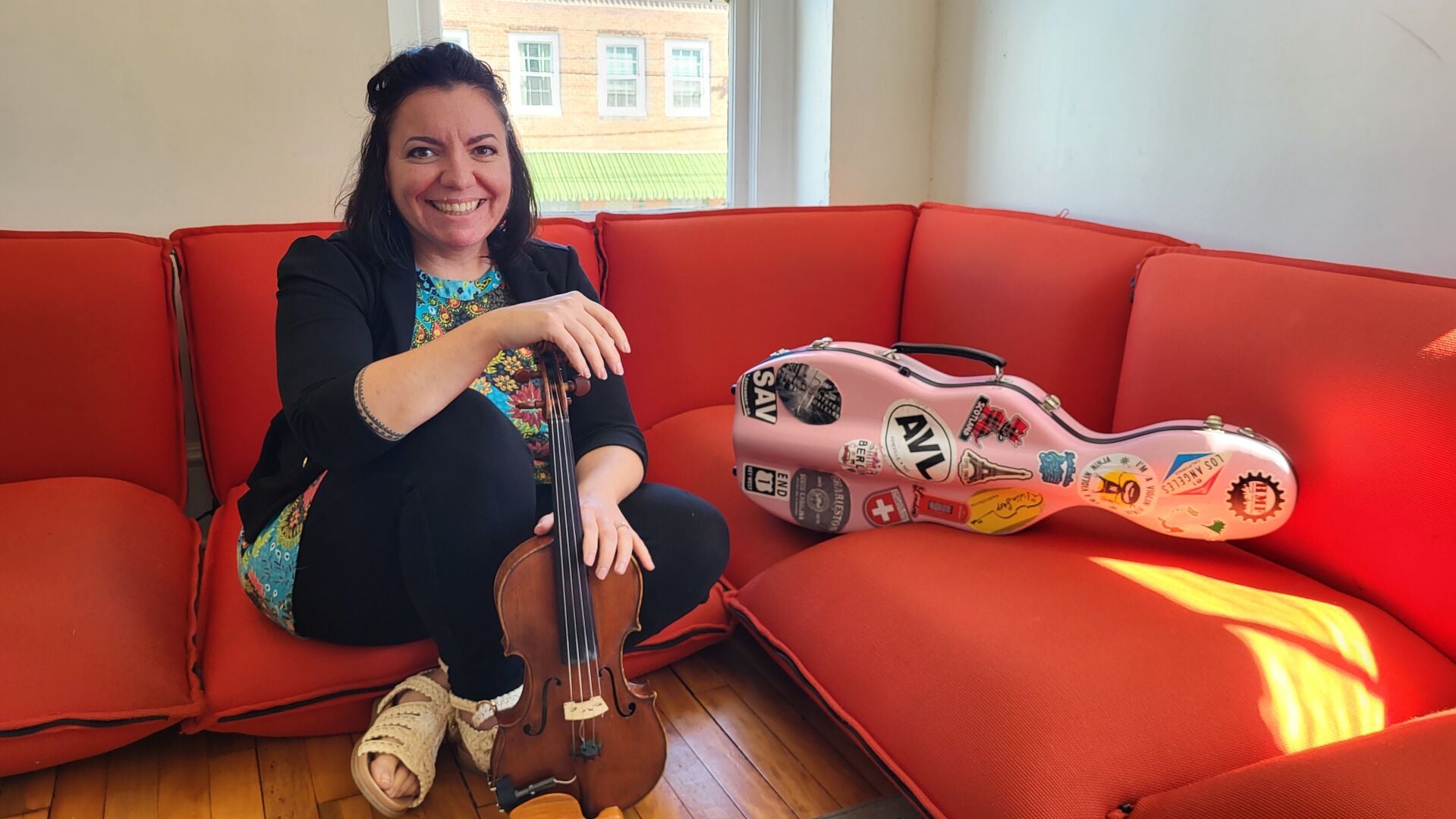
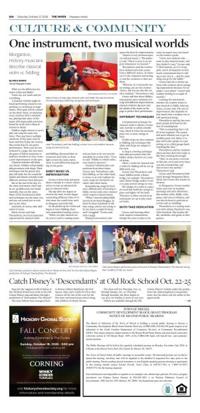
Maria Grosso, of Italy, plays classical violin and fiddle. She said she blends the two and enjoys exploring new genres and techniques.
“When you play classical violin, you’re used to reading music and you have to be very precise and abide by certain rules,” Grosso said. “Fiddle is a whole other, new world to discover.”
Classical violinists play compositions from sheet music, Grosso said. Throneberry said that fiddling, on the other hand, is closer to an oral tradition because songs are learned by ear rather than sheet music.
Remembering songs by heart was a difficult part of learning to fiddle, Grosso said, since classical rarely requires memorization.
“When I started taking fiddle lessons from David Bragger, he knew by heart hundreds of old-time songs, and he was trying to let me learn a couple by heart, and I struggled,” Grosso said with a laugh.
Playing from memory also opens the door for improvisation.
“Improv is very frowned upon (in classical music),” Throneberry said. “There is next to no improv whatsoever in classical.”
Throneberry said the creative force behind each style comes from a different source. In classical, it’s the composer and arranger and the orchestra is their medium.
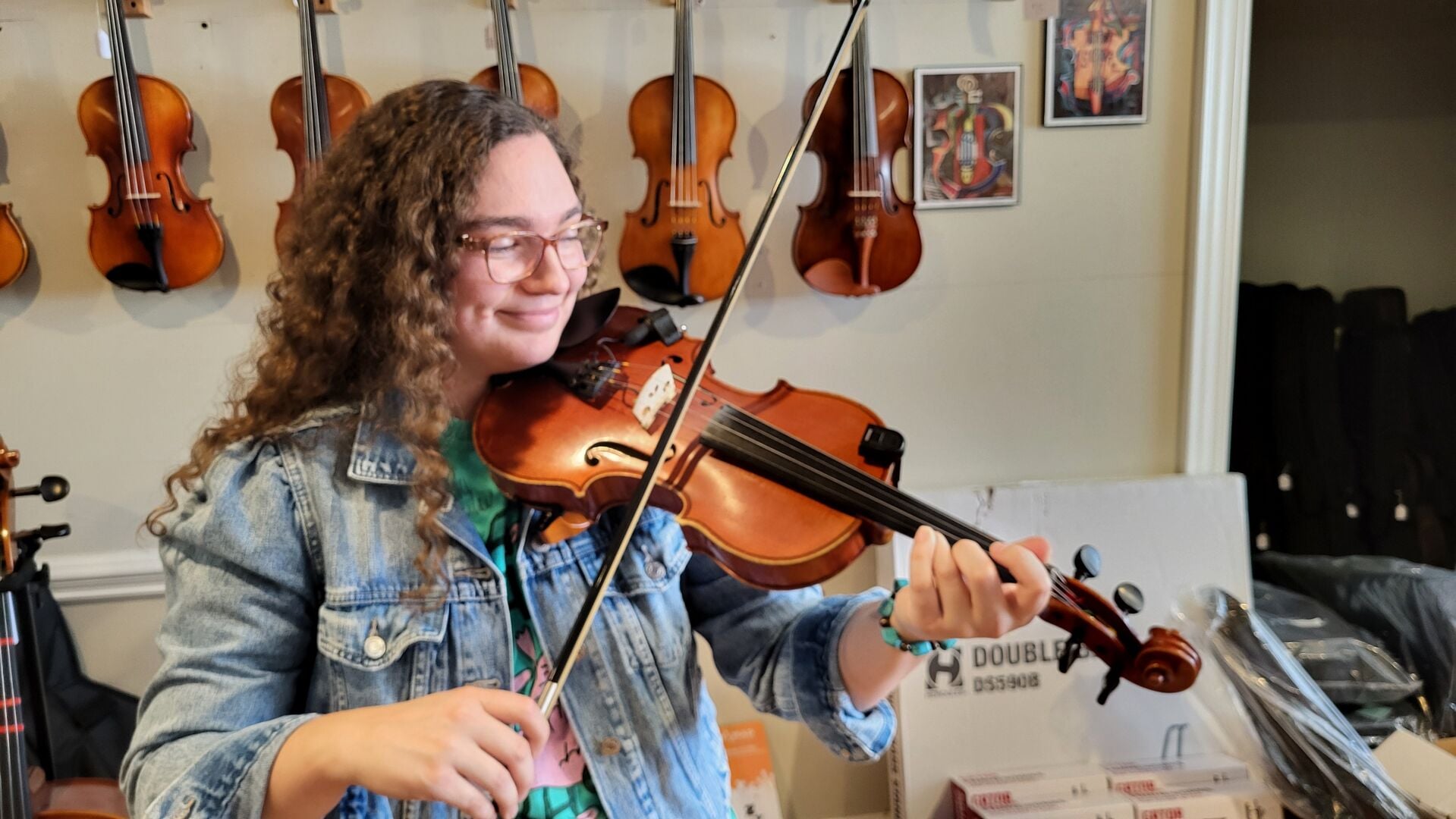
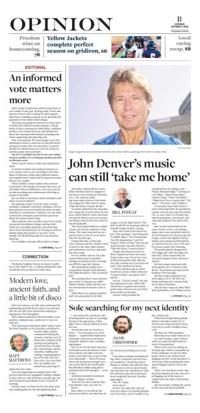
Jade Throneberry said that fiddling is closer to an oral tradition because songs are learned by ear.
“Whereas, in a vernacular music setting, you are the creative (force), but you are also the creative medium,” Throneberry said.
Grosso said that where fiddlers may practice more variations of a song with different improvisations, classical violinists dig more into the details of the music on the page to perfect their performance.
DIFFERENT TECHNIQUES
A fundamental technique for classical violin is vibrato, Grosso said. Another is called a double stop, which is when the musician plays two or more strings at once.
Double stops are also common in fiddling, but techniques like slides and chops are unique to the style.
A chop is a bowing technique that adds percussion when the fiddler strikes the bow on a muted string.
Often, a violin for classical and a violin for fiddling will be set up differently, too.
Grosso and Throneberry said many fiddlers prefer a flatter bridge, for example. Throneberry said a flatter bridge makes it easier to play several strings at once.
The bridge of a violin is a piece of wood that holds the strings in place and higher off the body. This piece is often curved on an instrument set up to play classical violin.
BOTH TAKE DEDICATION
Grosso said learning either style requires commitment, though the years it takes to become an expert may vary based on the learner’s goals.
“I have new students who … want to play classical music, and they think it’s easy,” Grosso said. “Unfortunately, no, it’s a long path. And it all depends on how much commitment they’re willing to put into it … and the same thing can go for the fiddle.”
Grosso said she is always upfront with students about managing expectations because, for example, a new player “cannot play Lindsey Stirling in a couple of months.”
Learning the instrument, whether the student wants to play classical or fiddle, takes patience, Grosso said. The rate of improvement also depends on how much time a student can or will spend practicing.
Throneberry said she has seen many people held back by the fear of sounding bad.
“This is something that I tell all of my students: The easiest and most efficient way to get incredibly good, way faster, is to play with other people in a jam setting or in a little garage band. Anything like that.”
Throneberry said her students often say they don’t feel ready or like they sound good enough.
“(But) at one point, everyone in that jam circle and every musician has sounded bad, and they’ve been the newbie,” Throneberry said.
Grosso and Throneberry both teach through Morganton Music Patch, but Grosso also teaches in Hickory.
In Morganton, Grosso teaches violin and viola on weekday mornings and early afternoons. She teaches violin, fiddle, viola, piano, and voice in Hickory, and can also be hired to perform at events such as weddings.
Throneberry is a touring musician with Johnny Paycheck’s son, John Paycheck. She teaches fiddle, mandolin, and guitar in Morganton.