



Harrell
My old buddy Stover Mason has been on my mind a lot lately. Back in the summer of 1959 when Stover was 81 and I was 11, we ran the North Carolina mountains together right regularly. We fox hunted and trout fished on a grand scale and frequented stock sales and country stores wherever we found them. He was a born and bred mountain man.
Some folks might have thought that Stover wasn’t very widely traveled, but they were only going on the fact that he knew so much about his part of Western North Carolina. Stover had traveled our mountains more than any game warden and knew every wrinkle and damp spot in his part of the Blue Ridge.
And the biggest measure of that exploration was associated with the fact that he, along with my granddaddy Eddie Cole, were in the lumber business and were always on the hunt for standing timber. My great granddaddy owned a sawmill and Stover and Grandad were tasked with finding trees that could be turned into planks.
That in itself was a pretty big undertaking for a couple of young fellows born on adjoining hillside farms in the west end of Buncombe County in 1878, but Stover was more of a world traveler than most anyone of his generation and heritage.
As it turned out, Stover Mason and Eddie Cole weren’t the only ones scouting timber. The country was growing at the turn of the century and the demand for lumber was huge. Before long Western North Carolina was getting pretty much timbered out.
Stover, being the inquisitive fellow that he was, frequented the Asheville City Library where he discovered, there among their treasures, National Geographic Magazine. He was so enamored with that publication that he subscribed sometime around the turn of the century.
He had built a magazine rack especially for his prized back issues and, if I promised to wash the Hershey Bar residue off my mitts, he would let me sit and peruse those ancient copies. I remember the ones from the teens had printed at the bottom of the cover, “$2.50 A Year.” And “25 cts A COPY.”
About the time that North Carolina timber was getting scarce, he had read about the big fir trees in the Pacific Northwest and decided it would be a fine idea to just go out there and check out the situation.
So, in 1914, he boarded a train at the Candler depot and rode all the way to the coast of Washington where he took a job cutting timber for a season. To the folks back home he might as well have gone to Egypt.
When he returned people swarmed him as if he were Charles Lindberg. His response to them was, “Folks, it’s a timber man’s heaven out there. The trees are as thick as tourists in Asheville come July and tall as Mount Pisgah.”
My granddaddy’s youngest brother had just gotten married, and after listening to Stover’s tales of his adventures, he and his young bride decided to cast their fate in the Pacific Northwest. They asked Stover if he had any advice about how to get started out there. They bombarded him with so many questions over the next few weeks that Stover finally said, “Dang, I reckon I just need to take you out there and show you around.”
So, in the spring of 1916, those three adventurers set out in a very used Model T Ford loaded down with camping gear and a set of Blue Willow dishes the young couple had received as a wedding gift and drove across the continent to the coast of Washington. That branch of my mother’s family is still out there all these generations later.
We were riding along in Stover’s old International truck one day and, having heard rumors about that big undertaking I quizzed him about the trip.
“So y’all just drove all day then camped alongside the highway at night?” Which made him laugh so hard he had to stop the truck.
He turned, looked at me and said, “Highway? Why we didn’t roll over twenty miles of pavement the whole trip. It was just over two months of drive a ways and fix a flat tire, drive a ways and pour water in the radiator, drive a ways and adjust the brakes.
“We carried any container we could scrounge that had a lid just for hauling extra gasoline. We went through sections of the country where folks had no idea where there might even be gasoline available ahead. We completely ran out of any sign of a road or even a cow path somewhere out in Montana.
“We asked some feller the best way to get to Washington and he said to head for New Orleans and take a boat!”
I asked Stover how long he had stayed in Washington. He winked at me and said, “I stayed three years fore they run me off.” He went on, “I left there and went on up to Alaska. Stayed there five years timbering.”
Having overheard more than a few stories about what a rounder he was when he was a young man, I said, “Did you get in any trouble up in the Yukon?”
He grinned and answered, “There was one occasion when they threw me in the hoosgow.”
I had to ask, “What did they arrest you for?”
He proudly announced, “Rode my horse into a beauty parlor.”
Wide eyed me asked, “So, how long were you in jail?”
He winked and said, “Aw, they let me out next morning. The gal who ran the beauty parlor dropped the charges when I offered to buy her breakfast.”
Then he shook his head and mused, “They kept my horse though.”
I learned a lot from Stover Mason, but the most important thing I learned is never miss an opportunity to spend time with old folks if you want to be any kind of a storyteller.
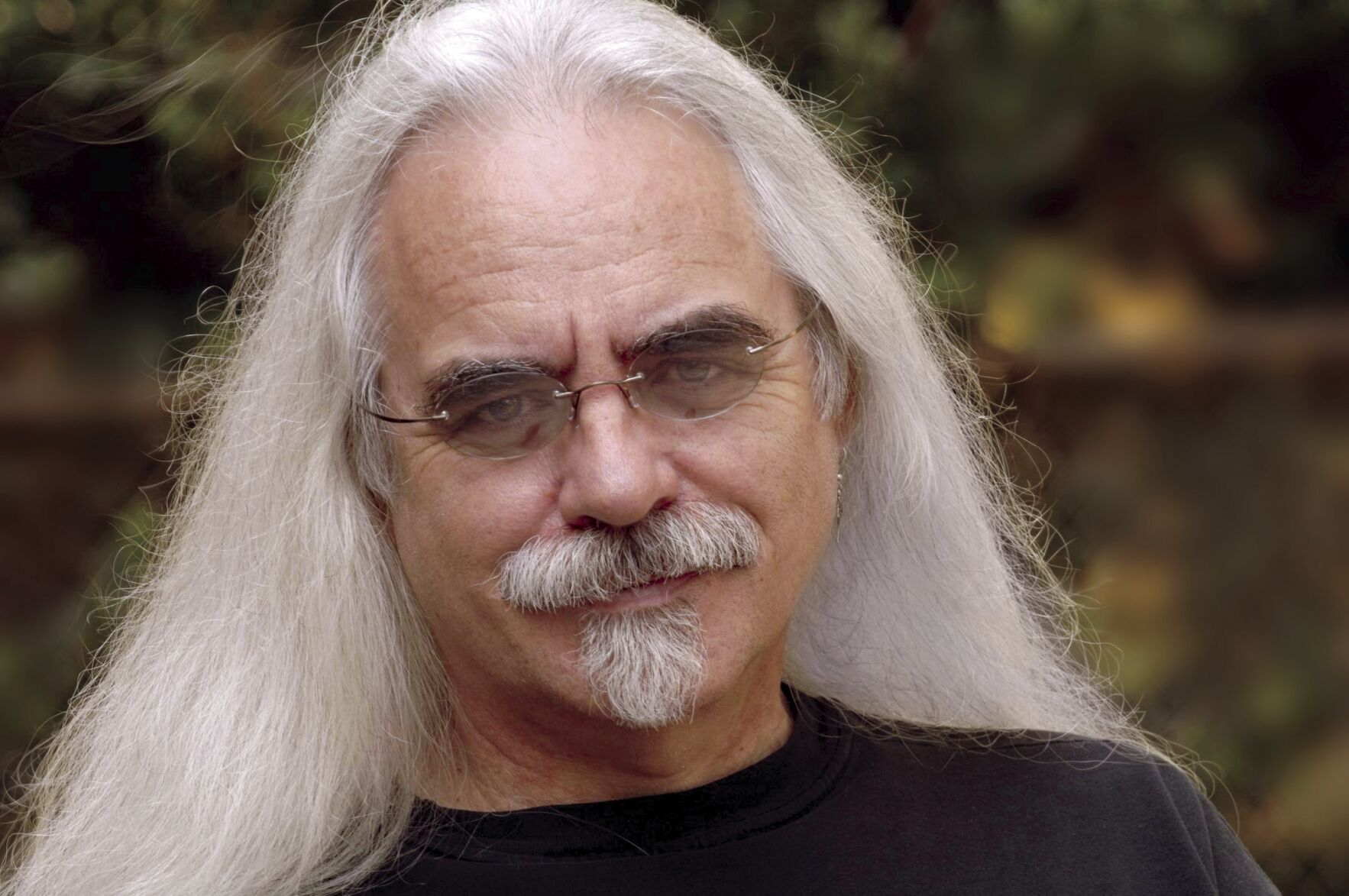
Michael Reno Harrell is an award-winning songwriter, a published author, a nationally known storyteller, and a visual artist. He writes a monthly column for The Paper. See more of his work and performance schedule at his website, michaelreno.com, or his YouTube channel, @MichaelRenoharrell.