
Burke County Public Schools' fuel expenses more than double with rising cost of diesel

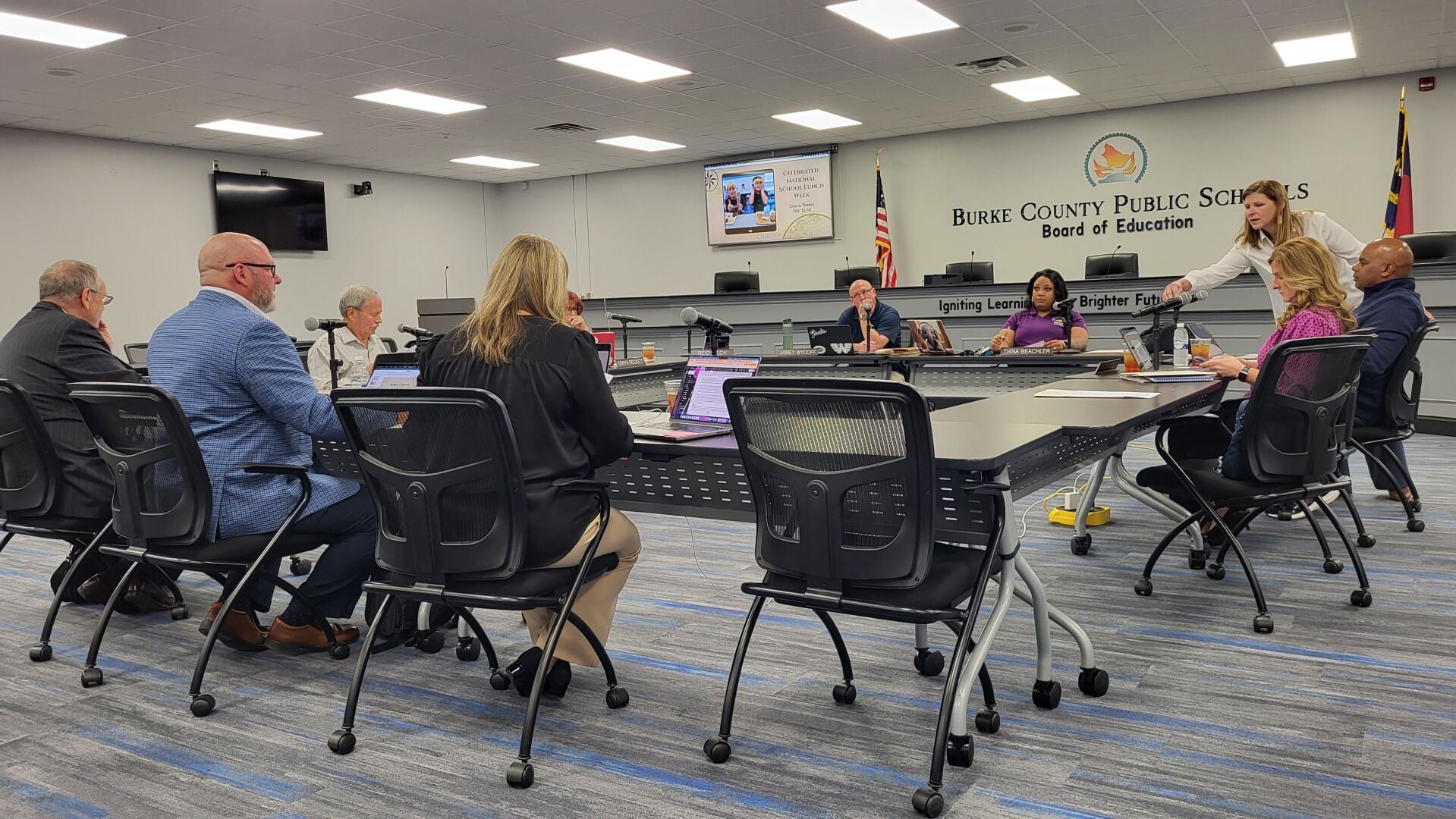
The Burke County Public Schools Board of Education gathered for its October work session on Monday.
With diesel costing more than $5 per gallon, Burke County Public Schools’ (BCPS) transportation department’s fuel expenses have shot up from about $17,000 every 10-12 days to $38,000.
If diesel prices don’t come down, it could cause a $260,000 deficit in the district’s 2026-27 transportation budget, said Transportation Director Daniel Wall.
At Monday’s work session, Wall said that when he took on the role of transportation director in May 2025, diesel cost about $2.75 per gallon.
Diesel cost about $5.08 last Friday, he said.
Wall reminded the school board that Burke County Public Schools already is exempt from gasoline and diesel taxes, so any federal or state suspension of those taxes would not reduce the district’s fuel costs.
Part of the strategy to navigate this issue is communicating with the General Assembly.
“The legislature is supposed to meet before Christmas, and hopefully, … we’ll know the level of (financial) support they’re going to give us, which will help guide us and make decisions about what we need to do to try to overcome it,” Wall said.
Navigating the situation is all about timing fuel purchases and striving for efficiency to save every penny possible.
Wall said he receives daily quotes on fuel prices from the district’s supplier. He tries to purchase gasoline and diesel when the prices seem lowest.
“It has been a rollercoaster of ups and downs — severe ups and downs — that we have never seen before. It can change by 20 to 40 cents a day,” Wall said.
Bus routes, which were overhauled this summer, remain as efficient as possible. Wall said buses no longer stop at every house, though, to save on fuel.
“We want to be respectful of parents, and we definitely want to keep kids safe,” Wall said. “The state law policy is that we only have to stop every two-tenths of a mile, and so even this year we’ve made some changes to where we don’t stop at every driveway on a road.”
Wall said this has been a big adjustment for some parents, “but those are the kind of things that the less we stop and have to go again, that saves diesel and every penny counts.”
It adds up to more than pennies though, Wall said, considering buses travel the same routes twice a day for 160 to 170 days in a school year. The little changes make big differences, he said.
Wall said there are 89 daily route buses covering more than 100 routes this year.
Board member Sonya Rockett said that, with many families depending on school buses, while saving money is important, “we have got to make sure that … we’re not having a first grader walk three driveways down just because it’s going to save us a few pennies.”
Superintendent Dr. Mike Swan said a recent ridership count showed that the district transports about 3,400 students each day. The district has about 11,000 students, so that figure represents about 31% of students.
Swan said the district truthfully needs more bus drivers and mentioned it is hiring.
If fuel prices stay this high or continue to climb, there would have to be “major changes that would really affect parents,” Wall said, including the potential for pulling buses off the road and reconfiguring routes again. For now, though, there will be no changes to the number of buses or routes.