
The Piedmont of Italy makes a flavor stop in Valdese
-
Angela K. Copeland
Editor
- 3 min to read

I have a 2-inch thick travel book about Italy collecting dust on a bookshelf at home. I remember the day I bought it, thinking that soon — yes soon — I would be off on a wild adventure to “The Boot,” as the country is sometimes called.
That was 2016.
I’ve yet to lay eyes on the Mediterranean Sea or sip wine in Tuscany, but I can now say that my taste buds have experienced genuine Italian Piedmont cuisine.
And that’s all thanks to the Waldensian Heritage Museum in Valdese. Museum Director Gretchen Costner and assistant Katherine Fletcher organized a cooking class last month at the Le Phar des Alpes clubhouse featuring real-deal Italian chef Simona Bartoli. She delivered her cooking directions to the class with a thick accent and a dry wit, which made the evening all the more enjoyable for me.
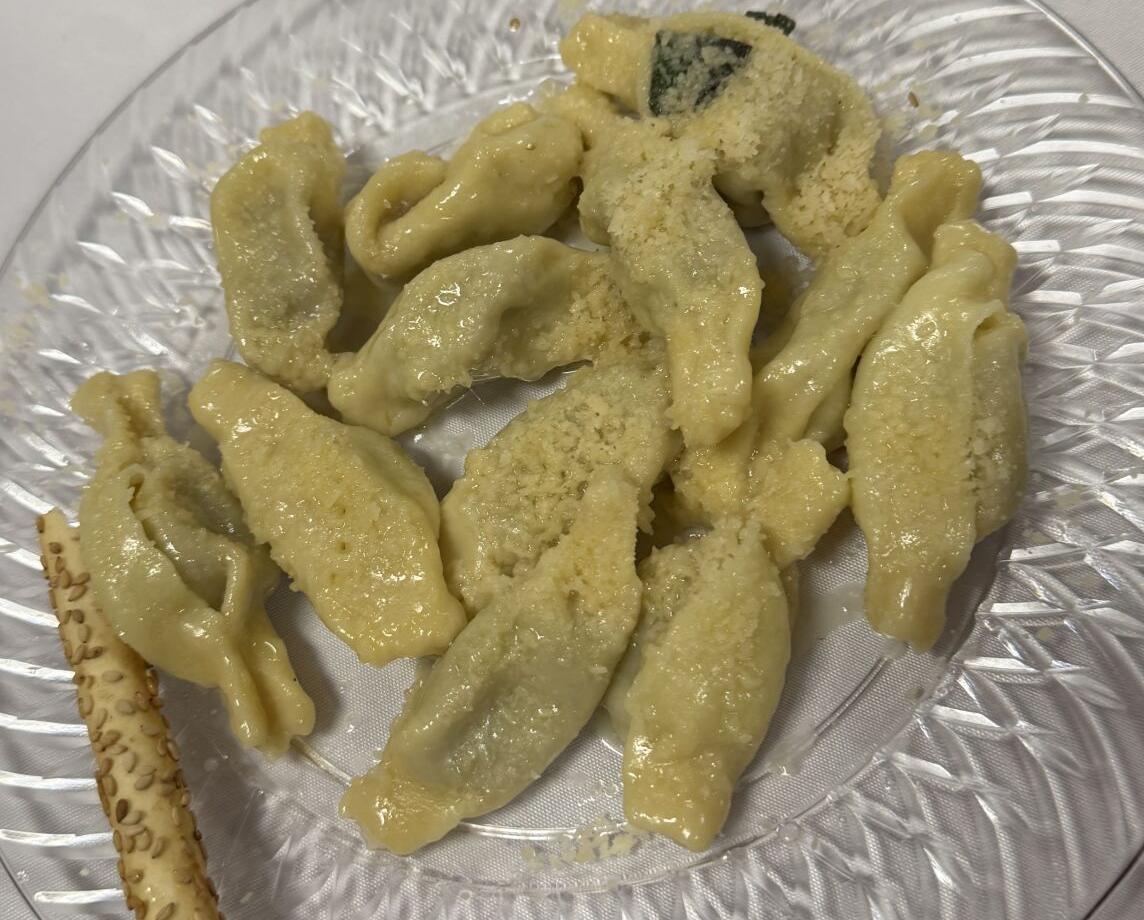
Agnolotti del plin is a rustic Italian Piedmont dish full of flavor.
On the menu was Agnolotti del Plin, a traditional Italian Piedmont pasta dish known for its small, hand-pinched pockets filled with roasted meat. The Waldenses who settled Valdese came from that region. Chef Simona explained that while we would use roasted beef, the true dish typically uses several meats, most notably rabbit — basically whatever is leftover from previous meals.
The more than two dozen of us participating in the class listened and watched, while munching on meats, cheeses, crackers, and olives. Some wine might have been involved.
Our pre-meal festivities were by design.
“In Italy, it’s really important to us, and we call it aperitivo. Aperitivo is the time before dinner,” said Maria Grosso, the chef’s friend, collaborator, and fellow Italian. “You get your small apertivo, which usually, it’s like nibbles. And you order, of course, some cocktail or spritz. We have Aperol Spritz or Campari.”
She’s speaking my language.
“Aperitivo comes from the word ‘aperire,’ which means open. So, you need to open your stomach before dinner with some wine or some alcohol to open the stomach, and so it makes you hungry, right?” Maria said with a smile.
Yes, Maria, you are right.
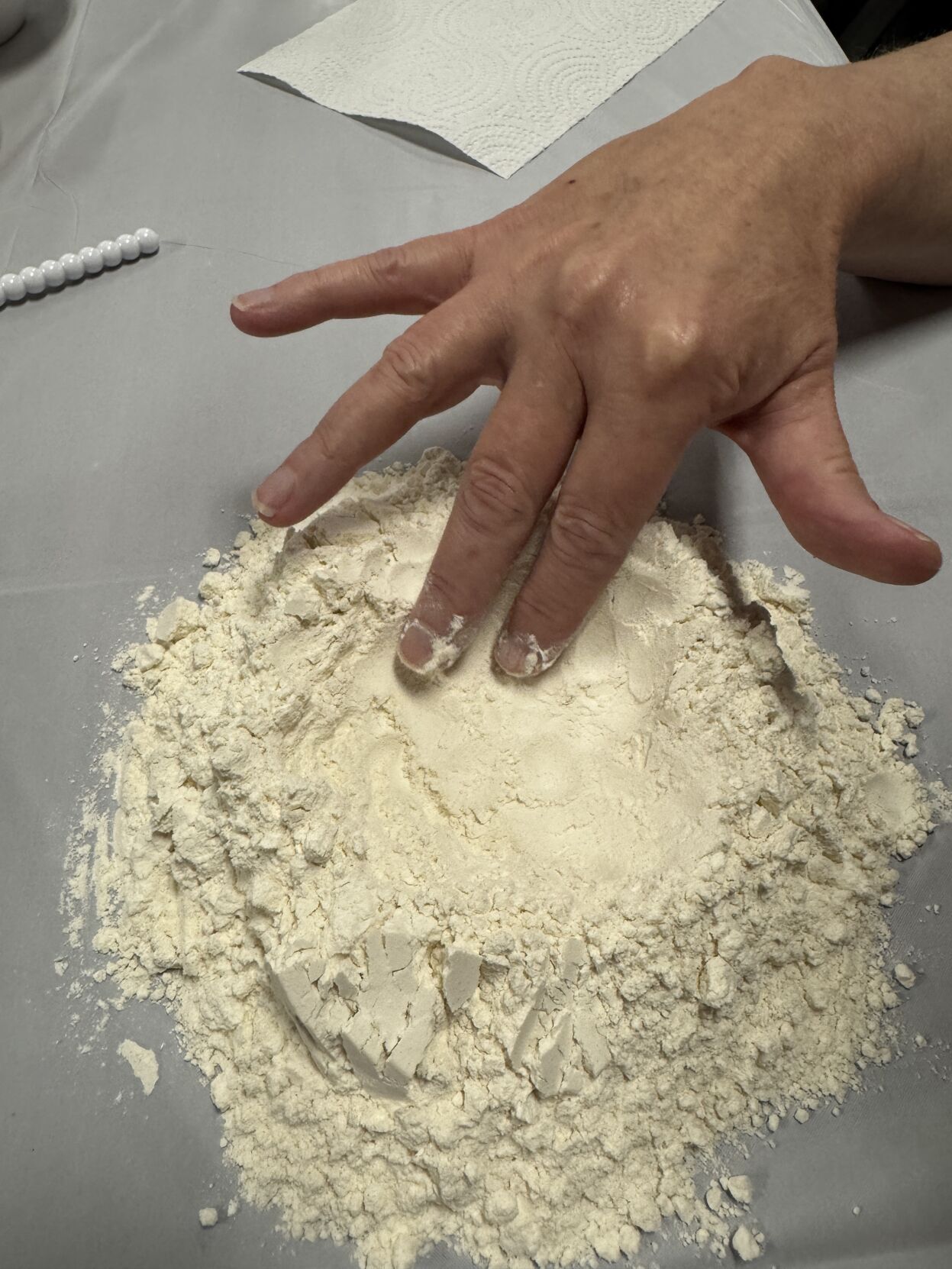
Begin making the dough for the pasta by creating a well in the flour.
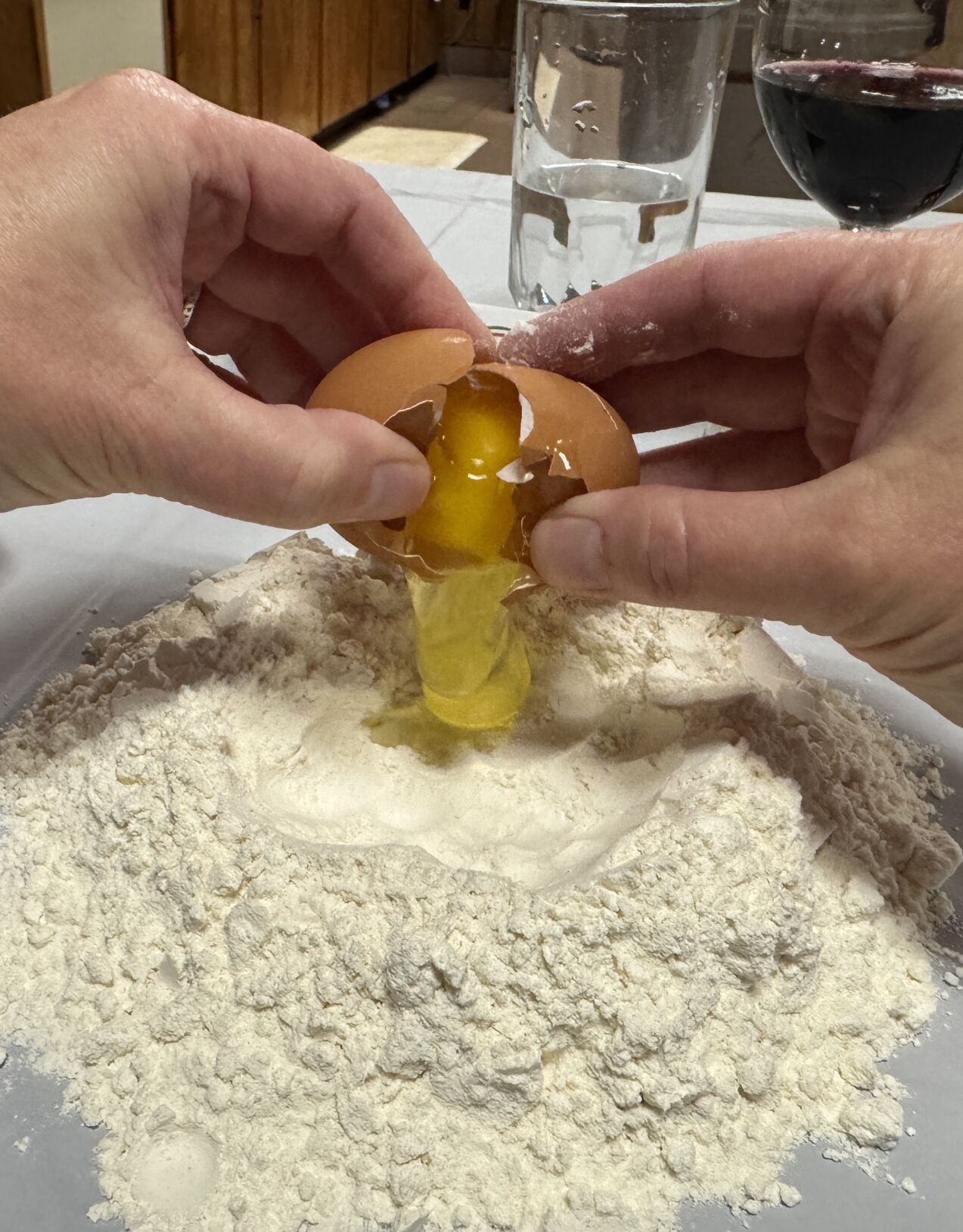
Crack the eggs into the well of the flour.
We all eventually got elbow deep in flour and eggs to make the pasta sheets that would be the foundation of our meal. We mixed and hand-kneaded the dough, forming something close in size to a standard-issue softball. In to the refrigerator the dough went for 30 minutes.
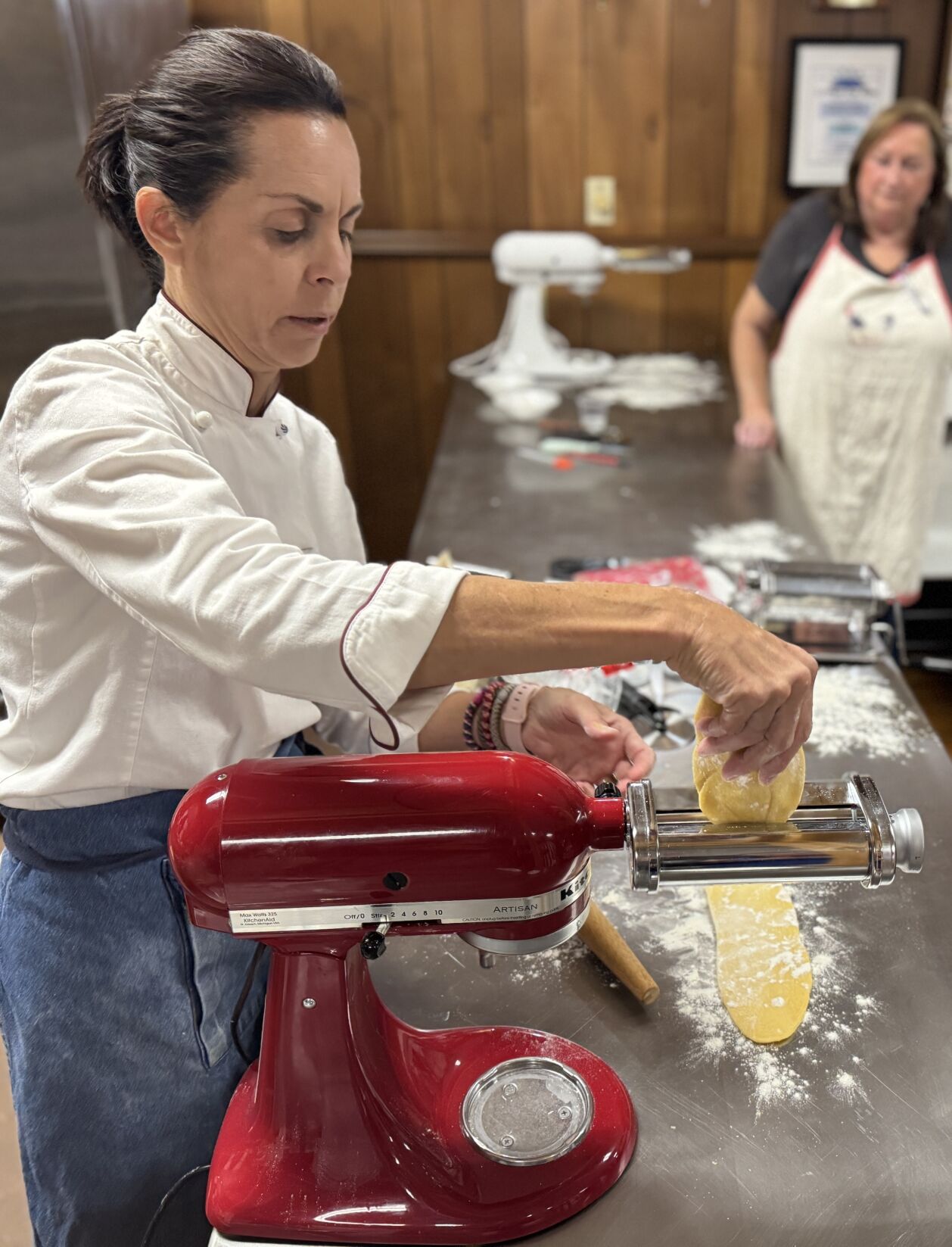
Cooking instructor Chef Simona Bartoli shows the class how to use the pasta roller attachment.
While our dough chilled, Chef Simona demonstrated how to create thin pasta sheets using dough she had already refrigerated. She would pass the pasta through the KitchenAid mixer pasta roller, starting with a wide gauge and progressively getting narrower with each pass of the dough.
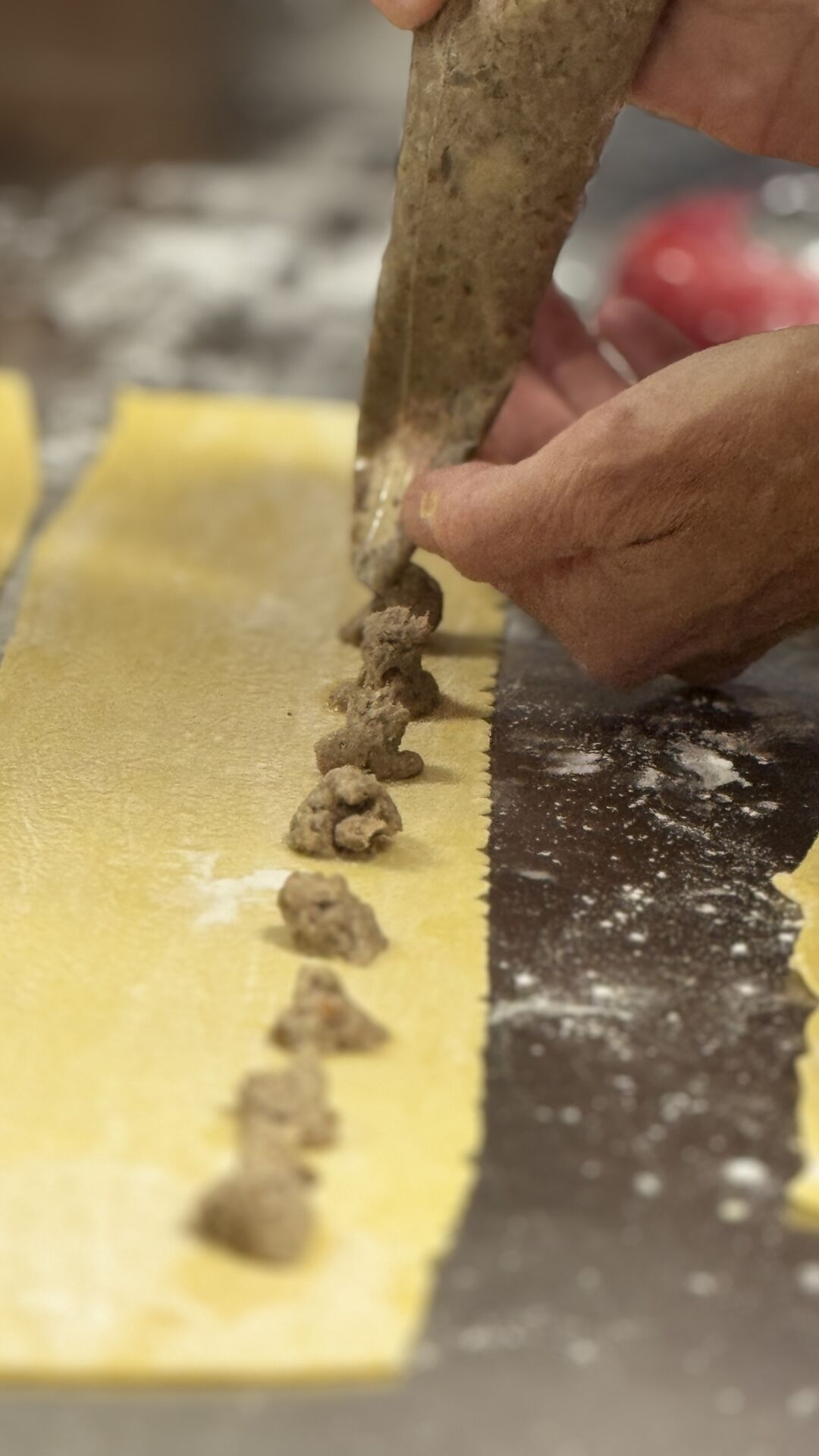
The filling is a combination of cooked beef, carrots, celery, and herbs, all blended into a paste.
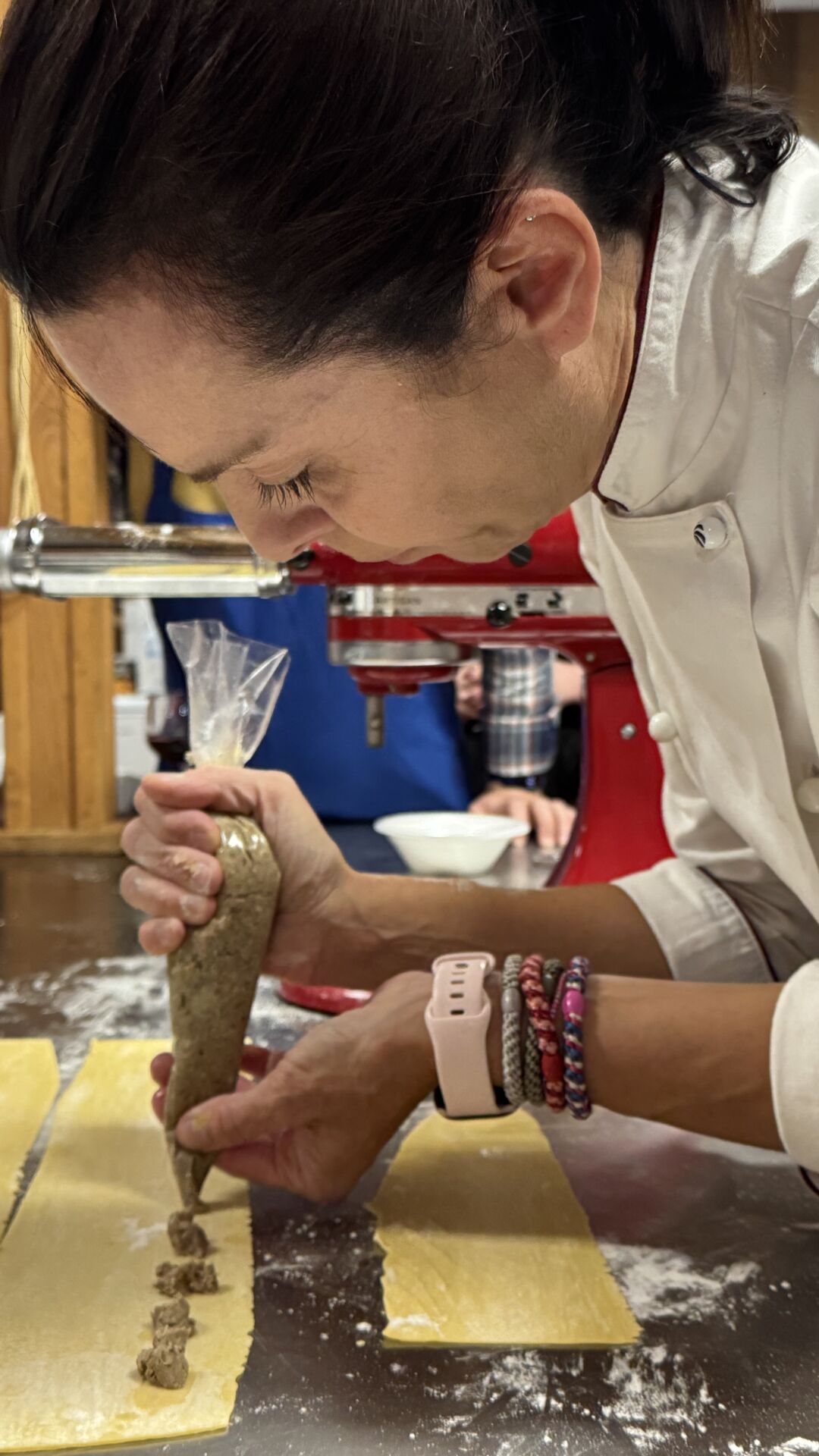
Chef Simona uses a pastry bag to evenly distribute filling across the long sheet of pasta.
Once the dough was the correct thinness, next came the premade filling (the cooked beef, carrots, celery, and herbs blended into a paste) that the chef portioned out along the bottom half of the sheet of pasta using a pastry bag. The top half of the pasta was then folded over. She used a little water to help seal the edges together and pinched the pasta together between the dollops of filling.
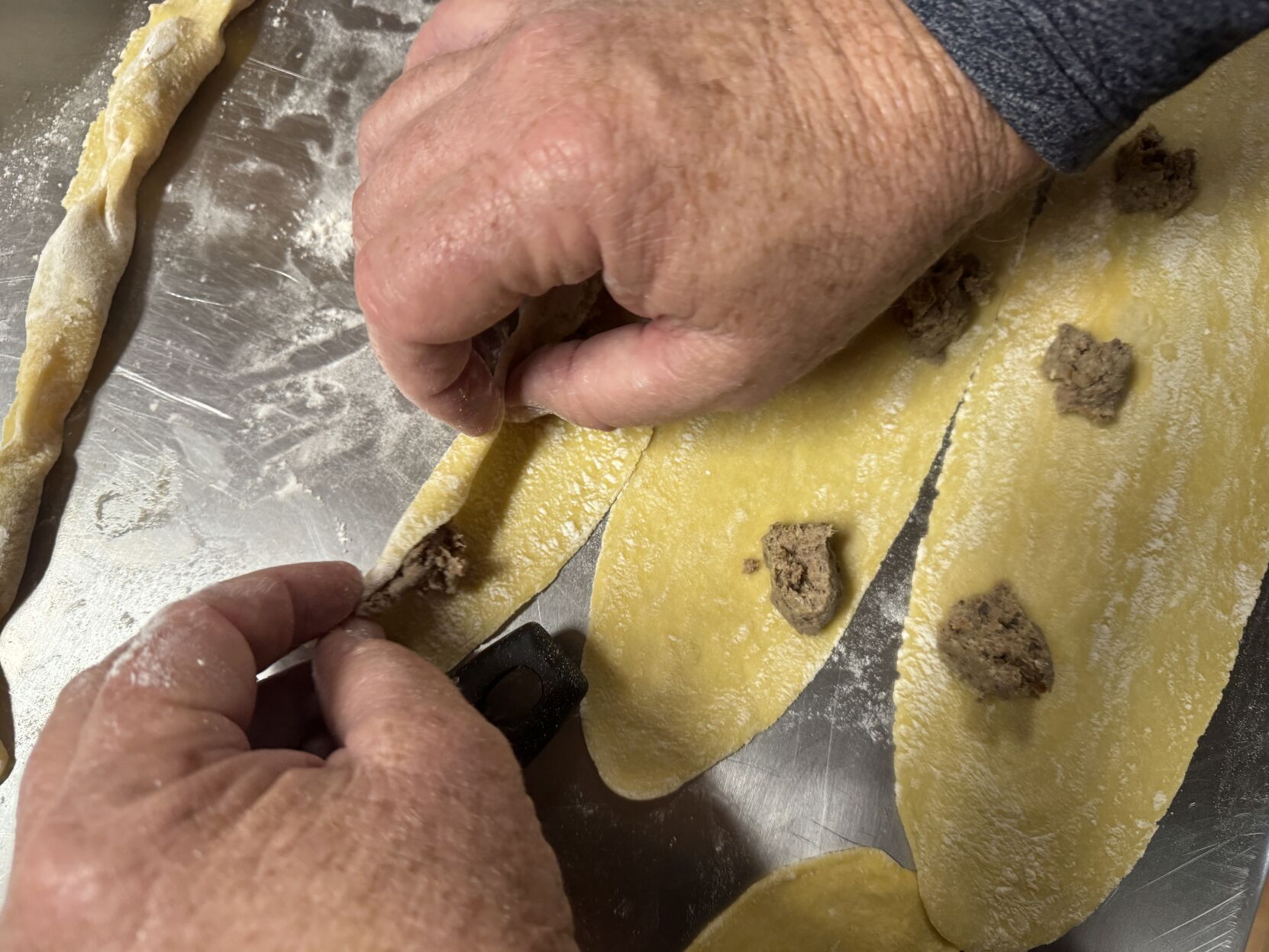
After placing a portion of the meat and vegetable filling on the bottom half of the pasta, the top half of the pasta sheet is folded on top.
She cut the pasta between each pocket and cooked them in boiling water until the pasta floated. Once done, the Agnolotti del Plin was served in a hearty broth or sautéed in butter (the Piedmont region uses butter, not olive oil).
Then it was our turn. We retrieved our pasta softballs from the depths of the refrigerator and got to work. Some were lucky enough to get a mixer with the pasta attachment. I was not one of them. Maria helped hold down a hand-cranked version while I did the cranking. It wasn’t pretty, but I got the job done.
Giggles and snorts could be heard throughout the room as we all did our best to recreate Simona’s masterpiece.
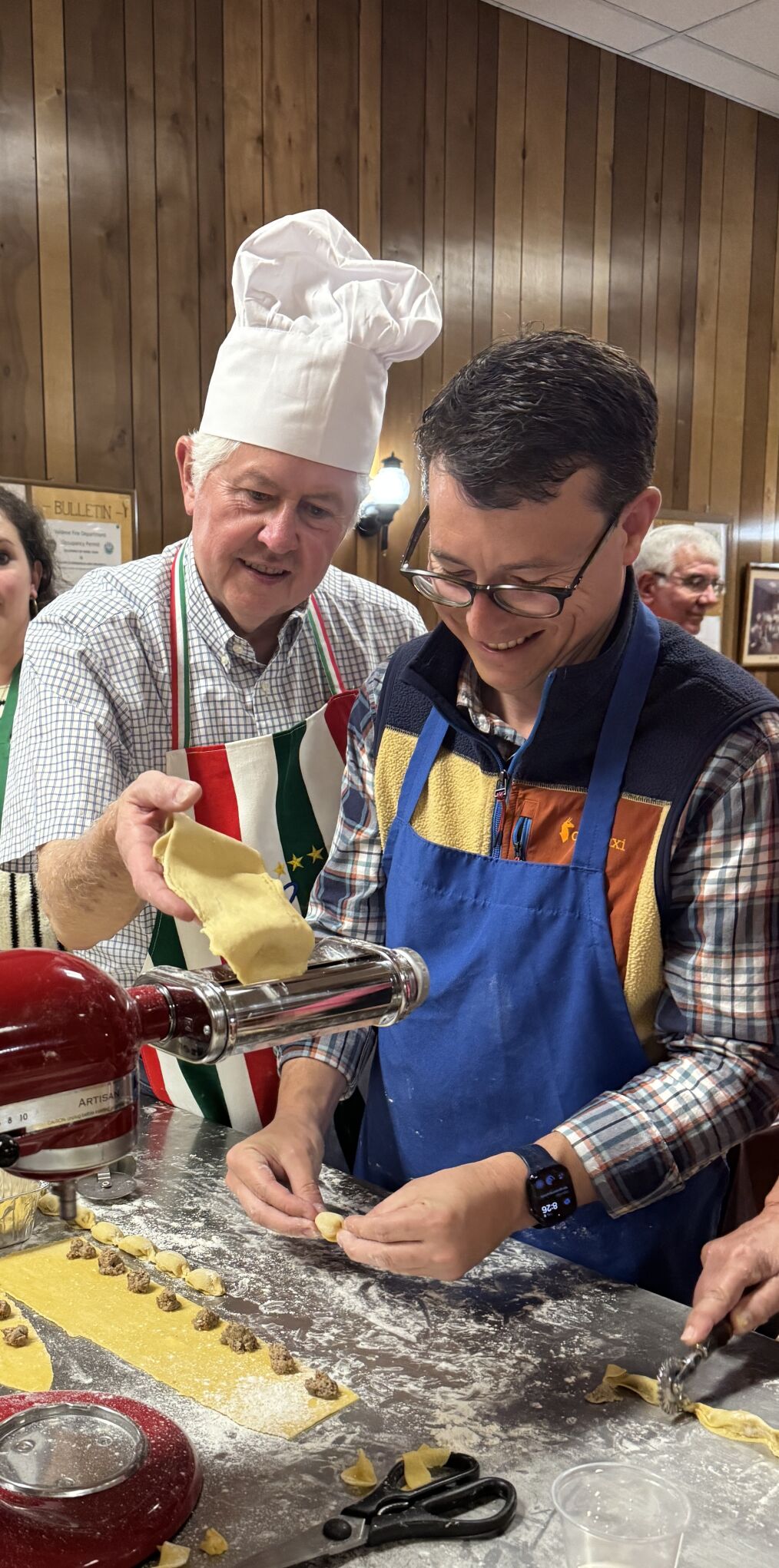
Alan Griffin (left) and Shawn Hamm try their hand at making sheets of pasta.
While sitting down to enjoy the fruits of my labor, I talked with people I knew and made new friends. I was invited to two different churches and out to dinner once. Some came up to talk about The Paper.
Driving home, I realized that the evening had accomplished exactly what Maria alluded to earlier in the evening about how Italians see the true purpose of food.
We weren’t creating meals. We were creating community.
Angela Kuper Copeland is the Executive Editor. She may be reached at 828-445-8595, ext. 2003, or angela@thepaper.media.